Under Your Skin Heat Protection Spray
A heat protectant with 23 ingredients.
Heat protectant with 23 ingredients
We independently verify ingredients, backed by peer-reviewed research. Suggest an update.
What's inside
Ingredients List
Water
Skin ConditioningAloe Barbadensis Leaf Juice
Skin Conditioning


Caprylyl/Capryl Glucoside
CleansingSaccharomyces Cerevisiae Extract
Skin Conditioning

Glycerin
Humectant

Xylitylglucoside
Humectant
Anhydroxylitol
Humectant
Hydrolyzed Rice Protein
Skin ConditioningHydrolyzed Quinoa
Skin ConditioningXylitol
Humectant
Polycitronellol
Polycitronellol Acetate
Undecane
EmollientTridecane
Perfuming

Parfum
Masking

Sodium Levulinate
Skin ConditioningSodium Anisate
AntimicrobialPotassium Sorbate
Preservative
Leuconostoc/Radish Root Ferment Filtrate
Antimicrobial
Sodium Phytate
ChelatingBenzyl Alcohol
Perfuming

Sodium Benzoate
Masking
Alcohol
Antimicrobial
Water, Aloe Barbadensis Leaf Juice, Caprylyl/Capryl Glucoside, Saccharomyces Cerevisiae Extract, Glycerin, Xylitylglucoside, Anhydroxylitol, Hydrolyzed Rice Protein, Hydrolyzed Quinoa, Xylitol, Polycitronellol, Polycitronellol Acetate, Undecane, Tridecane, Parfum, Sodium Levulinate, Sodium Anisate, Potassium Sorbate, Leuconostoc/Radish Root Ferment Filtrate, Sodium Phytate, Benzyl Alcohol, Sodium Benzoate, Alcohol
Benefits
Concerns
Ingredients Explained
Water. It's the most common cosmetic ingredient of all. You'll usually see it at the top of ingredient lists, meaning that it makes up the largest part of the product.
So why is it so popular? Water most often acts as a solvent - this means that it helps dissolve other ingredients into the formulation.
You'll also recognize water as that liquid we all need to stay alive. If you see this, drink a glass of water. Remember to stay hydrated!
Learn more about WaterAloe Barbadensis Leaf Juice is the filtered, stabilized liquid pressed from the inner gel of the aloe vera leaf.
In cosmetics, it shows up as either soothing active or a water-replacement base. It is roughly 98-99% water and the last 1-2% is an interesting mix of polysaccharides, amino acids, vitamins, minerals, and enzymes.
The polysaccharides do most of the work: they bind water at the skin surface for a light, non-greasy hydration boost. And one of the polysaccharides, glycomannan, is linked to fibroblast stimulation + collagen synthesis. This is also why aloe has such a long track record in wound and burn healing.
This ingredient is also calming with anti-inflammatory and mild antimicrobial activity, making it a great pick for sensitive, irritated, or post-sun skin.
Realistic expectations matter though; the solid evidence is mostly limited to hydration, soothing, and wound support. Deeper claims about anti-aging or sun protection are not well backed, and science reviews note it does not prevent radiation-induced skin injury.
Because it plays well with almost everything, it's commonly used as a base alongside other actives like niacinamide or vitamin C.
Typical usage concentrations range from 0.5% (where hydration benefits already show up) all the way to 90%+ (where it replaces water as the main base).
The safety for this ingredient is well-establish as well. Overall, this is a great supporting ingredient for those who want a boost in hydration.
Learn more about Aloe Barbadensis Leaf JuiceThis ingredient is a mild surfactant made by sticking glucose onto a blend of fatty acids.
It does two jobs because it has a sugar head that loves water and a fatty tail that loves oil:
Typical use levels range from 10-20% in cleansers and 15-30% in shower products.
Once on your skin, your skin's glucoside hydrolases breaks it down into glucose and the parent fatty alcohols.
This ingredient is considered fungal acne safe because its fatty alcohol portion sits outside the Malassezia yeast's metabolization range.
Learn more about Caprylyl/Capryl GlucosideSaccharomyces Cerevisiae Extract comes from a yeast used in fermentation. It has skin conditioning properties due to its naturally occurring peptides, polysaccharides (including beta-glucans), amino acids, minerals, and vitamins.
Clinical research shows formulas that contain this ingredient can improve moisture levels and refine skin texture over time. This is associate with its ability to reduce free-radical activity and protect the skin against environmental damage.
Lab studies demonstrate that some peptide fractions in this ingredient possess antioxidant and anti-collegenase effects, helping to protect the structural proteins in skin and soothing inflammation.
Additionally, this ingredient has been shown to have antimicrobial effects against bacteria associated with acne.
Learn more about Saccharomyces Cerevisiae ExtractGlycerin (or glycerol) is a compound naturally found in your skin. It's a powerhouse humectant that pulls water into the stratum corneum.
Topically, glycerin does several things at once:
Your skin makes glycerin on its own (mostly from sebaceous oil breakdown) and shuttles it to your outermost layer of skin, or your epidermis, via aquaporin-3.
Aquaporin-3 is a transporter that is essential for normal skin hydration, elasticity, and repair. Interestingly, mice lacking in AQP3 have dry and less elastic skin that can be fully corrected with glycerin.
This ingredient is non-irritating, plays well with almost every ingredient, and works across all skin types. Typical use is anywhere between 3-10% but can go up to 79% in some leave-on products.
Just know very high concentrations (>40%) can feel tacky in low humidity.
Glycerin is the name for this ingredient in American English. British English uses Glycerol/Glycerine.
Learn more about GlycerinXylitylglucoside is created from xylitol and glucose, two humectants.
Not surprisingly, this ingredient is also a humectant. It attracts and holds water in your skin, helping to maintain hydration.
This ingredient is most commonly found in a popular trio called Aquaxyl. Aquaxyl is made up of anhydroxylitol(24 - 34%), xylitylglucoside (35 - 50%), and xylitol (5 - 15%).
According to a manufacturer, Aquaxyl is known for a 3-D hydration concept and an anti-dehydration shield to reinforce the outer layer of skin.
Learn more about XylitylglucosideThis ingredient is created from dehydrating xylitol in acidic conditions. Xylitol is a famous sugar and humectant.
Much like its predecessor, anhydroxylitol is a humectant. Humectants attract and hold water to moisturize the skin.
This ingredient is most commonly found in a popular trio called Aquaxyl. Aquaxyl is made up of anhydroxylitol (24 - 34%), xylitylglucoside (35 - 50%), and xylitol (5 - 15%).
According to a manufacturer, Aquaxyl is known for a 3-D hydration concept and an anti-dehydration shield to reinforce the outer layer of skin.
This ingredient is often derived from plants such as wood and sugarcane.
Learn more about AnhydroxylitolHydrolyzed Rice Protein is protein extracted from rice. This ingredient is rich in antioxidants and peptides.
Studies show this ingredient may help with blocking the melanin creation process when skin is exposed to UV.
We don't have a description for Hydrolyzed Quinoa yet.
Xylitol is a humectant and prebiotic. It can help with dry skin.
In studies, xylitol has been shown to improve dry skin. It decreased transepidermal water loss, or when water passes through the skin and evaporates. Xylitol also showed to help improve the biomechanical properties of the skin barrier.
The prebiotic property of xylitol may also help reinforce our skin's natural microbiome. Having a healthy microbiome prevents infection by bad bacteria and helps with hydration.
As a humectant, Xylitol helps draw moisture from both the air and from deeper skin layers. This helps keep skin hydrated.
Xylitol is a sugar alcohol and commonly used as a sugar substitute. It is naturally occurring in plants such as strawberries and pumpkin.
Learn more about XylitolPolycitronellol is derived from citronellol. it has film-forming and fragrance fixative properties.
This means polycitronellol helps make products have a nice texture and keep your skin soft. It also helps fragrance last longer in perfumes or fragranced products.
Unlike citronellol, this ingredient has been shown to be non-sensitizing to skin in manufacturer studies.
Fun fact: This ingredient is biodegradable and sustainably derived.
Learn more about PolycitronellolWe don't have a description for Polycitronellol Acetate yet.
Undecane is an emollient and helps create a lightweight base for products.
Is is not soluble in water and naturally occurring in some species.
Tridecane is a lightweight emollient and fragrancing ingredient. It is a paraffin and often called a silicone alternative.
According to official INCI guidelines, this ingredient is used to give a light odor to raw materials. It is often used as a starter ingredient to create parfum.
This ingredient can be derived from palm oil, or coconut oil. It is also naturally found in certain species of organisms.
According to the NOAA, this ingredient can cause skin sensitivity with prolonged use. However, this warning is taken from the Coast Guard and no studies have been done on this in relation to cosmetics.
Tridecane is not water soluble.
Learn more about TridecaneParfum is a catch-all term for an ingredient or more that is used to give a scent to products.
Also called "fragrance", this ingredient can be a blend of hundreds of chemicals or plant oils. This means every product with "fragrance" or "parfum" in the ingredients list is a different mixture.
For instance, Habanolide is a proprietary trade name for a specific aroma chemical. When used as a fragrance ingredient in cosmetics, most aroma chemicals fall under the broad labeling category of “FRAGRANCE” or “PARFUM” according to EU and US regulations.
The term 'parfum' or 'fragrance' is not regulated in many countries. In many cases, it is up to the brand to define this term.
For instance, many brands choose to label themselves as "fragrance-free" because they are not using synthetic fragrances. However, their products may still contain ingredients such as essential oils that are considered a fragrance by INCI standards.
One example is Calendula flower extract. Calendula is an essential oil that still imparts a scent or 'fragrance'.
Depending on the blend, the ingredients in the mixture can cause allergies and sensitivities on the skin. Some ingredients that are known EU allergens include linalool and citronellol.
Parfum can also be used to mask or cover an unpleasant scent.
The bottom line is: not all fragrances/parfum/ingredients are created equally. If you are worried about fragrances, we recommend taking a closer look at an ingredient. And of course, we always recommend speaking with a professional.
Learn more about ParfumSodium levulinate is the a sodium salt of Levulinic Acid. Oncedissolved in an aqueous solution, the two ingredients become identical. It is usually derived from renewable plant sources like corn starch or sugarcane.
In skincare, it mostly acts as a skin conditioning agent that keeps skin soft and hydrated. It also acts as a preservative booster by inhibiting the growth of mold, yeast, and bacteria.
It's often paired with Sodium Anisate as the two create a broad-spectrum preservative system that is popular in "natural" formulations.
This ingredient is water-soluble.
The CIR Expert Panel for Cosmetic Ingredient Safety has concluded this ingredient to be non-irritated and there are no restrictions for use in EU cosmetics. The FDA also allows this ingredient to be used as a food-grade flavoring agent.
Learn more about Sodium LevulinateSodium Anisate comes from fennel. It is used as a preservative and to add flavoring.
Sodium Anisate has antimicrobial properties.
Potassium Sorbate is a preservative used to prevent yeast and mold in products. It is commonly found in both cosmetic and food products.
This ingredient comes from potassium salt derived from sorbic acid. Sorbic acid is a natural antibiotic and effective against fungus.
Both potassium sorbate and sorbic acid can be found in baked goods, cheeses, dried meats, dried fruit, ice cream, pickles, wine, yogurt, and more.
You'll often find this ingredient used with other preservatives.
Learn more about Potassium SorbateLeuconostoc/Radish Root Ferment Filtrate is a natural preservative. It comes from fermenting radish roots with a bacteria called leuconostoc. The trade name for this ingredient is Leucidal.
Leuconostoc comes from lactic acid.
This ingredient has antimicrobial properties and helps prevent the growth of bacteria in a product.
Leuconostoc is used to make the traditional Korean side-dish, kimchi. It is also used to make sourdough bread (both incredibly yummy foods).
Learn more about Leuconostoc/Radish Root Ferment FiltrateSodium Phytate is the sodium salt of Phytic acid, a compound that plants store phosphorus in. It's the plant-derived alternative to ingredients like Disodium EDTA.
In skincare, this ingredient is a chelator that grabs onto trace metal ions like iron and copper that sneak into formulas through water/raw materials.
Those metals speed up oxidation so binding them keeps oils, fragrance, and actives from going off, stops color changes, and helps the preservative system work harder.
Survey data shows usage levels range from 0.0099%-0.5% in leave-on products, 0.025%-0.3% in rinse-off, and up to 0.05% in eye-area products. Suppliers typically recommend a range between 0.05-0.5%.
Learn more about Sodium PhytateBenzyl Alcohol is an aromatic alcohol with several roles: it's a preservative, solvent, and mild fragrance component with a floral scent.
This ingredient has been deemed safe for use in cosmetic formulations at concentrations up to 5%, and up to 10% in hair dyes. You'll typically see 0.5-2% in most rinse-off or leave-on products.
As a preservative, it works by disrupting the membrane of microbial proteins. This helps keep bacteria and fungi from growing in your products.
The sensitization picture is actually quite assuring as well:of nearly 71,000 patients patch tested with benzyl alcohol, only 0.21% showed a positive reaction with most of them being weakly positive.
This led researchers to conclude that benzyl alcohol cannot be regarded as a significant contact allergen.
It is worth noting this ingredient is classified as one of the EU's regulated fragrance allergens and restricted to 1% in finished products.
Labels must also declare it in concentrations above 0.001% in leave-on products and 0.01% in rinse-off products.
At concentrations around 5%, localized redness and itching can appear as a direct irritant response and not as a true allergic reaction.
Learn more about Benzyl AlcoholSodium Benzoate is a preservative. It's used in both cosmetic and food products to inhibit the growth of mold and bacteria. It is typically produced synthetically.
Both the US FDA and EU Health Committee have approved the use of sodium benzoate. In the US, levels of 0.1% (of the total product) are allowed.
Sodium benzoate works as a preservative by inhibiting the growth of bacteria inside of cells. It prevents the cell from fermenting a type of sugar using an enzyme called phosphofructokinase.
It is the salt of benzoic acid. Foods containing sodium benzoate include soda, salad dressings, condiments, fruit juices, wines, and snack foods.
Studies for using ascorbic acid and sodium benzoate in cosmetics are lacking, especially in skincare routines with multiple steps.
We always recommend speaking with a professional, such as a dermatologist, if you have any concerns.
Learn more about Sodium BenzoateThis ingredient is also called ethanol or ethyl alcohol. It is denatured, meaning made undrinkable for cosmetic use.
In formulas, it:
Is it bad for your skin?
The answer comes down to concentration. Patch and wash studies have found highly concentrated alcohol-based hand rubs (60-100%) cause less barrier disruption than washing with a basic detergent like SLS. The only measurable effect in these studies was a temporary dip in skin hydration.
Concentrations below 12-15% in leave-on cosmetics is generally well-tolerated. Concentrations above start to see increased transepidermal water loss (TEWL) and reduced hydration.
In concentrations about 58%, it creates temporary channels in your skin's lipid layers to become more permeable and allow other ingredients to slip through easily.
This ingredient can be up to 80% of the formula in alcohol-based perfumes.
Overall, this ingredient is probably harmless if found lower down an ingredients list but worth side-eyeing if it's high up (especially if your barrier is already struggling).
Alcohol can worsen dry skin, eczema, and oily skin, especially at higher concentrations. This is because it can increase transepidermal water loss and decrease hydration to disrupt the skin barrier.
According to the National Rosacea Society based in the US, you should be mindful of products with these alcohols in the top half of ingredients.
True allergic contact dermatitis to ethanol is uncommon, but be sure to patch test if you have dry or sensitive skin.
Learn more about AlcoholReviews
No written reviews yet. Be the first to review this product.
Recent searches
Search reviews by skin type, ingredient, or keyword.
Where it's from
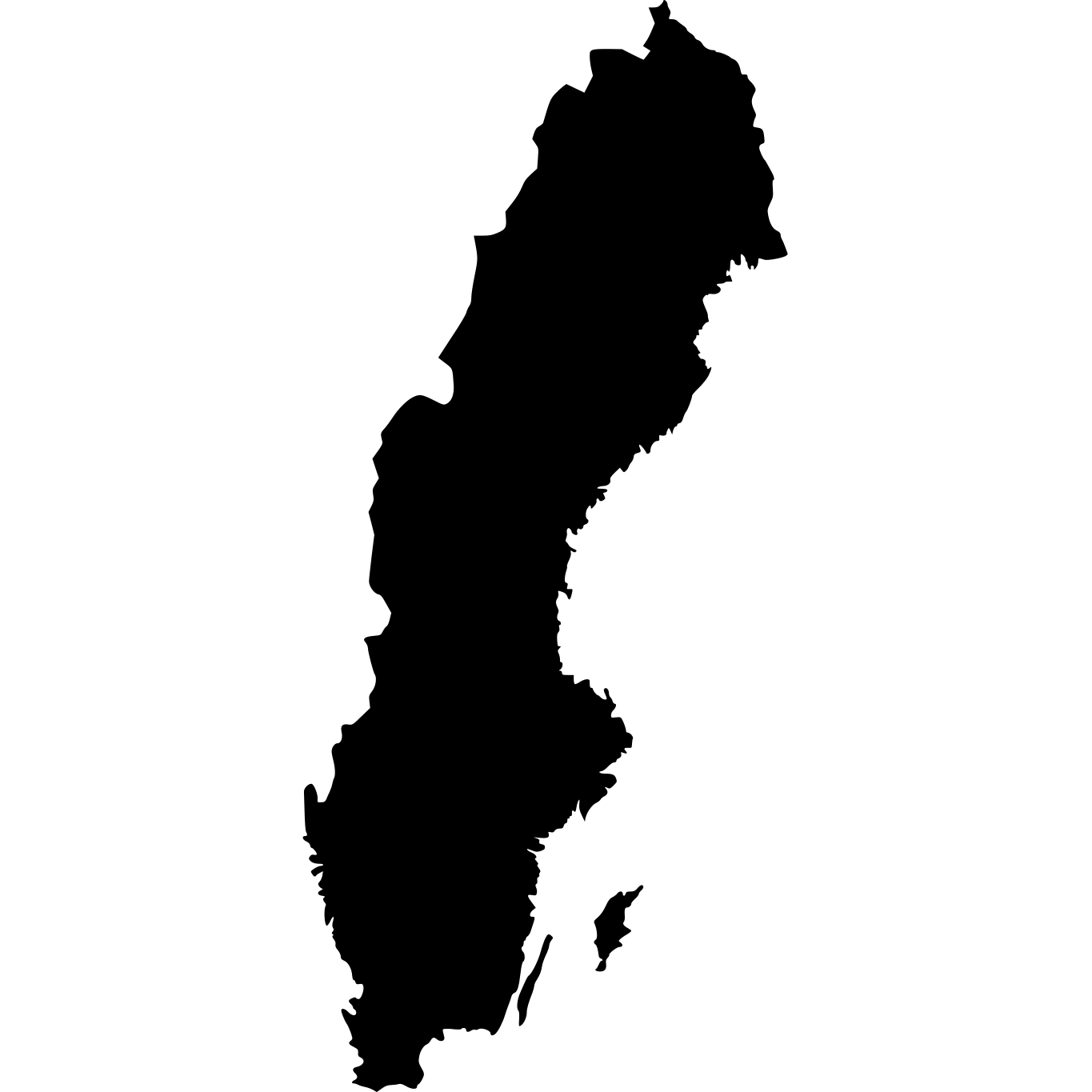
Under Your Skin is a Swedish brand

We're dedicated to providing you with the most up-to-date and science-backed ingredient info out there.
The data we've presented on this page has been verified by a member of the SkinSort Team.
Read more about us· Updated November 30, 2025 • Added by veronicall


