Noviole Nutrasupreme Baume Nutritivo Para Área Dos Olhos
A eye moisturizer with 16 ingredients, including exfoliants and vitamin E.
This calming eye moisturizer is formulated around Avena Sativa Kernel Flour and Centella Asiatica Extract to calm redness and hydrate skin.
We independently verify ingredients, backed by peer-reviewed research. Suggest an update.
What's inside
Ingredients List
Water
Skin ConditioningAvena Sativa Kernel Flour
Abrasive

Sodium Polyacrylate
Absorbent
Propanediol
Solvent
Pentaclethra Macroloba Seed Oil
Emollient


Platonia Insignis Seed Butter
Emollient
Passiflora Edulis Seed Oil
Emollient
Glyceryl Undecylenate
Emollient
Centella Asiatica Extract
Cleansing



Citric Acid
Buffering

Boerhavia Diffusa Root Extract
Skin Protecting
Tocopherol
Antioxidant


Euterpe Oleracea Fruit Extract
Helianthus Annuus Seed Oil
Emollient
Potassium Sorbate
Preservative
Sodium Benzoate
Masking
Water, Avena Sativa Kernel Flour, Sodium Polyacrylate, Propanediol, Pentaclethra Macroloba Seed Oil, Platonia Insignis Seed Butter, Passiflora Edulis Seed Oil, Glyceryl Undecylenate, Centella Asiatica Extract, Citric Acid, Boerhavia Diffusa Root Extract, Tocopherol, Euterpe Oleracea Fruit Extract, Helianthus Annuus Seed Oil, Potassium Sorbate, Sodium Benzoate
Key Ingredients
Benefits
Ingredients Explained
Water. It's the most common cosmetic ingredient of all. You'll usually see it at the top of ingredient lists, meaning that it makes up the largest part of the product.
So why is it so popular? Water most often acts as a solvent - this means that it helps dissolve other ingredients into the formulation.
You'll also recognize water as that liquid we all need to stay alive. If you see this, drink a glass of water. Remember to stay hydrated!
Learn more about WaterOatmeal flour is created by grinding down the kernels of oats. Oatmeal helps sooth, hydrate, and protect the skin.
Oatmeal kernel flour has abrasive, or exfoliating, properties.
Learn all about the skin benefits of colloidal oatmeal here.
Learn more about Avena Sativa Kernel FlourSodium Polyacrylate is the sodium salt of polyacrylic acid. It is used as an absorber, emollient, and stabilizer.
This ingredient is a super-absorbent polymer - meaning it can absorb 100 to 1000 times its mass in water. As an emollient, Sodium Polyacrylate helps soften and soothe skin. Emollients work by creating a barrier to trap moisture in. This helps keep your skin hydrated.
Propanediol is an all-star ingredient. It softens, hydrates, and smooths the skin.
It’s often used to:
Propanediol is not likely to cause sensitivity and considered safe to use. It is derived from corn or petroleum with a clear color and no scent.
Learn more about PropanediolPentaclethra Macroloba Seed Oil is an oil and isn't fungal acne safe.
Platonia Insignis Seed Butter isn't fungal acne safe.
Passiflora Edulis Seed Oil is a lightweight plant oil from the seeds of passion fruit.
This oil supports skin hydration because it is packed with linoleic acid (56-73%), oleic acid (14-20%), palmitic acid, and stearic acids. It also contains vitamin E and other antioxidants, like carotenoids.
In vitro research has shown that passion fruit seed extracts can inhibit the enzymes that break down collagen and elastin in the skin.
While this ingredient is considered well-tolerated, some cases of contact dermatitis have been reported with the Passiflora plant's vines and leaves itself. As with any ingredient, a patch test is a great idea if you are unsure.
This may not be suitable for fungal acne-prone skin due to the fatty acid content.
Learn more about Passiflora Edulis Seed OilGlyceryl Undecylenate is a gentle ester made by joining glycerin and undecylenic acid (a fatty acid pulled from castor oil).
In formulations, it pulls double duty as a skin-conditioning emollient and mild preservative.
The glycerin side attracts and binds water to support skin hydration and the undeclyenic acid side adds a bit of broad-spectrum antimicrobial activity.
Undecylenic acid inhibits the formation of fungal biofilm and the branching filaments that let fungi spread.
Typical use concentrations range from 0.1-5%, but it is generally used on the lower end and paired with other mild preservative boosters like caprylyl glycol.
On the fungal acne front:
This ingredient is described in the patent literature as a Malassezia-active ingredient used to treat an excess of Malassezia on the skin (Malassezia is actually a yeast and not fungal).
Though it leans anti-fungal, the leftover Malassezia yeast may feed on the Undecylenic Acid portion of this ingredient. Just know this ingredient may not be a trigger for everyone.
Learn more about Glyceryl UndecylenateCentella Asiatica Extract (Centella) is one of the most researched botanical extracts in skincare with decades of studies backing its effects on inflammation, collagen, and the skin barrier.
That research keeps pointing back to the same four triterpenoid saponins: Asiaticoside, Madecassoside, Asiatic Acid, and Madecassic Acid.
These compounds allow centella to dial back inflammation, encourage the skin to build and hold onto collagen, support the barrier and hydration, and bring solid antioxidant activity to protect against signs of aging.
Centella also carries a nice supporting cast of Vitamin A, vitamin C, several B vitamins, and amino acids. Put it all together and you get an ingredient that soothes, hydrates, and protects, all at once.
Most of centella's magic comes from the four big compounds (Asiaticoside, Madecassoside, Asiatic Acid, and Madecassic Acid). These are the actives doing the heavy lifting in almost every centella study.
Here is the short version of what they do in the skin:
So it is not just soothing for the sake of soothing. Centella calms the skin AND helps it rebuild.
Just FYI, not all centella on an ingredient list is the same. What you are getting actually depends on the extract:
Fun fact on the ratios: the leaves tend to be richest in Madecassoside and Asiaticoside, and lower in the two acids. The exact amounts shift with where the plant is grown and how it is processed. This means purity really does vary brand to brand.
Centella is one of the most easygoing actives out there.
It layers well with basically everything: niacinamide, hyaluronic acid, peptides, and vitamin C, and also pairs nicely with stronger actives like retinoids and exfoliating acids where it can help take the edge off irritation.
On the safety side, centella and its triterpenes are classified as weak sensitizers, meaning allergic reactions are possible but uncommon.
Patch tests at 1% and 5% came back negative in test panels, and creams at typical use levels did not cause allergic reactions across large groups of people.
But as with any new active, a patch test is still a smart move for very reactive skin.
Centella is widely used because it is effective at low percentages. For context, human safety testing found no meaningful irritation from creams containing centella extract at everyday use levels (the tested amounts were well under 1%).
The irritancy threshold in animal testing was also above 30% (so real-world formulas sit far below anything concerning).
In collagen lab studies, higher concentrations drove more collagen synthesis, so serums built around centella tend to feature it more prominently.
Bottom line: you will find centella working nicely anywhere from a fraction of a percent up to hero-ingredient levels depending on whether it is a supporting soother or the main event.
Fun fact: Centella has been used as a medicine and in food for many centuries. As a medicine, it is used to treat burns, scratches, and wounds.
Learn more about Centella Asiatica ExtractCitric Acid is an alpha hydroxy acid (AHA) naturally found in citrus fruits like oranges, lemons, and limes.
Like other AHAs, citric acid can exfoliate skin by breaking down the bonds that hold dead skin cells together. This helps reveal smoother and brighter skin underneath.
However, this exfoliating effect only happens at high concentrations (20%) which can be hard to find in cosmetic products.
Due to this, citric acid is usually included in small amounts as a pH adjuster. This helps keep products slightly more acidic and compatible with skin's natural pH.
In skincare formulas, citric acid can:
While it can provide some skin benefits, research shows lactic acid and glycolic acid are generally more effective and less irritating exfoliants.
Most citric acid used in skincare today is made by fermenting sugars (usually from molasses). This synthetic version is identical to the natural citrus form but easier to stabilize and use in formulations.
Rosacea skin has a lower threshold for acids generally, with 62.5% of rosacea subjects in one study reacting to lactic acid in a sting test. This is why we mark citric acid as a potential rosacea trigger.
However, this ingredient shows up as a pH adjuster or chelator at roughly 0.1-1% in many products. These low levels are unlikely to be an issue for rosacea skin and becomes a potential trigger at exfoliating concentrations (20%). Because everybody's skin is unique, we recommend a patch test if you are unsure.
Learn more about Citric AcidBoerhavia Diffusa Root Extract comes from the Boerhavia Diffusa tree, or more commonly known as punarnava, red spiderling, spreading hogweed, or tarvine.
This tree is native to India and commonly used in ayurvedic medicine.
Studies show this extract helps soothe and hydrate skin. This root contains many amino acids that help moisturize skin, such as arginine and glycine.
Boerhavia Diffusa Root Extract also contains antioxidants, antioxidants help fight free-radicals. Free-radicals are molecules that may damage your skin cells.
Learn more about Boerhavia Diffusa Root ExtractTocopherol is a fat-soluble antioxidant known as Vitamin E.
You'll find this ingredient in the vast majority of skincare (for good reason). It works to neutralize free radicals, or unstable molecules generated by UV exposure, pollution, and other environmental stressors, before they can cause oxidative damage to your skin cells.
Topically applied tocopherol has been shown to protect against UV damage by ramping up the skin's own natural defense enzymes.
It also acts as a skin conditioning agent; some studies show that regular topical use can improve the skin's water-binding capacity over 2-4 weeks.
This ingredient is especially loved for being a team player. When combined with Vitamin C, the photoprotective effect of both ingredients roughly doubles and the combo also helps reduce UV-induced DNA damage.
This ingredient has some brightening potential but it's more of a prevention ingredient than spot-fader. Cell studies show it can slow down melanin production but it's worth noting that it's not the most powerful brightener out there.
In formulations, it also serves as a stabilizer that helps protect other oxidation-prone ingredients from degrading.
Concentrations usually range from 0.1-1% in most leave-on products.
Learn more about TocopherolThis extract comes from the Cabbage Palm, AKA the Açaí berry! It has skin soothing and antioxidant properties.
Acai berries are rich in antioxidants, including ferulic acid (The famous vitamin C stabilizer). Antioxidants protect your skin against damaging free-radical molecules.
You can also find carbohydrates, lipids, proteins, minerals, vitamin A, and Vitamin C in these berries.
Learn more about Euterpe Oleracea Fruit ExtractHelianthus Annuus Seed Oil is a plant oil derived from the seeds of a sunflower.
It is rich in fatty acids, primarily linoleic acid and oleic acid. This gives it emollient and skin conditioning properties.
The reason this ingredient is so effective is because it forms a thin film on the skin that reduces transepidermal water loss (TEWL) while supplying linoleic acid to the stratum corneum to improve barrier strength.
The high linoleic acid content is particularly noteworthy for acne-prone skin.
Research suggests that acne-prone skin tends to be deficient in linoleic acid in sebum. Topical application may help replenish this to support a healthier follicular environment and less comedone-promoting sebum.
One randomized study found sunflower seed oil preserved skin barrier integrity in adult volunteers with and without atopic dermatitis (outperforming olive oil).
This ingredient is well-studied, gentle, and an effective emollient suitable for most skin types.
On fungal acne: This ingredient may not be Fungal acne (Malassezia folliculitis) safe. This is because it contains fatty acids with carbon chain lengths in the C11-C24 range.
Learn more about Helianthus Annuus Seed OilPotassium Sorbate is a preservative used to prevent yeast and mold in products. It is commonly found in both cosmetic and food products.
This ingredient comes from potassium salt derived from sorbic acid. Sorbic acid is a natural antibiotic and effective against fungus.
Both potassium sorbate and sorbic acid can be found in baked goods, cheeses, dried meats, dried fruit, ice cream, pickles, wine, yogurt, and more.
You'll often find this ingredient used with other preservatives.
Learn more about Potassium SorbateSodium Benzoate is a preservative. It's used in both cosmetic and food products to inhibit the growth of mold and bacteria. It is typically produced synthetically.
Both the US FDA and EU Health Committee have approved the use of sodium benzoate. In the US, levels of 0.1% (of the total product) are allowed.
Sodium benzoate works as a preservative by inhibiting the growth of bacteria inside of cells. It prevents the cell from fermenting a type of sugar using an enzyme called phosphofructokinase.
It is the salt of benzoic acid. Foods containing sodium benzoate include soda, salad dressings, condiments, fruit juices, wines, and snack foods.
Studies for using ascorbic acid and sodium benzoate in cosmetics are lacking, especially in skincare routines with multiple steps.
We always recommend speaking with a professional, such as a dermatologist, if you have any concerns.
Learn more about Sodium BenzoateReviews
No written reviews yet. Be the first to review this product.
Recent searches
Search reviews by skin type, ingredient, or keyword.
Where it's from
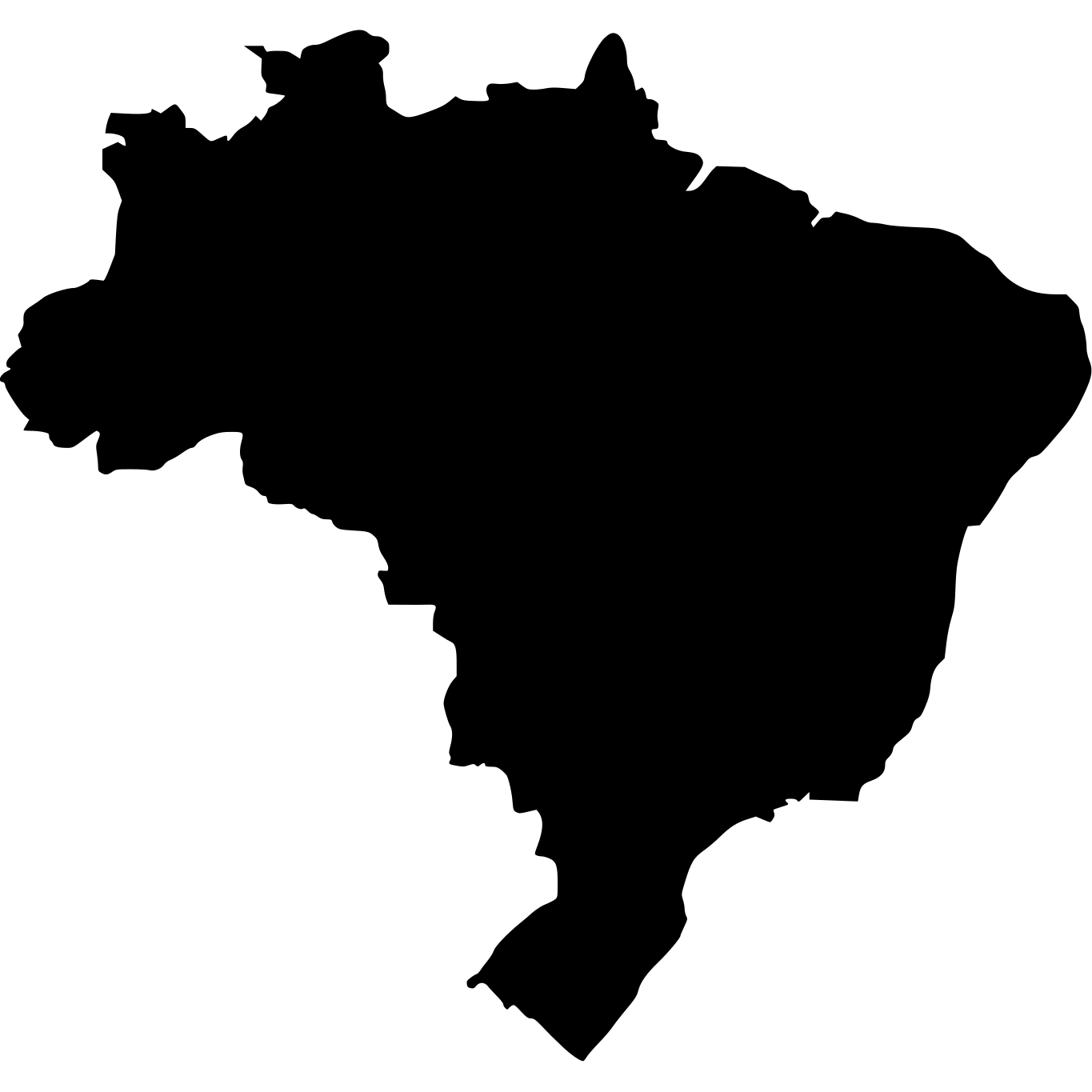
Noviole is a Brazilian brand

We're dedicated to providing you with the most up-to-date and science-backed ingredient info out there.
The data we've presented on this page has been verified by a member of the SkinSort Team.
Read more about us· Updated August 27, 2026 • Added by 00muguet


