Goodness Every Day Lip Balm
A lip moisturizer with 18 ingredients, including vitamin E and hyaluronic acid.
This barrier-repair lip moisturizer is formulated around Ricinus Communis Seed Oil and Limnanthes Alba Seed Oil to strengthen the lip barrier and hydrate lips.
Worth noting
Contains Benzaldehyde, an EU-listed fragrance allergen.
We independently verify ingredients, backed by peer-reviewed research. Suggest an update.
What's inside
Ingredients List
Ricinus Communis Seed Oil
Masking




Hydrogenated Rapeseed Oil
Emollient
Limnanthes Alba Seed Oil
Skin Conditioning
Capryloyl Glycerin/Sebacic Acid Copolymer
Skin ConditioningCaramel
Cosmetic ColorantVanilla Planifolia Fruit Extract
Skin Conditioning
Vitis Vinifera Seed Oil
Emollient
Hydrogenated Castor Oil
Emollient
Argania Spinosa Kernel Oil
Emollient


Copernicia Cerifera Wax
Sodium Hyaluronate
Humectant

Tocopherol
Antioxidant


Polyglyceryl-4 Oleate
Emulsifying
1,2-Hexanediol
Skin Conditioning
Caprylyl Glycol
Emollient
Helianthus Annuus Seed Oil
Emollient
Benzaldehyde
Masking


Dihydrocarvone
Perfuming
Ricinus Communis Seed Oil, Hydrogenated Rapeseed Oil, Limnanthes Alba Seed Oil, Capryloyl Glycerin/Sebacic Acid Copolymer, Caramel, Vanilla Planifolia Fruit Extract, Vitis Vinifera Seed Oil, Hydrogenated Castor Oil, Argania Spinosa Kernel Oil, Copernicia Cerifera Wax, Sodium Hyaluronate, Tocopherol, Polyglyceryl-4 Oleate, 1,2-Hexanediol, Caprylyl Glycol, Helianthus Annuus Seed Oil, Benzaldehyde, Dihydrocarvone
Key Ingredients
Benefits
Concerns
Ingredients Explained
This ingredient is also known as castor oil. It is a skin conditioning ingredient.
The star component of castor oil is ricinoleic acid, an unusual fatty acid that makes up ~80-92% of its composition.
In skincare, it is an emollient that dries down to a solid film with water-binding properties. This helps keep skin hydrated and helps reduce transepidermal water loss (TEWL).
A 2026 dermatology review pulls together its broader uses:
Human clinical testing found this ingredient to be non-irritating and non-sensitizing.
Because castor oil contains fatty acids in the C11-24 range, this ingredient may not be fungal acne safe.
At this time, the literature does not support castor oil in regrowing hair. A 2022 systematic review found no strong evidence that it supports hair growth and only weak evidence that it improves hair shine.
Castor oil itself carries "perfuming" and "masking" function tags according to the official CosIng database. This is because of its mild odor and odor-dampening properties.
Learn more about Ricinus Communis Seed OilHydrogenated Rapeseed Oil comes from the rapeseed plant. This plant is closely related to mustard, cabbage, broccoli, cauliflower and turnip.
To be hydrogenated means to be combined with hydrogen.
Like other vegetable oils, Hydrogenated Rapeseed Oil helps keep your skin hydrated.
Rapeseed Oil and Canola Oil are derived from the same plant; rapeseed oil is industrial while canola oil is culinary.
Canola oil has an erucic acid level of 2% or less, while rapeseed oil is higher. Erucic acid is a monounsaturated omega-9 fatty acid.
Learn more about Hydrogenated Rapeseed OilLimnanthes Alba Seed Oil is from the seeds of the meadowfoam plant. It is a skin conditioning agent and emollient that sits on top of skin to soften and hydrate it.
Over 98% of the oil is made up of long-chain fatty acids, mostly aachidic acid (61%), docosenoic acid (~16%), and docosadienoic acid (~18%).
This combination is not really found in any other plant oil and is the reason this is one of the most stable botanical oils available.
Some studies show it to be more stable than jojoba oil, helps a product resist going rancid, and can help extend the shelf life of a formula.
It also naturally contains vitamin E and phytosterols that give it a mild antioxidant benefit.
This ingredient is typically used from around 1% to fairly high levels since it's gentle; it's well-tolerated and low on the irritation scale.
Learn more about Limnanthes Alba Seed OilWe don't have a description for Capryloyl Glycerin/Sebacic Acid Copolymer yet.
We don't have a description for Caramel yet.
Vanilla Planifolia Fruit Extract comes from the vanilla orchid native to central America. It is a skin-soothing ingredient.
This ingredient is skin-soothing and contains polyphenols that give it antioxidant properties.
This ingredient is not known to sensitize or irritate skin (unlike Vanilla Tahitensis). Vanilla tahitensis has shown to irritate skin in low amounts.
Learn more about Vanilla Planifolia Fruit ExtractVitis Vinifera Seed Oil comes from the grape vine. Grape seeds are a byproduct of creating grape juice or wine.
The components of grape seeds have many skin benefits. Research has found it to be antimicrobial and anti-inflammatory. It also contains many potent antioxidants such as Vitamin E , Vitamin C, proanthocyanidins, polyphenols, flavonoids, and anthocyanins. Proanthocyanidin has been shown to help even out skin tone.
Antioxidants help fight free-radical molecules. Free-radical molecules are capable of damaging our cells and other genetic material. Antioxidants help stabilize free-radicals by donating extra electrons. Grape seed extract may help reduce the signs of aging.
The antimicrobial properties of grape seed may help treat acne. However, more research is needed to support this claim.
Grape seed has also been found to help absorb UV rays. Grape seed extract should not replace your sunscreen.
The fatty acids of grape seed oil give it emollient properties. Emollients help soothe and soften your skin by creating a film. This film traps moisture within, keeping your skin hydrated.
Learn more about Vitis Vinifera Seed OilHydrogenated Castor Oil (aka "castor wax") is what you get when castor oil is turned into a wax.
Its dominant fatty acid is ricinoleic acid, giving it both emollient and mild humectant properties.
According to EU CosIng, this ingredient helps soften skin, keep oil and water stay mixed, and thickens products.
Hydrogenated castor oil at 30% did not trigger a positive patch-test reaction and is well-tolerated.
Since this ingredient is based on an 18-carbon fatty acid, it falls into the chain-length range that Malassezia can feed on and may not be fungal acne safe.
Learn more about Hydrogenated Castor OilYou may know this ingredient as argan oil. It has emollient and skin conditioning properties that help soften skin and reinforce the lipid barrier.
The fatty acid profile of argan oil is roughly 45-55% oleic acid, 28-36% linoleic acid, 10-15% palmitic acid, and 5-7% stearic acid. It also contains vitamin E, sterols, squalene, and polyphenols like ferulic acid.
Two clinical studies in postmenopausal women found that applying argan oil for 60 days significantly improved skin elasticity and moisturization (reduced transepidermal water loss and increased epidermal water content).
Since it is high in oleic and linoleic acid, this ingredient may not be fungal acne safe. Both of these fall in the C11-C24 range that Malassezia yeast can metabolize.
Learn more about Argania Spinosa Kernel OilCopernicia Cerifera Wax comes from a palm tree native to Brazil; another name for this ingredient is Carnauba Wax.
This ingredient is used to thicken texture and also leaves behind a film when applied.
Fun fact: This wax has the highest melting point of all natural waxes and low solubility.
Learn more about Copernicia Cerifera WaxSodium Hyaluronate is the salt form of hyaluronic acid. It is a long sugar chain that is naturally found in your skin, joints, and connective tissue that maintains hydration and elasticity.
In skincare, it works as a humectant. It pulls water from the environment and deeper layers of skin and binds it to the surface.
Interestingly, the size of the molecule affects its behavior:
Some clinical evidence links low molecular weight versions to improved wrinkle depth, elasticity, anti-inflammatory effects, and barrier repair.
Many serums use a blend of both weights so you can get surface hydration plus longer-lasting and deeper effects.
You'll typically see concentrations between 0.1-2% for this ingredient.
Learn more about Sodium HyaluronateTocopherol is a fat-soluble antioxidant known as Vitamin E.
You'll find this ingredient in the vast majority of skincare (for good reason). It works to neutralize free radicals, or unstable molecules generated by UV exposure, pollution, and other environmental stressors, before they can cause oxidative damage to your skin cells.
Topically applied tocopherol has been shown to protect against UV damage by ramping up the skin's own natural defense enzymes.
It also acts as a skin conditioning agent; some studies show that regular topical use can improve the skin's water-binding capacity over 2-4 weeks.
This ingredient is especially loved for being a team player. When combined with Vitamin C, the photoprotective effect of both ingredients roughly doubles and the combo also helps reduce UV-induced DNA damage.
This ingredient has some brightening potential but it's more of a prevention ingredient than spot-fader. Cell studies show it can slow down melanin production but it's worth noting that it's not the most powerful brightener out there.
In formulations, it also serves as a stabilizer that helps protect other oxidation-prone ingredients from degrading.
Concentrations usually range from 0.1-1% in most leave-on products.
Learn more about TocopherolPolyglyceryl-4 Oleate isn't fungal acne safe.
1,2-Hexanediol is a synthetic liquid and another multi-functional powerhouse.
It is a:
- Humectant, drawing moisture into the skin
- Emollient, helping to soften skin
- Solvent, dispersing and stabilizing formulas
- Preservative booster, enhancing the antimicrobial activity of other preservatives
Caprylyl Glycol is a humectant, skin conditioner, emollient, and preservative booster derived from either caprylic acid or synthetically created.
Typical use levels vary from 0.3-1% as a preservative booster and go up to 2% to condition skin.
Because it is not a free-fatty acid, this ingredient is fungal acne safe (there's nothing for Malassezia to feed on).
Learn more about Caprylyl GlycolHelianthus Annuus Seed Oil is a plant oil derived from the seeds of a sunflower.
It is rich in fatty acids, primarily linoleic acid and oleic acid. This gives it emollient and skin conditioning properties.
The reason this ingredient is so effective is because it forms a thin film on the skin that reduces transepidermal water loss (TEWL) while supplying linoleic acid to the stratum corneum to improve barrier strength.
The high linoleic acid content is particularly noteworthy for acne-prone skin.
Research suggests that acne-prone skin tends to be deficient in linoleic acid in sebum. Topical application may help replenish this to support a healthier follicular environment and less comedone-promoting sebum.
One randomized study found sunflower seed oil preserved skin barrier integrity in adult volunteers with and without atopic dermatitis (outperforming olive oil).
This ingredient is well-studied, gentle, and an effective emollient suitable for most skin types.
On fungal acne: This ingredient may not be Fungal acne (Malassezia folliculitis) safe. This is because it contains fatty acids with carbon chain lengths in the C11-C24 range.
Learn more about Helianthus Annuus Seed OilBenzaldehyde is a fragrance. It can cause irritation.
Dihydrocarvone is a fragrance.
Reviews
No written reviews yet. Be the first to review this product.
Recent searches
Search reviews by skin type, ingredient, or keyword.
Where it's from
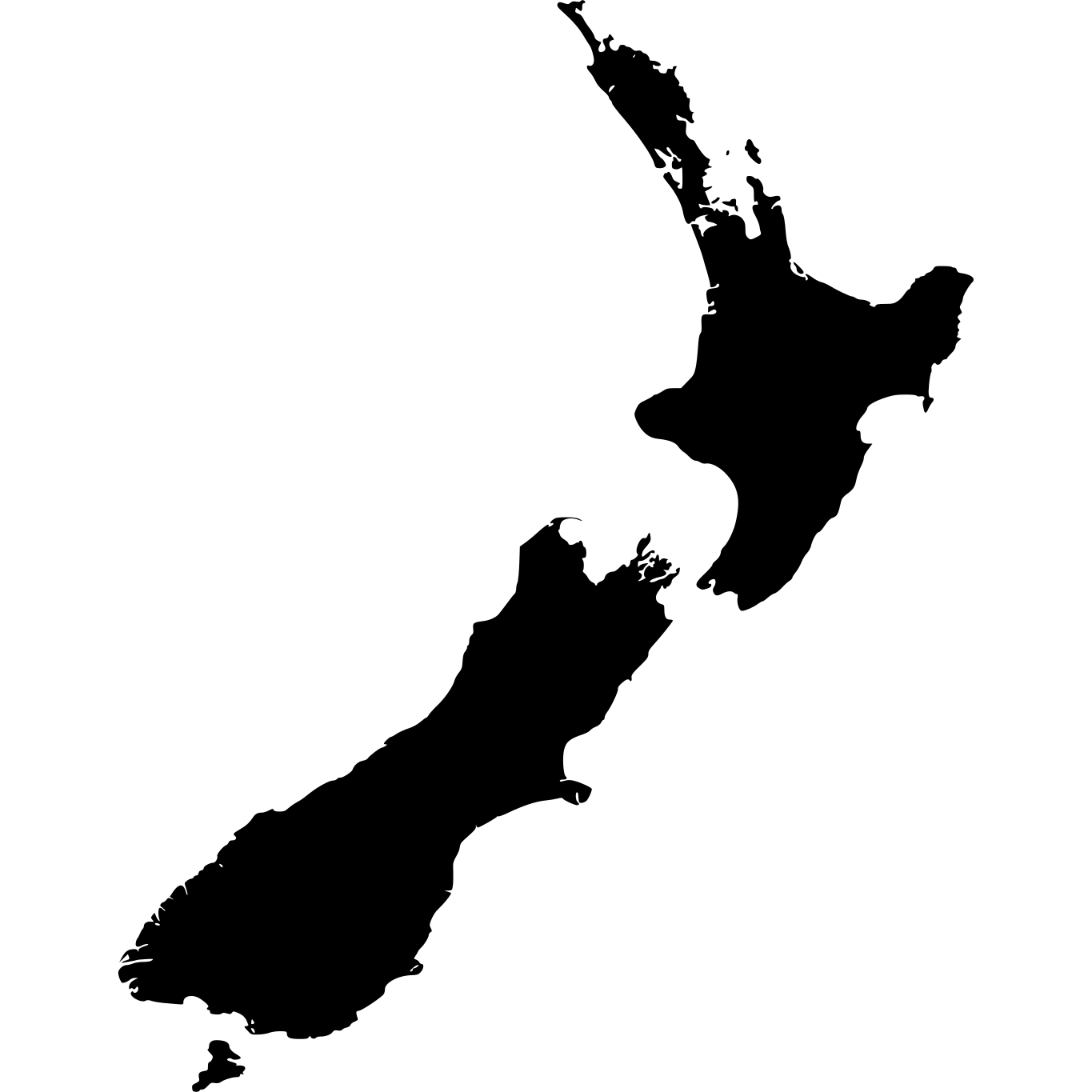
Goodness is a New Zealander brand

We're dedicated to providing you with the most up-to-date and science-backed ingredient info out there.
The data we've presented on this page has been verified by a member of the SkinSort Team.
Read more about us· Updated April 29, 2025 • Added by ChelseaAnne26


