G.G.G Cosmetics Calming Mushroom Toner
A toner with 30 ingredients, including hyaluronic acid.
This calming toner is formulated around Panthenol and Dipotassium Glycyrrhizate to calm redness and hydrate skin.
Worth noting
Contains Lavandula Angustifolia Extract, an EU-listed fragrance allergen.
We independently verify ingredients, backed by peer-reviewed research. Suggest an update.
What's inside
Ingredients List
Water
Skin ConditioningInonotus Obliquus Extract
Skin ConditioningGlycerin
Humectant


Butylene Glycol
Humectant
Panthenol
Skin Conditioning

Betaine
Humectant
Caprylyl Glycol
Emollient
Dipropylene Glycol
HumectantHydroxyacetophenone
Antioxidant
1,2-Hexanediol
Skin Conditioning
Erythritol
Humectant
Propanediol
Solvent
Sodium Hyaluronate
Humectant

Illicium Verum Fruit Extract
Perfuming
Ethylhexylglycerin
Skin ConditioningDipotassium Glycyrrhizate
Humectant
Lavandula Angustifolia Extract
Skin Conditioning

Rosmarinus Officinalis Extract
AntimicrobialThymus Vulgaris Extract
Perfuming
Origanum Vulgare Flower/Leaf/Stem Extract
Skin ConditioningGlycyrrhiza Glabra Root Extract
Bleaching

Sophora Flavescens Root Extract
Antioxidant
Angelica Gigas Root Extract
Skin ConditioningMorus Alba Bark Extract
Skin ConditioningPhellinus Linteus Extract
Skin ConditioningCimicifuga Racemosa Root Extract
Antimicrobial
Paeonia Lactiflora Root Extract
Skin ConditioningPolygonum Multiflorum Root Extract
Skin ConditioningScutellaria Baicalensis Root Extract
Astringent
Sesamum Indicum Seed Extract
Skin Conditioning
Water, Inonotus Obliquus Extract, Glycerin, Butylene Glycol, Panthenol, Betaine, Caprylyl Glycol, Dipropylene Glycol, Hydroxyacetophenone, 1,2-Hexanediol, Erythritol, Propanediol, Sodium Hyaluronate, Illicium Verum Fruit Extract, Ethylhexylglycerin, Dipotassium Glycyrrhizate, Lavandula Angustifolia Extract, Rosmarinus Officinalis Extract, Thymus Vulgaris Extract, Origanum Vulgare Flower/Leaf/Stem Extract, Glycyrrhiza Glabra Root Extract, Sophora Flavescens Root Extract, Angelica Gigas Root Extract, Morus Alba Bark Extract, Phellinus Linteus Extract, Cimicifuga Racemosa Root Extract, Paeonia Lactiflora Root Extract, Polygonum Multiflorum Root Extract, Scutellaria Baicalensis Root Extract, Sesamum Indicum Seed Extract
Key Ingredients
Benefits
Concerns
Ingredients Explained
Water. It's the most common cosmetic ingredient of all. You'll usually see it at the top of ingredient lists, meaning that it makes up the largest part of the product.
So why is it so popular? Water most often acts as a solvent - this means that it helps dissolve other ingredients into the formulation.
You'll also recognize water as that liquid we all need to stay alive. If you see this, drink a glass of water. Remember to stay hydrated!
Learn more about WaterThis ingredient is also known as the chaga mushroom. It is a fungus that grows on birch trees.
Glycerin (or glycerol) is a compound naturally found in your skin. It's a powerhouse humectant that pulls water into the stratum corneum.
Topically, glycerin does several things at once:
Your skin makes glycerin on its own (mostly from sebaceous oil breakdown) and shuttles it to your outermost layer of skin, or your epidermis, via aquaporin-3.
Aquaporin-3 is a transporter that is essential for normal skin hydration, elasticity, and repair. Interestingly, mice lacking in AQP3 have dry and less elastic skin that can be fully corrected with glycerin.
This ingredient is non-irritating, plays well with almost every ingredient, and works across all skin types. Typical use is anywhere between 3-10% but can go up to 79% in some leave-on products.
Just know very high concentrations (>40%) can feel tacky in low humidity.
Glycerin is the name for this ingredient in American English. British English uses Glycerol/Glycerine.
Learn more about GlycerinButylene Glycol (or BG) is used within cosmetic products for a few different reasons:
Overall, Butylene Glycol is a safe and well-rounded ingredient that works well with other ingredients.
Though this ingredient works well with most skin types, some people with sensitive skin may experience a reaction such as allergic rashes, closed comedones, or itchiness.
Learn more about Butylene GlycolPanthenol is a common ingredient that helps hydrate and soothe the skin. It is found naturally in our skin and hair.
There are two forms of panthenol: D and L.
D-panthenol is also known as dexpanthenol. Most cosmetics use dexpanthenol or a mixture of D and L-panthenol.
Panthenol is famous due to its ability to go deeper into the skin's layers. Using this ingredient has numerous pros (and no cons):
Like hyaluronic acid, panthenol is a humectant. Humectants are able to bind and hold large amounts of water to keep skin hydrated.
This ingredient works well for wound healing. It works by increasing tissue in the wound and helps close open wounds.
Once oxidized, panthenol converts to pantothenic acid. Panthothenic acid is found in all living cells.
This ingredient is also referred to as pro-vitamin B5.
Learn more about PanthenolBetaine is a humectant. Like hyaluronic acid, it helps attract and retain moisture in the skin. It’s known for being gentle and for helping the skin maintain balanced hydration.
Betaine is mainly used to improve hydration and support calmer skin. It helps skin cells regulate water balance because it functions as an osmolyte.
Some studies suggest betaine may support making skin tone more even.
Fun fact: Betaine naturally exists in the skin and the body. In cosmetic products, it can be either plant-derived (most commonly from sugar beets) or synthetically produced for consistency and stability.
Betaine is also known as trimethylglycine.
Learn more about BetaineCaprylyl Glycol is a humectant, skin conditioner, emollient, and preservative booster derived from either caprylic acid or synthetically created.
Typical use levels vary from 0.3-1% as a preservative booster and go up to 2% to condition skin.
Because it is not a free-fatty acid, this ingredient is fungal acne safe (there's nothing for Malassezia to feed on).
Learn more about Caprylyl GlycolDipropylene Glycol is a synthetically created humectant, stabilizer, and solvent.
This ingredient helps:
Dipropylene glycol is technically an alcohol, but it belongs to the glycol family (often considered part of the ‘good’ alcohols). This means it is hydrating and gentle on skin unlike drying solvent alcohols like denatured alcohol.
As a masking agent, Dipropylene Glycol can be used to cover the smell of other ingredients. However, it does not have a scent.
Studies show Dipropylene Glycol is considered safe to use in skincare.
Learn more about Dipropylene GlycolHydroxyacetophenone is a small phenolic molecule that earns its place in a formulas as an antioxidant and preservative booster.
As a phenol, it is able to neutralize free radicals to protect both the product and the skin from oxidative stress.
Though it can't kill microbes on its own, it works as a good supporting agent when combined with other preservatives like Phenoxyethanol or 1,2-Hexanediol.
This ingredient naturally occurs as piceol in Norwegian spruce needles (~0.4-1.1% dry weight and in cloudberries). Though the cosmetic-grade material is synthesized for purity and consistency.
You'll usually see it used at low levels and suppliers recommend up to 1% added to a water phase.
Safety testing was done at concentrations like 0.05% in SPF products and 0.5% in a Human Repeated Insult Patch Test. The safety evidence is assuring; this ingredient is safe for cosmetics in current use and also holds safety status as a food flavoring as well.
An honest caveat: the "soothing" and "anti-inflammatory" claims come mostly from supplier marketing rather than published clinical trials. The Cosmetic Ingredient Review's own literature search found no useful efficacy studies on this ingredient.
So the antioxidant and preservative-boosting roles are the well supported ones while the calming benefit is plausible but thinly evidenced.
Overall, this is a well-tolerated, low-irritation multitasker that quietly helps a formula stay fresh and stable.
Learn more about Hydroxyacetophenone1,2-Hexanediol is a synthetic liquid and another multi-functional powerhouse.
It is a:
- Humectant, drawing moisture into the skin
- Emollient, helping to soften skin
- Solvent, dispersing and stabilizing formulas
- Preservative booster, enhancing the antimicrobial activity of other preservatives
You might know this ingredient as a sugar substitute in foods. It is a sugar alcohol with humectant properties.
Humectants attract water to your skin (like glycerin or hyaluronic acid).
Fun fact: Erythritol can be naturally found in some fermented foods.
Learn more about ErythritolPropanediol is an all-star ingredient. It softens, hydrates, and smooths the skin.
It’s often used to:
Propanediol is not likely to cause sensitivity and considered safe to use. It is derived from corn or petroleum with a clear color and no scent.
Learn more about PropanediolSodium Hyaluronate is the salt form of hyaluronic acid. It is a long sugar chain that is naturally found in your skin, joints, and connective tissue that maintains hydration and elasticity.
In skincare, it works as a humectant. It pulls water from the environment and deeper layers of skin and binds it to the surface.
Interestingly, the size of the molecule affects its behavior:
Some clinical evidence links low molecular weight versions to improved wrinkle depth, elasticity, anti-inflammatory effects, and barrier repair.
Many serums use a blend of both weights so you can get surface hydration plus longer-lasting and deeper effects.
You'll typically see concentrations between 0.1-2% for this ingredient.
Learn more about Sodium HyaluronateStar anise extract is used to add a scent to a product. It has a similar smell to black licorice.
Ethylhexylglycerin is created from glycerin. It is a multitasker ingredient that:
The CIR Expert Panel found minimal skin absorption or sensitization of any kind in a safety assessment. Though this ingredient is considered well-tolerated, a small number of cases of allergic dermatitis have been published since 2002. Just be sure to patch test if you are unsure.
Industry-reported use ranges from 8% in rinse-off products and 2% in leave-on formulations.
Learn more about EthylhexylglycerinDipotassium Glycyrrhizate comes from licorice root.
Extracts of licorice have demonstrated to have antibacterial, anti‐inflammatory, antiviral, antioxidant properties.
One component, glabridin, has extra potent antioxidant and soothing properties. It has also been found to block pigmentation from UVB rays in guinea pigs.
Licorice Root also contains a flavonoid. Flavonoids are a natural substance from in plants. Flavonoids also have antioxidant properties.
Another component, glycyrrhizin, has been found to have anti-inflammatory and antimicrobial benefits. This may make licorice root extract effective at treating acne. However, more research is needed to support this.
Liquiritin is one of the flavone compounds found in licorice. It has been found to help lighten skin by preventing tyrosinase from reacting with tyrosine. When the two react, protein is converted to melanin. Melanin is the substance in your body that gives your features pigmentation.
Licorice root is native to Southern Europe and Asia. It has been used in traditional Chinese medicine to help with respiratory issues.
Learn more about Dipotassium GlycyrrhizateLavandula Angustifolia Extract comes from the flowers and leaves of the lavender plant. It's mostly used in skincare for its scent plus a bit of skin conditioning properties.
Lab research credits it with soothing, antioxidant, and wound-supporting effects. This is largely thanks to a compound called rosmarinic acid.
Rosmarinic acid has been shown to calm inflammation signaling in skin cells (the same pathways that flare up in conditions like eczema and psoriasis). It also has real antimicrobial and antifungal activity in test-tube studies.
This ingredient is typically used in low concentrations (generally well under 1%) where it acts as a light fragrance + mild skin soother extract.
The main thing to know is that lavender contains two naturally fragrant molecules: Linalool and Linalyl Acetate. Some people's skin does perfectly fine with fragrance while others don't.
Just be sure to patch test if you have reactive skin or known plant allergies.
Linalool and Linalyl Acetate are gentle when fresh but oxidize into compounds that can cause allergic contact dermatitis when exposed to air. Patch-test studies of patients already being investigated for skin allergies found about 5-7% of patients had reactions to oxidized linalool, and 2.8% of patients reacted to oxidized lavender oil.
Learn more about Lavandula Angustifolia ExtractRosemary extract has antioxidant, anti-inflammatory, anti-bacterial, and astringent properties.
This ingredient has a natural fragrance due its small component of rosemary oil. The antioxidant properties from its rosmarinic acid, flavone, and phenolic acids.
This ingredient comes form the common thyme plant. It has skin conditioning and perfuming ingredients.
In-vitro studies show strong antioxidant activity due to the high phenolic content of thyme.
Studies also demonstrate it has antimicrobial activity against acne-related bacteria. A 2017 study found this extract exhibited anti-inflammatory effects.
However, this ingredient does have sensitization potential due to its terpene content. Terpenes are among the most common causes of contact dermatitis.
This is kind of a double-edged sword situation where the same compounds that give it antimicrobial power can also irritate reactive skin.
Learn more about Thymus Vulgaris ExtractWe don't have a description for Origanum Vulgare Flower/Leaf/Stem Extract yet.
Glycyrrhiza Glabra Root Extract is an extract of the roots of Licorice. It has been found to have several benefits such as skin hydrating, conditioning, and soothing.
One component, glabridin, has extra potent antioxidant and soothing properties. It has also been found to block pigmentation from UVB rays in guinea pigs.
Licorice Root also contains a flavonoid. Flavonoids are a natural substance from in plants. Flavonoids also have antioxidant properties.
Another component, glycyrrhizin, has been found to have anti-inflammatory and antimicrobial benefits. This may make licorice root extract effective at treating acne. However, more research is needed to support this.
Liquiritin is one of the flavone compounds found in licorice. It has been found to help lighten skin by preventing tyrosinase from reacting with tyrosine. When the two react, protein is converted to melanin. Melanin is the substance in your body that gives your features pigmentation.
Learn more about Glycyrrhiza Glabra Root ExtractSophora Flavescens Root Extract is an antioxidant. It can help to reduce redness.
We don't have a description for Angelica Gigas Root Extract yet.
We don't have a description for Morus Alba Bark Extract yet.
We don't have a description for Phellinus Linteus Extract yet.
Cimicifuga Racemosa Root Extract is from a flowering plant native to Eastern US and Canada.
Cimicifuga Racemosa Root Extract has antioxidant properties. Antioxidants help fight free-radicals. Free-radicals are molecules that may damage your skin cells, such as pollution.
Cimicifuga Racemosa Root has been used in traditional indigenous medicine.
Other colloquial names for this plant include black bugbane, black snakeroot, rattle-top, or fairy candle
Learn more about Cimicifuga Racemosa Root ExtractPaeonia Lactiflora Root Extract comes from the root of the peony plant and has a long history of being used in traditional herbal medicine. In cosmetics, it has skin conditioning properties.
This root is rich in paeoniflorin, polyphenols, and flavonoids. These compounds are known to help calm inflammatory signaling, reduce oxidative stress, and regular skin responses to irritation.
In lab and cell studies, this ingredient has been shoown to reduce pro-inflammatory mediators and protect skin cells from stress.
Some research even suggests mild involvement in pigment regulation pathways which is why you might see this ingredient in brightening products.
Learn more about Paeonia Lactiflora Root ExtractThis plant derived ingredient has skin conditioning and antioxidant properties.
You may see his ingredient in hair and scalp products because some research suggests it may support hair growth. However, strong human clinical evidence is limited.
Scutellaria Baicalensis Root Extract comes from the Baikal skullcap or Chinese skullcap plant. This plant is native to Northeast Asia and can be found in China, Mongolia, Korea, and Siberia.
In cosmetics, Scutellaria Baicalensis Root Extract provides antioxidant and anti-inflammatory benefits. This is due to the flavonoid composition of Scutellaria Baicalensis Root Extract.
In Chinese traditional folk medicine, Scutellaria Baicalensis Root Extract is used to help treat lung issues and hypertension.
Learn more about Scutellaria Baicalensis Root ExtractSesamum Indicum Seed Extract can be good for oily skin.
Reviews
No written reviews yet. Be the first to review this product.
Recent searches
Search reviews by skin type, ingredient, or keyword.
Where it's from
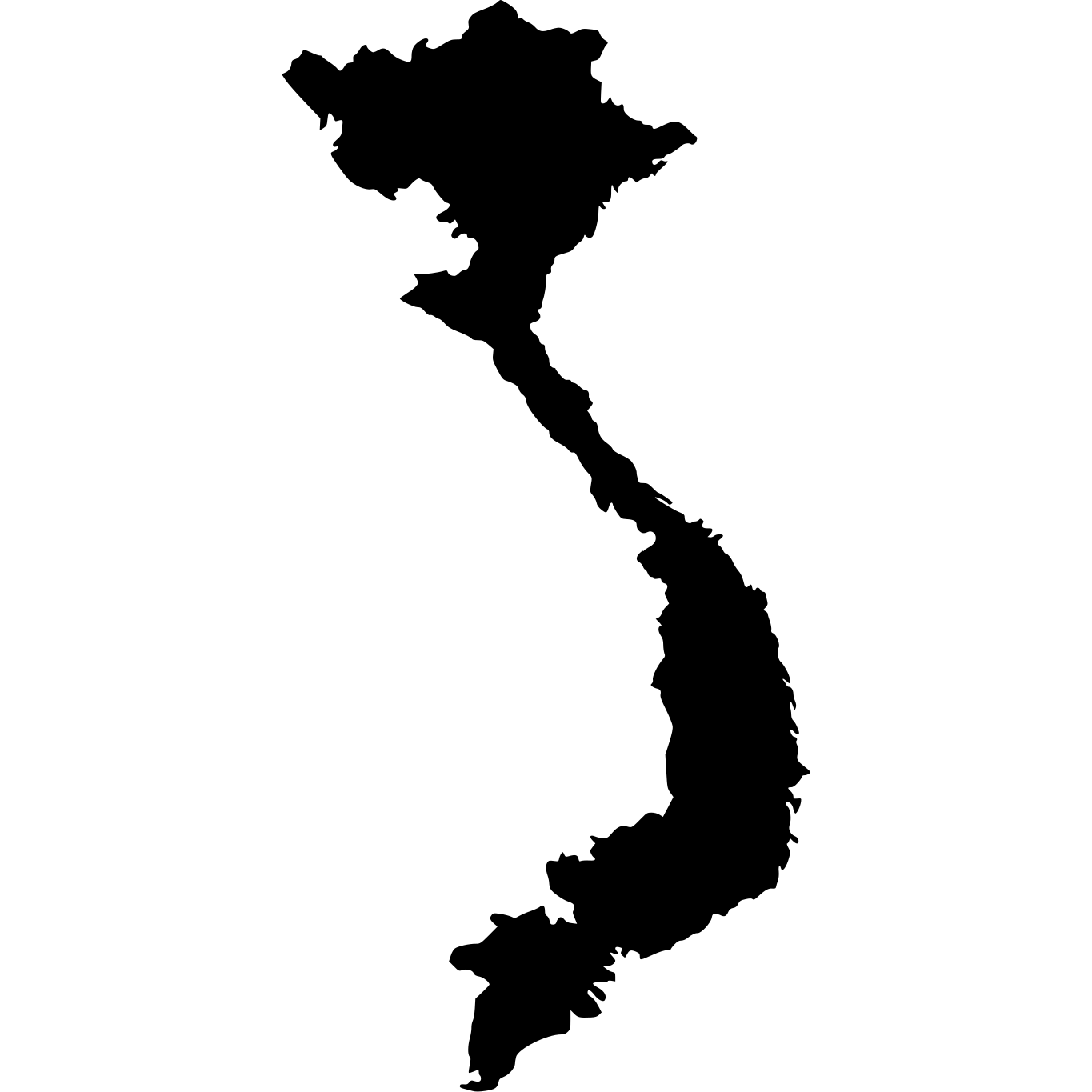
G.G.G Cosmetics is a Vietnamese brand

We're dedicated to providing you with the most up-to-date and science-backed ingredient info out there.
The data we've presented on this page has been verified by a member of the SkinSort Team.
Read more about us· Published May 15, 2026 • Added by liliablossom


