Frezyderm Atoprel Emollient Baume
A moisturizer with 27 ingredients.
This barrier-repair moisturizer is formulated around Butyrospermum Parkii Butter Extract and Helianthus Annuus Seed Oil to strengthen the skin barrier and hydrate skin.
We independently verify ingredients, backed by peer-reviewed research. Suggest an update.
What's inside
Ingredients List
Water
Skin ConditioningButyrospermum Parkii Butter Extract
Skin Conditioning


Helianthus Annuus Seed Oil
Emollient
Dimethicone
Emollient

Isostearyl Isostearate
Emollient


Tapioca Starch
Polymethylsilsesquioxane
Brassica Campestris Sterols
EmollientCetearyl Alcohol
Emollient

Glyceryl Stearate
Emollient
Betaine
Humectant

Inositol
Humectant
Octyldodecyl PCA
EmollientLactobacillus Ferment
Skin Conditioning
Rosmarinus Officinalis Leaf Extract
AntimicrobialMagnolia Officinalis Bark Extract
Antimicrobial
Magnesium Carboxymethyl Beta-Glucan
Skin ConditioningMaltodextrin
Absorbent
Sodium Stearoyl Glutamate
CleansingDihydromyrcene
Perfuming
Citric Acid
Buffering

Hydroxyacetophenone
Antioxidant
Hydroxyethyl Acrylate/Sodium Acryloyldimethyl Taurate Copolymer
Emulsion StabilisingPhenethyl Alcohol
MaskingChlorphenesin
Antimicrobial
PEG-100 Stearate
Surfactant
Xanthan Gum
EmulsifyingWater, Butyrospermum Parkii Butter Extract, Helianthus Annuus Seed Oil, Dimethicone, Isostearyl Isostearate, Tapioca Starch, Polymethylsilsesquioxane, Brassica Campestris Sterols, Cetearyl Alcohol, Glyceryl Stearate, Betaine, Inositol, Octyldodecyl PCA, Lactobacillus Ferment, Rosmarinus Officinalis Leaf Extract, Magnolia Officinalis Bark Extract, Magnesium Carboxymethyl Beta-Glucan, Maltodextrin, Sodium Stearoyl Glutamate, Dihydromyrcene, Citric Acid, Hydroxyacetophenone, Hydroxyethyl Acrylate/Sodium Acryloyldimethyl Taurate Copolymer, Phenethyl Alcohol, Chlorphenesin, PEG-100 Stearate, Xanthan Gum
Key Ingredients
Benefits
Concerns
Ingredients Explained
Water. It's the most common cosmetic ingredient of all. You'll usually see it at the top of ingredient lists, meaning that it makes up the largest part of the product.
So why is it so popular? Water most often acts as a solvent - this means that it helps dissolve other ingredients into the formulation.
You'll also recognize water as that liquid we all need to stay alive. If you see this, drink a glass of water. Remember to stay hydrated!
Learn more about WaterButyrospermum Parkii Butter Extract is from the fruit of the Shea Tree. It is an effective skin hydrator and emollient.
Shea butter is rich in antioxidants. Antioxidants help fight free-radicals, or molecules that may harm the body. It is also full of fatty acids including stearic acid and linoleic acid. These acids help replenish the skin and keep skin moisturized.
Helianthus Annuus Seed Oil is a plant oil derived from the seeds of a sunflower.
It is rich in fatty acids, primarily linoleic acid and oleic acid. This gives it emollient and skin conditioning properties.
The reason this ingredient is so effective is because it forms a thin film on the skin that reduces transepidermal water loss (TEWL) while supplying linoleic acid to the stratum corneum to improve barrier strength.
The high linoleic acid content is particularly noteworthy for acne-prone skin.
Research suggests that acne-prone skin tends to be deficient in linoleic acid in sebum. Topical application may help replenish this to support a healthier follicular environment and less comedone-promoting sebum.
One randomized study found sunflower seed oil preserved skin barrier integrity in adult volunteers with and without atopic dermatitis (outperforming olive oil).
This ingredient is well-studied, gentle, and an effective emollient suitable for most skin types.
On fungal acne: This ingredient may not be Fungal acne (Malassezia folliculitis) safe. This is because it contains fatty acids with carbon chain lengths in the C11-C24 range.
Learn more about Helianthus Annuus Seed OilDimethicone is a type of synthetic silicone created from natural materials such as quartz. It is also known as polydimethylsiloxane.
What it does:
Dimethicone comes in different viscosities:
Depending on the viscosity, dimethicone has different properties.
Ingredients lists don't always show which type is used, so we recommend reaching out to the brand if you have questions about the viscosity.
This ingredient is unlikely to cause irritation because it does not get absorbed into skin. However, people with silicone allergies should be careful about using this ingredient.
Note: Dimethicone may contribute to pilling. This is because it is not oil or water soluble, so pilling may occur when layered with products. When mixed with heavy oils in a formula, the outcome is also quite greasy.
Learn more about DimethiconeIsostearyl Isostearate is a plant-based and vegan emollient ester made by reacting Isostearyl Alcohol and Isostearic Acid.
It helps improve how the product spreads on skin, acts as a binding agent for makeup powders without modifying pigment color, and softens skin while helping it hold onto water.
This ingredient is very interesting as a hydrator; most moisturizers are either occlusives, humectants, or emollients. Isostearyl isostearate works through another route named "internal occlusion" by the head researcher.
Isostearyl isostearate nudges the skin's own lipids into a denser, more tightly packed arrangement. Packing the deeper layers of the stratum corneum together more efficiently means less water is able to escape.
This is a barrier-improving mechanism that hadn't been described before and plastic occlusion stress tests confirmed it improved the skin's water-permeability barrier function
Just one thing worth noting from the same review: this ingredient increased the penetration rate of a test drug through excised human skin. Though this ingredient is not classified as a penetration enhancer, it does interact with the barrier rather than sitting totally inert on top.
This ingredient does have a comedogenic rating of 4, but this doesn’t mean a formula with this ingredient will clog pores. Human testing has proved that any finished product with this ingredient won’t automatically make you break out; it really comes down to concentration, formula, and your skin.
Fungal acne:
The Malassezia yeast feeds on fatty acids and esters in the C11-24 range. Since both halves of this molecules are C18, it may not be fungal acne safe.
Tapioca starch is a thickening agent and is made from the cassava root, also known as yucca.
According to a manufacturer, it is an excellent talc replacement.
It is gluten-free.
Learn more about Tapioca StarchPolymethylsilsesquioxane is a silicone used as a film forming agent.
When applied to the skin, this ingredient creates an invisible film on the surface. This film still allows oxygen to pass through, but prevents moisture from escaping. This can help condition and hydrate the skin. It also leaves a silky feel when applied.
Polymethylsilsesquioxane has not been shown to clog pores. It has been deemed safe to use up to 55%, but most cosmetics use much less.
If you have concerns about using this ingredient, we recommend speaking with a professional.
Learn more about PolymethylsilsesquioxaneThis ingredient is the sterol fraction pulled out of rapeseed (or field mustard) oil. It's the waxy, cholesterol-like part of the oil.
That cholesterol-like part matters because the molecules are structurally close cousins of the cholesterol your own skin makes.
Cholesterol is one of the three lipids (along with ceramides and fatty acids) that hold your skin barrier together. So the plant sterols (like this one) do the same job: they integrate into the barrier and mimic the skin's natural lipids, which helps it hold onto water.
There's some decent evidence too:
A tape stripping study found skin treated with a phyosterol formulation recovered barrier function noticeably faster than skin treated with the vehicle alone.
Phytosterols also show anti-inflammatory activity which is why they appear often in soothing and anti-aging creams.
Usage concentrations vary according to industry survey data; leave-on products go up to 7% and rinse-off products up to 0.13%.
Actual face products usually use lower amounts (0.1-2%), partly because sterols are waxy and don't dissolve easily.
A human repeat insult patch test of 100% pure sterols in 50 subjects produced no irritation/sensitization, and guinea pig maximization testing was also negative. The CIR Expert Panel has also concluded the phytosterol ingredient group is safe at current use concentrations.
Fungal acne note: Sterols are not fatty acids and the yeast makes its own sterols anyway, so this ingredient doesn't feed it (it is fungal acne safe).
Learn more about Brassica Campestris SterolsCetearyl alcohol is a waxy mixture of two fatty alcohols: cetyl alcohol and stearyl alcohol. It is an emollient and emulsifier.
Despite having "alcohol" in its name, it has nothing to do with drying solvent alcohols; the FDA also allows "alcohol-free" products to contain fatty alcohols like this ingredient.
It plays several roles in a formula:
Typical use levels for this ingredient sit around 1-10% and the Cosmetic Ingredient Review Expert Panel has affirmed safety at concentrations up to 25% in leave-on products.
Multiple assessments have found it to be non-irritating and non-sensitizing to most people.
However, there have been some cases of allergic contact dermatitis in patients with chronically compromised skin barriers.
Cetearyl alcohol has a comedogenic rating of 2 and irritancy rating of 1. Both of these numbers come from the 1989 study that used rabbit ears; a "2" means mildly comedogenic and a "1" means low irritancy.
Here's the catch: rabbit skin is more sensitive than human skin and throws a lot of false positives. A 1996 reappraisal found that ingredients rated 1-2 in the rabbit ear tests are generally safe for humans.
Remember comedogenic ratings are unable to assess the entire formula of a product or how it will react on your skin. Just be sure to patch test if you are unsure about certain ingredients.
This ingredient is not fungal acne safe. Cetearyl alcohol is a fatty alcohol with chain lengths that fall within the range that Malassezia can metabolize.
A 2019 study has also observed Malassezia growth in the presence of this ingredient, confirming it to be not-fungal acne safe.
Learn more about Cetearyl AlcoholGlyceryl Stearate is made by reacting glycerin with stearic acid (typically sourced from plant oils like palm or coconut). It's an emulsifier, emollient, and mild occlusive.
Emulsifiers help ingredients like oil and water stay mixed so your formula stays nicely blended and uniform in texture.
This ingredient is typically used in concentrations between 1-10%. Studies have found it to be non-sensitizing, non-phototoxic, and non-photoallergenic.
A close cousin of this ingredient is Glyceryl Stearate SE ("self-emulsifying"). This just has a small amount of sodium or potassium stearate added so it can emulsify without a co-emulsifier.
Since this ingredient is an ester of a C18 fatty acid, it may not be fungal acne safe. The Malassezia yeast can potentially metabolize within the C11-C24 range.
Fun fact: The human body also creates Glyceryl Stearate naturally.
Learn more about Glyceryl StearateBetaine is a humectant. Like hyaluronic acid, it helps attract and retain moisture in the skin. It’s known for being gentle and for helping the skin maintain balanced hydration.
Betaine is mainly used to improve hydration and support calmer skin. It helps skin cells regulate water balance because it functions as an osmolyte.
Some studies suggest betaine may support making skin tone more even.
Fun fact: Betaine naturally exists in the skin and the body. In cosmetic products, it can be either plant-derived (most commonly from sugar beets) or synthetically produced for consistency and stability.
Betaine is also known as trimethylglycine.
Learn more about BetaineInositol is a sugar alcohol naturally found in the human body. Our bodies use this ingredient in the process of growing new cells.
Studies show inositol to be a key component for keratinocyte growth.
Keratinocytes make up the majority of the outermost layer of skin. These cells protect our skin from UV exposure, infection, and help keep skin hydrated.
This ingredient is also considered a humectant. Humectants help hydrate the skin by drawing moisture to it.
Learn more about InositolWe don't have a description for Octyldodecyl PCA yet.
This ingredient is made when the Lactobacillus bacteria (the same kind that makes yogurt and kimchi) are allowed to ferment a nutrient medium.
As it ferments, it collects lactic acid, peptides, enzymes, and other bioactive metabolites to provide:
A 2023 review noted that probiotic fermentation ingredients like this one can enhance antioxidant capacity, reduce UV-induced oxidative damage, and support barrier function.
One clinical study from the same year showed a Lactobacillus ferment lysate significantly reduced transepidermal water loss and improved skin hydration.
Another review highlighted that topical Lactobacillus-based preparations can improve ceramide levels in the stratum corneum, support barrier integrity, and even help reduce S. aureus colonization in atopic dermatitis.
Why is this so cool?
Basically, your skin's outer layer works as a brick wall; skin cells are bricks and ceramides are the mortar holding it together. Moisture escapes, irritants get in, and your skin gets dry and reactive when ceramide levels drop. On top of that, "bad" skin bacteria S. aureus loves to move in when your barrier is weak to make inflammation and irritation worse.
So Lactobacillus ferment is basically patching the wall and evicting the troublemaker when it boosts ceramide production and help keep S. aureus in check.
On top of all this, it also acts as a mild antimicrobial preservative booster.
Just so you know, most studies focus on specific strains or the lysate form rather than this generic "Lactobacillus Ferment", so results can vary.
Though it's a promising ingredient, it doesn't have decades of robust clinical data behind it just yet.
Lactobacillus Ferment is generally considered safe for fungal-acne prone skin. The key thing to understand is that it comes from bacteria, not yeast or fungus.
Yeast-derived ferments (like galactomyces) have been shown to activate a protein that's linked to Malassezia-related skin issues whereas lactobacillus doesn't have that problem.
Its byproducts also don't contain the types of fatty acids (C11-24 chain lengths) that Malassezia feeds on.
Learn more about Lactobacillus FermentThis is a botanical extract from the rosemary plant (the same one you cook with). In skincare, it mostly works as a skin conditioning agent.
Its activity comes from a handful of polyphenols, carnosic acid, carnosol, and rosmarinic acid. Almost 90% of the antioxidant activity of this ingredient can be attributed to canosol and carnosic acid.
These compounds protect your skin two ways:
1) They fight off free radicals, or the unstable molecules from things like sun and pollution that age and damage skin.
2) They help calm inflammation by switching off the chemical signals that tell skin to get red and irritated.
Lab studies also suggest that rosmarinic acid may help protect collagen and slow sugar-related damage to it.
The Cosmetic Ingredient Review has concluded rosemary-derived ingredients to be safe when formulated to be non-sensitizing.
Rosemary can occasionally cause allergic contact dermatitis (due to carnosol), so be sure to patch test if you have reactive or fragrance-sensitive skin.
Learn more about Rosmarinus Officinalis Leaf ExtractMagnolia Officinalis Bark Extract can help to reduce redness.
We don't have a description for Magnesium Carboxymethyl Beta-Glucan yet.
Maltodextrin is a plant-derived carbohydrate made by breaking down starch (usually from corn, potato, or rice). In cosmetic formulas, it's a multitasking absorbent, emulsion stabilizer, and skin conditioner.
This ingredient is mostly used to stabilize emulsions and improve the powdery, non-greasy feel of products (like dry shampoos).
Safety-wise, this ingredient is pretty solid; it's even recognized as a food additive. Both animal and clinical studies found no adverse effects at the levels used in cosmetics.
Industry data shows this ingredient is used up to 45.7% in spray products and up to 33% in powder products.
Learn more about MaltodextrinSodium Stearoyl Glutamate is an amino-acid based emulsifier. It is made by combining stearic acid with L-glutamic acid and neutralizing it to a sodium salt.
As an emulsifier, it works mainly as an oil-in-water one and helps keep the oil and water in your formulas blended. It also contributes to a smooth, non-greasy skin feel.
This ingredient is biodegradable and commonly available in natural/COSMOS-certified grades.
Learn more about Sodium Stearoyl GlutamateDihydromyrcene is a fragrance.
Citric Acid is an alpha hydroxy acid (AHA) naturally found in citrus fruits like oranges, lemons, and limes.
Like other AHAs, citric acid can exfoliate skin by breaking down the bonds that hold dead skin cells together. This helps reveal smoother and brighter skin underneath.
However, this exfoliating effect only happens at high concentrations (20%) which can be hard to find in cosmetic products.
Due to this, citric acid is usually included in small amounts as a pH adjuster. This helps keep products slightly more acidic and compatible with skin's natural pH.
In skincare formulas, citric acid can:
While it can provide some skin benefits, research shows lactic acid and glycolic acid are generally more effective and less irritating exfoliants.
Most citric acid used in skincare today is made by fermenting sugars (usually from molasses). This synthetic version is identical to the natural citrus form but easier to stabilize and use in formulations.
Rosacea skin has a lower threshold for acids generally, with 62.5% of rosacea subjects in one study reacting to lactic acid in a sting test. This is why we mark citric acid as a potential rosacea trigger.
However, this ingredient shows up as a pH adjuster or chelator at roughly 0.1-1% in many products. These low levels are unlikely to be an issue for rosacea skin and becomes a potential trigger at exfoliating concentrations (20%). Because everybody's skin is unique, we recommend a patch test if you are unsure.
Learn more about Citric AcidHydroxyacetophenone is a small phenolic molecule that earns its place in a formulas as an antioxidant and preservative booster.
As a phenol, it is able to neutralize free radicals to protect both the product and the skin from oxidative stress.
Though it can't kill microbes on its own, it works as a good supporting agent when combined with other preservatives like Phenoxyethanol or 1,2-Hexanediol.
This ingredient naturally occurs as piceol in Norwegian spruce needles (~0.4-1.1% dry weight and in cloudberries). Though the cosmetic-grade material is synthesized for purity and consistency.
You'll usually see it used at low levels and suppliers recommend up to 1% added to a water phase.
Safety testing was done at concentrations like 0.05% in SPF products and 0.5% in a Human Repeated Insult Patch Test. The safety evidence is assuring; this ingredient is safe for cosmetics in current use and also holds safety status as a food flavoring as well.
An honest caveat: the "soothing" and "anti-inflammatory" claims come mostly from supplier marketing rather than published clinical trials. The Cosmetic Ingredient Review's own literature search found no useful efficacy studies on this ingredient.
So the antioxidant and preservative-boosting roles are the well supported ones while the calming benefit is plausible but thinly evidenced.
Overall, this is a well-tolerated, low-irritation multitasker that quietly helps a formula stay fresh and stable.
Learn more about HydroxyacetophenoneThis is a synthetic polymer. It helps improve the texture of products by adding thickness and gel-like feel.
It is also an emulsifer, meaning it prevents ingredients such as oil and water from separating. It also helps evenly disperse other ingredients.
Phenethyl Alcohol is a colorless and aromatic alohol. It is naturally occuring in essential oils.
The scent of this ingredient is floral and often compared to rose.
Like other alcohols, this ingredient helps prevent the growth of bacteria. However, its main purpose is to impact a fragrance.
Learn more about Phenethyl AlcoholChlorphenesin is a synthetic preservative. It helps protect a product against bacteria in order to extend shelf life. In most cases, Chlorphenesin is paired with other preservatives such as phenoxyethanol and caprylyl glycol.
Chlorphenesin is a biocide. This means it is able to help fight the microorganisms on our skin. It is also able to fight odor-releasing bacteria.
Chlorphenesin is soluble in both water and glycerin.
Studies show Chlorphenesin is easily absorbed by our skin. You should speak with a skincare professional if you have concerns about using Chlorphenesin.
Learn more about ChlorphenesinPeg-100 Stearate is an emollient and emulsifier. As an emollient, it helps keep skin soft by trapping moisture in. On the other hand, emulsifiers help prevent oil and water from separating in a product.
PEGS are a hydrophilic polyether compound . There are 100 ethylene oxide monomers in Peg-100 Stearate. Peg-100 Stearate is polyethylene glycol ester of stearic acid.
Xanthan gum is used as a stabilizer and thickener within cosmetic products. It helps give products a sticky, thick feeling - preventing them from being too runny.
On the technical side of things, xanthan gum is a polysaccharide - a combination consisting of multiple sugar molecules bonded together.
Xanthan gum is a pretty common and great ingredient. It is a natural, non-toxic, non-irritating ingredient that is also commonly used in food products.
Learn more about Xanthan GumReviews
No written reviews yet. Be the first to review this product.
Recent searches
Search reviews by skin type, ingredient, or keyword.
Where it's from
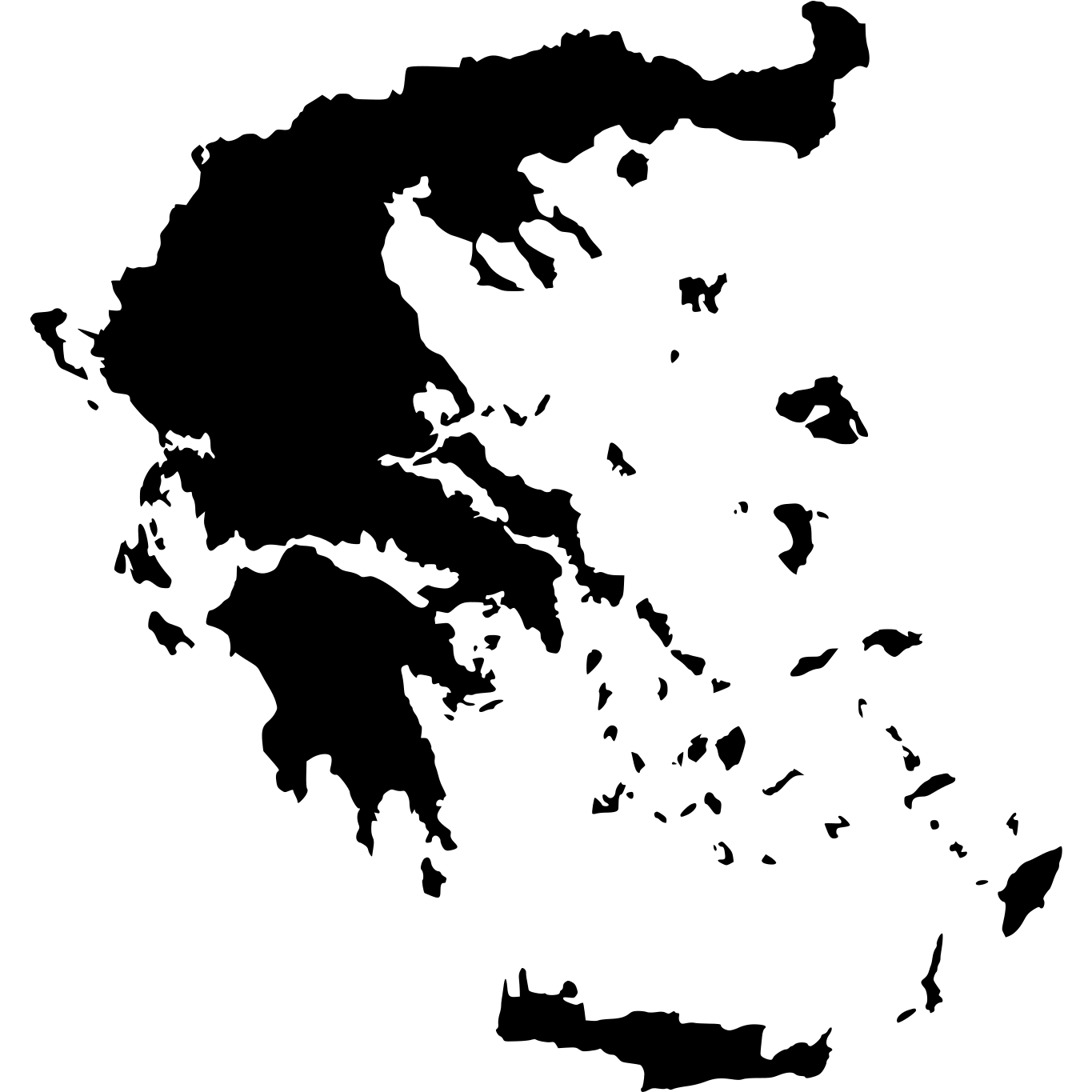
Frezyderm is a Greek brand

We're dedicated to providing you with the most up-to-date and science-backed ingredient info out there.
The data we've presented on this page has been verified by a member of the SkinSort Team.
Read more about us· Updated September 16, 2025 • Added by marina2


