Face Formula SOS Paste
A wash off mask with 23 ingredients.
This wash off mask is formulated around Sulfur to clear breakouts.
We independently verify ingredients, backed by peer-reviewed research. Suggest an update.
What's inside
Ingredients List
Water
Skin ConditioningSulfur
Antiseborrhoeic



Octyldodecanol
Emollient
Glycerin
Humectant


Caprylic/Capric Triglyceride
Masking
C15-19 Alkane
SolventPropanediol
Solvent
Polyglyceryl-6 Stearate
Emollient

Polyglyceryl-6 Distearate
Emulsifying
Butyrospermum Parkii Butter
Skin Conditioning

Cetearyl Alcohol
Emollient
Isopentyldiol
Humectant
1,2-Hexanediol
Skin Conditioning
Acacia Senegal Gum
MaskingAgar
MaskingJojoba Esters
Emollient
Hydroxyacetophenone
Antioxidant
Cetyl Alcohol
Emollient
Polyglyceryl-3 Beeswax
Emulsifying
Polyglyceryl-6 Behenate
Emulsion Stabilising
Xanthan Gum
EmulsifyingSodium Phytate
ChelatingTrifolium Pratense Flower Extract
AstringentWater, Sulfur, Octyldodecanol, Glycerin, Caprylic/Capric Triglyceride, C15-19 Alkane, Propanediol, Polyglyceryl-6 Stearate, Polyglyceryl-6 Distearate, Butyrospermum Parkii Butter, Cetearyl Alcohol, Isopentyldiol, 1,2-Hexanediol, Acacia Senegal Gum, Agar, Jojoba Esters, Hydroxyacetophenone, Cetyl Alcohol, Polyglyceryl-3 Beeswax, Polyglyceryl-6 Behenate, Xanthan Gum, Sodium Phytate, Trifolium Pratense Flower Extract
Key Ingredients
Benefits
Concerns
Ingredients Explained
Water. It's the most common cosmetic ingredient of all. You'll usually see it at the top of ingredient lists, meaning that it makes up the largest part of the product.
So why is it so popular? Water most often acts as a solvent - this means that it helps dissolve other ingredients into the formulation.
You'll also recognize water as that liquid we all need to stay alive. If you see this, drink a glass of water. Remember to stay hydrated!
Learn more about WaterSulfur is a commonly occurring element on Earth (and our universe!). In cosmetics, it helps kill bacteria, reduces sebum, and provides exfoliation. This makes it an effective ingredient to reduce breakouts and fight acne.
As a ketayolytic agent, it breaks down the top layer of skin. This is a form of exfoliation and may help decrease acne and hyperpigmentation.
Studies show sulfur has antibacterial and antifungal properties. Sulfur can be drying if used excessively or at higher concentrations. We recommend speaking with a medical professional if you have any concerns.
Ancient Greece, India, China, and Egypt have used sulfur in both traditional medicines and for household use.
Learn more about SulfurOctyldodecanol is a fatty alcohol sourced from plant oils like coconut or palm (or made synthetically).
It is:
You'll likely see this in many BHA products because this is the go-to solvent for salicylic acid.
This ingredient is typically used at levels between 2-20%.
Regarding fungal acne:
In 2019, this ingredient was tested against multiple Malassezia species (the yeast that causes fungal acne) and showed no growth.
Glycerin (or glycerol) is a compound naturally found in your skin. It's a powerhouse humectant that pulls water into the stratum corneum.
Topically, glycerin does several things at once:
Your skin makes glycerin on its own (mostly from sebaceous oil breakdown) and shuttles it to your outermost layer of skin, or your epidermis, via aquaporin-3.
Aquaporin-3 is a transporter that is essential for normal skin hydration, elasticity, and repair. Interestingly, mice lacking in AQP3 have dry and less elastic skin that can be fully corrected with glycerin.
This ingredient is non-irritating, plays well with almost every ingredient, and works across all skin types. Typical use is anywhere between 3-10% but can go up to 79% in some leave-on products.
Just know very high concentrations (>40%) can feel tacky in low humidity.
Glycerin is the name for this ingredient in American English. British English uses Glycerol/Glycerine.
Learn more about GlycerinCaprylic/Capric Triglyceride (aka MCT Oil) is a lightweight emollient, solvent, and texture enhancer. It is considered a skin-softener by helping to prevent moisture loss.
Though it behaves like an oil, it is not technically one due to its chemical composition. One perk of this ingredient is that it is very stable, resistant to oxidation, and unlikely to go rancid.
In practice, that translates to a long shelf life and a consistently elegant skin feel.
While there is an assumption Caprylic Triglyceride can clog pores due to it being derived from coconut oil, there is no research supporting this. Just patch test if you have concerns.
Fractionated coconut oil and MCT Oil are both listed as Caprylic/Capric Triglyceride according to INCI. This is because INCI names are based on the ingredient’s final chemical composition and not its marketing name or source.
This ingredient is treated as the gold standard fungal acne safe oil. Even though it is coconut derived, the problematic lauric acid is stripped out.
This leaves just caprylic (C8) and capric (C10) acid. These chain lengths actually trend antifungal; a 2020 study found caprylic acid was enough to disrupt Malassezia furfur cell membrane, with a caprylic acid derivative damaging membrane structures at concentrations as low as 0.2%.
Learn more about Caprylic/Capric TriglycerideC15-19 alkane is a mixture of alkanes. Alkanes are hydrocarbons with carbon atoms held together by single bonds.
It is a synthetically created solvent and emollient often used to replace silicones or mineral oil. As an emollient, C15-19 Alkane helps soften and soothe the skin. Emollients create a barrier to trap moisture inside.
You'll often see this ingredient used with mineral UV filters such as titanium dioxidide and zinc oxide. It helps these UV filter ingredients be more spreadable.
This ingredient is biodegradable. According to a manufacturer, it is also known as Hydrogenated Polyfarnesene.
Learn more about C15-19 AlkanePropanediol is an all-star ingredient. It softens, hydrates, and smooths the skin.
It’s often used to:
Propanediol is not likely to cause sensitivity and considered safe to use. It is derived from corn or petroleum with a clear color and no scent.
Learn more about PropanediolPolyglyceryl-6 Stearate isn't fungal acne safe.
Polyglyceryl-6 Distearate isn't fungal acne safe.
This ingredient is also known as shea butter. It is a plant-derived extract from the nuts of the Africa shea tree and one of the most well-studied emollients.
Because it has a high concentration of fatty acids (primarily oleic, stearic, and linoleic) it is able to form a protective barrier on the skin's surface. This helps seal in moisture and prevents transepidermal water loss (TEWL).
In vitro research found an increase in skin hydration by 58% and a decrease in TEWL by 37.8% after 24 hours of applying this ingredient (pretty impressive for a single ingredient!).
Besides hydration, shea butter also contains triterpenes that have anti-inflammatory potential. In particule, lupeol cinnamate has shown the highest anti-inflammatory activity in vivo.
Shea butter also contains vitamins A and E which may contribute to antioxidant activity.
While Shea Butter has an SPF rating of about 3-4, it is not a sunscreen replacement.
This ingredient may not be fungal acne safe because its fatty acids fall within the C11-C24 range that the Malassezia yeast can metabolize.
This ingredient shows up on a lot of "pore-clogging" lists but there's no real evidence behind that. It doesn't even have a comedogenic rating from an actual study; the numbers you'll find online come from blogs citing other blogs.
Ratings for other ingredients mostly come from a 1980s rabbit ear test. This test doesn't translate well to human skin or to real products because the ingredient sits at a much lower percentage.
Some people still find it breaks them out. So if that's you, definitely trust your skin. Just know this one's based on experience and not evidence.
Learn more about Butyrospermum Parkii ButterCetearyl alcohol is a waxy mixture of two fatty alcohols: cetyl alcohol and stearyl alcohol. It is an emollient and emulsifier.
Despite having "alcohol" in its name, it has nothing to do with drying solvent alcohols; the FDA also allows "alcohol-free" products to contain fatty alcohols like this ingredient.
It plays several roles in a formula:
Typical use levels for this ingredient sit around 1-10% and the Cosmetic Ingredient Review Expert Panel has affirmed safety at concentrations up to 25% in leave-on products.
Multiple assessments have found it to be non-irritating and non-sensitizing to most people.
However, there have been some cases of allergic contact dermatitis in patients with chronically compromised skin barriers.
Cetearyl alcohol has a comedogenic rating of 2 and irritancy rating of 1. Both of these numbers come from the 1989 study that used rabbit ears; a "2" means mildly comedogenic and a "1" means low irritancy.
Here's the catch: rabbit skin is more sensitive than human skin and throws a lot of false positives. A 1996 reappraisal found that ingredients rated 1-2 in the rabbit ear tests are generally safe for humans.
Remember comedogenic ratings are unable to assess the entire formula of a product or how it will react on your skin. Just be sure to patch test if you are unsure about certain ingredients.
This ingredient is not fungal acne safe. Cetearyl alcohol is a fatty alcohol with chain lengths that fall within the range that Malassezia can metabolize.
A 2019 study has also observed Malassezia growth in the presence of this ingredient, confirming it to be not-fungal acne safe.
Learn more about Cetearyl AlcoholIsopentyldiol is a synthetic solvent, humectant, and emollient.
Humectants have the ability to attract and hold water while emollients create a thin film to prevent water from evaporating. This combination keeps your skin and hair soft and hydrated. Plus, isopentyldiol does not leave a sticky feeling behind.
As a surfactant, isopentyldiol is a hydrotrope. Hydrotropes help surfactants (cleansing agents) dissolve into water.
According to the manufacturer, using this ingredient with sorbitol boosts skin hydration and helps close cuticles of damaged hair.
This ingredient is water-soluble.
Learn more about Isopentyldiol1,2-Hexanediol is a synthetic liquid and another multi-functional powerhouse.
It is a:
- Humectant, drawing moisture into the skin
- Emollient, helping to soften skin
- Solvent, dispersing and stabilizing formulas
- Preservative booster, enhancing the antimicrobial activity of other preservatives
Acacia Senegal Gum has skin soothing, thickening, and formulation stabilizing properties. It comes from the Acacia tree that is native to sub-Saharan Africa.
Agar is the vegan substitute for animal-gelatin. It helps thicken and improve the texture of cosmetics. It comes from cell-walls of red algae.
Jojoba Esters is a wax created from Jojoba oil. It is an emollient and film-forming ingredient. In bead form, it is an exfoliator.
This ingredient has high oxidative stability, meaning it doesn't break down when exposed to oxygen.
Its similarity to our skin's natural oils makes it a great emollient. Emollients help soften and soothe our skin by creating a barrier on top. This barrier helps trap moisture in, keeping skin hydrated.
It is created using either the hydrogenation or transesterification processes on jojoba oil.
Learn more about Jojoba EstersHydroxyacetophenone is a small phenolic molecule that earns its place in a formulas as an antioxidant and preservative booster.
As a phenol, it is able to neutralize free radicals to protect both the product and the skin from oxidative stress.
Though it can't kill microbes on its own, it works as a good supporting agent when combined with other preservatives like Phenoxyethanol or 1,2-Hexanediol.
This ingredient naturally occurs as piceol in Norwegian spruce needles (~0.4-1.1% dry weight and in cloudberries). Though the cosmetic-grade material is synthesized for purity and consistency.
You'll usually see it used at low levels and suppliers recommend up to 1% added to a water phase.
Safety testing was done at concentrations like 0.05% in SPF products and 0.5% in a Human Repeated Insult Patch Test. The safety evidence is assuring; this ingredient is safe for cosmetics in current use and also holds safety status as a food flavoring as well.
An honest caveat: the "soothing" and "anti-inflammatory" claims come mostly from supplier marketing rather than published clinical trials. The Cosmetic Ingredient Review's own literature search found no useful efficacy studies on this ingredient.
So the antioxidant and preservative-boosting roles are the well supported ones while the calming benefit is plausible but thinly evidenced.
Overall, this is a well-tolerated, low-irritation multitasker that quietly helps a formula stay fresh and stable.
Learn more about HydroxyacetophenoneCetyl Alcohol is a fatty alcohol. Fatty Alcohols are most often used as an emollient or to thicken a product.
Its main roles are:
Though it has "alcohol" in the name, it is not related to denatured alcohol or ethyl alcohol.
The FDA allows products labeled "alcohol-free" to have fatty alcohols.
This ingredient may not be fungal acne safe. It is a primary fatty alcohol with a chain length above 12 carbons. A study from 2019 show Malassezia can feed on fatty alcohols in this range, so it may trigger fungal acne in those prone to it.
Learn more about Cetyl AlcoholThis ingredient is a modified version of natural beeswax where the free fatty acids have been swapped for polyglycerol esters to make it more hydrophilic (water-loving).
It mainly works as an emulsifier to help oil and water stay mixed in a formula. You'll also see it in stick formulas because it also thickens and stabilizes oils to prevent the oils from bleeding.
Emulsifiers like this tend to be well tolerated unless you have a known bee-product allergy. Due to this ingredient being an ester of beeswax fatty acids, it may not be fungal acne safe.
Learn more about Polyglyceryl-3 BeeswaxPolyglyceryl-6 Behenate isn't fungal acne safe.
Xanthan gum is used as a stabilizer and thickener within cosmetic products. It helps give products a sticky, thick feeling - preventing them from being too runny.
On the technical side of things, xanthan gum is a polysaccharide - a combination consisting of multiple sugar molecules bonded together.
Xanthan gum is a pretty common and great ingredient. It is a natural, non-toxic, non-irritating ingredient that is also commonly used in food products.
Learn more about Xanthan GumSodium Phytate is the sodium salt of Phytic acid, a compound that plants store phosphorus in. It's the plant-derived alternative to ingredients like Disodium EDTA.
In skincare, this ingredient is a chelator that grabs onto trace metal ions like iron and copper that sneak into formulas through water/raw materials.
Those metals speed up oxidation so binding them keeps oils, fragrance, and actives from going off, stops color changes, and helps the preservative system work harder.
Survey data shows usage levels range from 0.0099%-0.5% in leave-on products, 0.025%-0.3% in rinse-off, and up to 0.05% in eye-area products. Suppliers typically recommend a range between 0.05-0.5%.
Learn more about Sodium PhytateThis extract comes from the flower more commonly known as red clover.
Reviews
No written reviews yet. Be the first to review this product.
Recent searches
Search reviews by skin type, ingredient, or keyword.
Where it's from
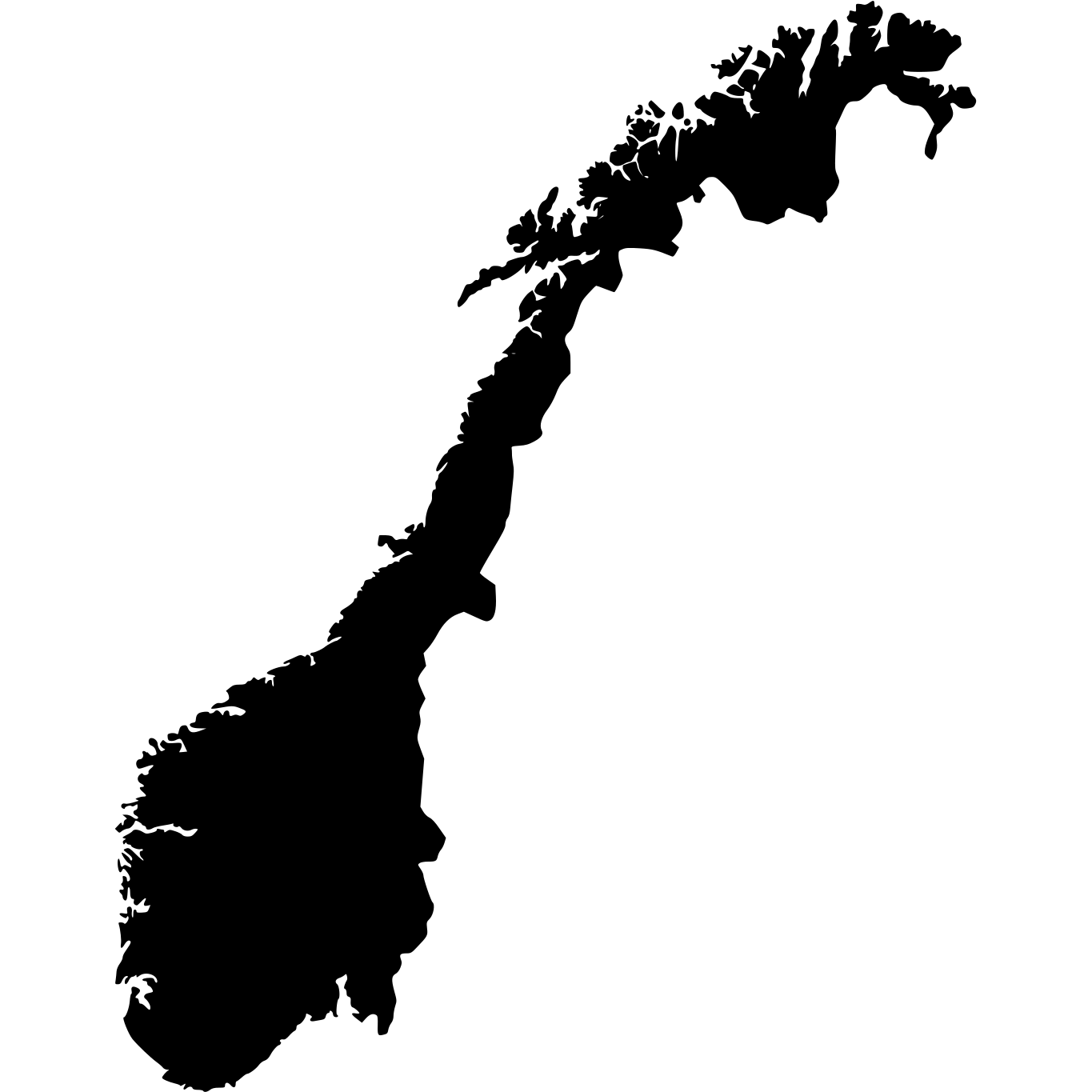
Face Formula is a Norwegian brand

We're dedicated to providing you with the most up-to-date and science-backed ingredient info out there.
The data we've presented on this page has been verified by a member of the SkinSort Team.
Read more about us· Updated October 26, 2025 • Added by Frans


