Eminence Organics Stone Crop Oxygenating Fizzofoliant
A exfoliator with 38 ingredients, including vitamin C, AHA, and exfoliants.
This smoothing exfoliator is formulated around Malic Acid and Ascorbic Acid to refine skin texture and brighten dull-looking skin.
Worth noting
Contains Malic Acid, an exfoliating acid best introduced gradually.
We independently verify ingredients, backed by peer-reviewed research. Suggest an update.
What's inside
Ingredients List
Oryza Sativa Starch
AbsorbentSodium Bicarbonate
Abrasive
Citric Acid
Buffering


Phaseolus Angularis Seed Powder
Sodium Cocoyl Isethionate
Cleansing
Spinacia Oleracea Leaf Powder
Skin ConditioningHelianthus Annuus Seed Oil
Emollient


Cicer Arietinum Seed Powder
Abrasive
CI 77231
Cosmetic ColorantDiatomaceous Earth
Abrasive
Malic Acid
Buffering


Peat Water
Skin ConditioningAscorbic Acid
Antioxidant



Sempervivum Tectorum Extract
Skin ConditioningTocopheryl Acetate
Antioxidant
Carica Papaya Fruit
Skin ConditioningBrassica Oleracea Italica Sprout Extract
EmollientRaphanus Sativus Seed Extract
Skin ConditioningTrifolium Pratense Extract
Skin ConditioningCurcuma Longa Root Powder
Skin ConditioningSchisandra Chinensis Fruit Powder
Skin ConditioningSilybum Marianum Seed Oil
Skin Conditioning
Lepidium Sativum Sprout Extract
Skin ConditioningLecithin
Emollient
Glycerin
Humectant
Aloe Barbadensis Leaf Juice
Skin Conditioning

Water
Skin ConditioningParfum
Masking


Euterpe Oleracea Fruit Extract
Citrus Limon Juice
Skin Conditioning
Malpighia Glabra Fruit
Skin ConditioningEmblica Officinalis Fruit Powder
Adansonia Digitata Fruit Extract
EmollientMyrciaria Dubia Fruit Extract
Skin ConditioningDaucus Carota Sativa Root Powder
Skin ConditioningCocos Nucifera Water
Masking
Hydrolyzed Lycium Barbarum Fruit
Skin ConditioningMaltodextrin
Absorbent
Oryza Sativa Starch, Sodium Bicarbonate, Citric Acid, Phaseolus Angularis Seed Powder, Sodium Cocoyl Isethionate, Spinacia Oleracea Leaf Powder, Helianthus Annuus Seed Oil, Cicer Arietinum Seed Powder, CI 77231, Diatomaceous Earth, Malic Acid, Peat Water, Ascorbic Acid, Sempervivum Tectorum Extract, Tocopheryl Acetate, Carica Papaya Fruit, Brassica Oleracea Italica Sprout Extract, Raphanus Sativus Seed Extract, Trifolium Pratense Extract, Curcuma Longa Root Powder, Schisandra Chinensis Fruit Powder, Silybum Marianum Seed Oil, Lepidium Sativum Sprout Extract, Lecithin, Glycerin, Aloe Barbadensis Leaf Juice, Water, Parfum, Euterpe Oleracea Fruit Extract, Citrus Limon Juice, Malpighia Glabra Fruit, Emblica Officinalis Fruit Powder, Adansonia Digitata Fruit Extract, Myrciaria Dubia Fruit Extract, Daucus Carota Sativa Root Powder, Cocos Nucifera Water, Hydrolyzed Lycium Barbarum Fruit, Maltodextrin
Key Ingredients
Benefits
Concerns
Ingredients Explained
Oryza Sativa Starch is an absorbent and used to mattify the skin. It is a natural carbohydrate and the main component of rice. A more common name for this ingredient is 'rice starch'.
Rice starch is created by steeping broken grains in a caustic soda.
Rice extract has many skin benefits. Read more about rice extract here.
Learn more about Oryza Sativa StarchSodium Bicarbonate has a more famous name: Baking soda.
In cosmetics, it is used to adjust the acidity. Due to its white crystalline solid form, it can also be an abrasive (exfoliator).
This ingredient is water-soluble.
Learn more about Sodium BicarbonateCitric Acid is an alpha hydroxy acid (AHA) naturally found in citrus fruits like oranges, lemons, and limes.
Like other AHAs, citric acid can exfoliate skin by breaking down the bonds that hold dead skin cells together. This helps reveal smoother and brighter skin underneath.
However, this exfoliating effect only happens at high concentrations (20%) which can be hard to find in cosmetic products.
Due to this, citric acid is usually included in small amounts as a pH adjuster. This helps keep products slightly more acidic and compatible with skin's natural pH.
In skincare formulas, citric acid can:
While it can provide some skin benefits, research shows lactic acid and glycolic acid are generally more effective and less irritating exfoliants.
Most citric acid used in skincare today is made by fermenting sugars (usually from molasses). This synthetic version is identical to the natural citrus form but easier to stabilize and use in formulations.
Rosacea skin has a lower threshold for acids generally, with 62.5% of rosacea subjects in one study reacting to lactic acid in a sting test. This is why we mark citric acid as a potential rosacea trigger.
However, this ingredient shows up as a pH adjuster or chelator at roughly 0.1-1% in many products. These low levels are unlikely to be an issue for rosacea skin and becomes a potential trigger at exfoliating concentrations (20%). Because everybody's skin is unique, we recommend a patch test if you are unsure.
Learn more about Citric AcidWe don't have a description for Phaseolus Angularis Seed Powder yet.
Sodium cocoyl isethionate is a natural ingredient from coconut oil. It is an ultra gentle cleanser that gives a nice foam without drying the skin or impacting the skin barrier.
The amount of foam created depends on the amount of sodium cocoyl isethionate used in the product.
This ingredient also helps improve the spreadability of a product.
This ingredient hasn’t been shown in studies to feed fungal acne yeast.
Learn more about Sodium Cocoyl IsethionateHelianthus Annuus Seed Oil is a plant oil derived from the seeds of a sunflower.
It is rich in fatty acids, primarily linoleic acid and oleic acid. This gives it emollient and skin conditioning properties.
The reason this ingredient is so effective is because it forms a thin film on the skin that reduces transepidermal water loss (TEWL) while supplying linoleic acid to the stratum corneum to improve barrier strength.
The high linoleic acid content is particularly noteworthy for acne-prone skin.
Research suggests that acne-prone skin tends to be deficient in linoleic acid in sebum. Topical application may help replenish this to support a healthier follicular environment and less comedone-promoting sebum.
One randomized study found sunflower seed oil preserved skin barrier integrity in adult volunteers with and without atopic dermatitis (outperforming olive oil).
This ingredient is well-studied, gentle, and an effective emollient suitable for most skin types.
On fungal acne: This ingredient may not be Fungal acne (Malassezia folliculitis) safe. This is because it contains fatty acids with carbon chain lengths in the C11-C24 range.
Learn more about Helianthus Annuus Seed OilCicer Arietinum Seed Powder is an exfoliant.
We don't have a description for CI 77231 yet.
Diatomaceous Earth is an exfoliant. It can be good for oily skin.
Malic Acid is an acid with both AHA and BHA properties, but is considered an AHA because its AHA properties are stronger.
It can be naturally found in unripe fruit and especially apples (its name from the latin word "malum", meaning apple!).
Like other AHAs, malic acid gently removes the top layer of dead skin cells to reveal smoother, brighter skin underneath.
Though it’s considered milder and less potent than glycolic or lactic acid, it can help improve:
Due to its larger molecular structure, it penetrates the skin more slowly and is often used in combination with other AHAs to enhance their overall effectiveness.
Malic acid often plays a role in balancing a product’s pH and is usually included in small amounts (around 1-2%) as a supporting exfoliant.
As with all exfoliating acids, you should wear sunscreen daily when using malic acid to protect your newly resurfaced skin.
Fun fact: Malic acid is the compound responsible for the tart flavor of apples and other sour fruits.
While research on malic acid is limited compared to glycolic or lactic acid, it’s still a safe and mild exfoliant.
Read more about some other popular AHA's here:
Learn more about Malic AcidWe don't have a description for Peat Water yet.
Ascorbic Acid is is pure Vitamin C and is the biologically active form used directly by skin.
Not only is vitamin C great for your overall health and immune system, but it also has plenty of benefits for your skin. It is best supported by academic literature for:
Topical vitamin C has been shown to help neutralize oxidative stress from UV and pollution, helping to improve photoaging and hyperpigmentation when used consistently.
One clinical study found that using 5% topical vitamin C for six months improved signs of photodamaged skin, both on the surface and in the deeper structural layers of the skin.
While vitamin C doesn’t replace sunscreen, studies show it can boost photoprotection when combined with Vitamin E and ferulic acid. These two ingredients help improve stability and protective effects.
The big downside of this ingredient is formulation difficulty. Vitamin C is prone to oxidation and doesn't penetrate the skin unless formulated correctly. Research found that vitamin C absorbs into the skin best at a low pH (< 3.5) with about 20% being the upper limit for effective absorption.
Skin levels can saturate after repeated application; this means your skin won’t keep absorbing more once it’s full of vitamin C. This is why more isn’t always better with vitamin C and why very high concentrations don’t necessarily give extra benefits.
Ascorbic acid generally works well with many skincare ingredients but can be irritating when combined with other active ingredients. Strong oxidizing acne treatments like benzoyl peroxide can reduce the effectiveness of vitamin C if they are used at the same time; they are often recommended for use at different times of day.
Read more about other types of Vitamin C:
Foods rich with vitamin C include oranges, strawberries, broccoli, bell peppers, and more. When consuming Vitamin C, your skin receives a portion of the nutrients.
Learn more about Ascorbic AcidWe don't have a description for Sempervivum Tectorum Extract yet.
Tocopheryl Acetate is a stable, shelf-friendly form of vitamin E.
Formulators love it because plain vitamin E oxidizes quickly once it hits air. This acetate version stays stable and resists going off, helping to extend a product's shelf life.
It's actually inactive on its own and works like a slow-release "storage" form; the enzymes in your skin called esterases gradually convert it into active vitamin E over time.
One in vivo study showed 5% of the acetate in the living layer of the epidermis converted to vitamin E after 5 days of application. This study also found the skin gained protection against UV damage even though the conversion was slow and small.
Once converted, vitamin E acts as a skin's main fat-soluble antioxidant that fights free radicals to protect skin from damage.
Topical vitamin E generally boosts the skin's photoprotection, and it reduced UV-damage in animal models.
This ingredient has some brightening potential but it's more of a prevention ingredient than spot-fader. Cell studies show it can slow down melanin production but it's worth noting that it's not the most powerful brightener out there.
Overall, it has a pretty solid safety profile and has been found to be non-irritating and non-comedogenic. Allergic reactions may happen but stay rare due to how widely the ingredient gets used.
The concentration will vary depending on the formula; industry data shows 0.1% in baby lotions, 3% in lipsticks, and 5% in foot powders. You can also find this ingredient at 100% in a pure vitamin E oil.
Most leave-on skincare keeps it at the lower end, often between 0.5-1%.
Learn more about Tocopheryl AcetateCarica Papaya Fruit Extract comes from the papaya fruit. Papayas were first domesticated in Mexico and Central America.
This fruit extract contains papain and chymopapain, two enzymes with exfoliating and anti-inflammatory properties. One study shows papain may help in scar healing. Papaya is also a rich source of antioxidants and Vitamin A.
We don't have a description for Brassica Oleracea Italica Sprout Extract yet.
This ingredient is also called radish or daikon seed extract. It has skin conditioning properties.
This ingredient comes from the red clover flower. It has antioxidant and skin conditioning properties.
We don't have a description for Curcuma Longa Root Powder yet.
We don't have a description for Schisandra Chinensis Fruit Powder yet.
This ingredient is also known as milk thistle seed oil. It is made by cold pressing the seeds of the milk thistle plant.
The main fatty acids in this oil are linoleic acid (~53%) and oleic acid (~21%). However, its standout compound is silymarin, a powerful antioxidant and skin soother.
Silymarin is best known for protecting skin against UV rays and pollution as an antioxidant. In a clinical study, a formulation containing this ingredient showed improvements in skin elasticity, dermal densitiy, brightness, and a reduction of redness after 4 weeks of use.
Research on the fruit extract found a sustained and significant decrease in acne lesion counts (a ~45% improvement after 6 months and ~59% at 12 months).
Due to its rich fatty acid content, this ingredient may not be fungal acne safe.
Learn more about Silybum Marianum Seed OilWe don't have a description for Lepidium Sativum Sprout Extract yet.
Lecithin is a term for a group of substances found in the cell membranes of plants, animals, and humans. They are made up of phospholipids.
Thanks to its amphiphilic structure (water-loving head and oil-loving tail), it is a true multitasker:
It plays well with most ingredients and is typically used at 0.1-1%. However, concentrations up to 50% have been reported in moisturizers.
Learn more about LecithinGlycerin (or glycerol) is a compound naturally found in your skin. It's a powerhouse humectant that pulls water into the stratum corneum.
Topically, glycerin does several things at once:
Your skin makes glycerin on its own (mostly from sebaceous oil breakdown) and shuttles it to your outermost layer of skin, or your epidermis, via aquaporin-3.
Aquaporin-3 is a transporter that is essential for normal skin hydration, elasticity, and repair. Interestingly, mice lacking in AQP3 have dry and less elastic skin that can be fully corrected with glycerin.
This ingredient is non-irritating, plays well with almost every ingredient, and works across all skin types. Typical use is anywhere between 3-10% but can go up to 79% in some leave-on products.
Just know very high concentrations (>40%) can feel tacky in low humidity.
Glycerin is the name for this ingredient in American English. British English uses Glycerol/Glycerine.
Learn more about GlycerinAloe Barbadensis Leaf Juice is the filtered, stabilized liquid pressed from the inner gel of the aloe vera leaf.
In cosmetics, it shows up as either soothing active or a water-replacement base. It is roughly 98-99% water and the last 1-2% is an interesting mix of polysaccharides, amino acids, vitamins, minerals, and enzymes.
The polysaccharides do most of the work: they bind water at the skin surface for a light, non-greasy hydration boost. And one of the polysaccharides, glycomannan, is linked to fibroblast stimulation + collagen synthesis. This is also why aloe has such a long track record in wound and burn healing.
This ingredient is also calming with anti-inflammatory and mild antimicrobial activity, making it a great pick for sensitive, irritated, or post-sun skin.
Realistic expectations matter though; the solid evidence is mostly limited to hydration, soothing, and wound support. Deeper claims about anti-aging or sun protection are not well backed, and science reviews note it does not prevent radiation-induced skin injury.
Because it plays well with almost everything, it's commonly used as a base alongside other actives like niacinamide or vitamin C.
Typical usage concentrations range from 0.5% (where hydration benefits already show up) all the way to 90%+ (where it replaces water as the main base).
The safety for this ingredient is well-establish as well. Overall, this is a great supporting ingredient for those who want a boost in hydration.
Learn more about Aloe Barbadensis Leaf JuiceWater. It's the most common cosmetic ingredient of all. You'll usually see it at the top of ingredient lists, meaning that it makes up the largest part of the product.
So why is it so popular? Water most often acts as a solvent - this means that it helps dissolve other ingredients into the formulation.
You'll also recognize water as that liquid we all need to stay alive. If you see this, drink a glass of water. Remember to stay hydrated!
Learn more about WaterParfum is a catch-all term for an ingredient or more that is used to give a scent to products.
Also called "fragrance", this ingredient can be a blend of hundreds of chemicals or plant oils. This means every product with "fragrance" or "parfum" in the ingredients list is a different mixture.
For instance, Habanolide is a proprietary trade name for a specific aroma chemical. When used as a fragrance ingredient in cosmetics, most aroma chemicals fall under the broad labeling category of “FRAGRANCE” or “PARFUM” according to EU and US regulations.
The term 'parfum' or 'fragrance' is not regulated in many countries. In many cases, it is up to the brand to define this term.
For instance, many brands choose to label themselves as "fragrance-free" because they are not using synthetic fragrances. However, their products may still contain ingredients such as essential oils that are considered a fragrance by INCI standards.
One example is Calendula flower extract. Calendula is an essential oil that still imparts a scent or 'fragrance'.
Depending on the blend, the ingredients in the mixture can cause allergies and sensitivities on the skin. Some ingredients that are known EU allergens include linalool and citronellol.
Parfum can also be used to mask or cover an unpleasant scent.
The bottom line is: not all fragrances/parfum/ingredients are created equally. If you are worried about fragrances, we recommend taking a closer look at an ingredient. And of course, we always recommend speaking with a professional.
Learn more about ParfumThis extract comes from the Cabbage Palm, AKA the Açaí berry! It has skin soothing and antioxidant properties.
Acai berries are rich in antioxidants, including ferulic acid (The famous vitamin C stabilizer). Antioxidants protect your skin against damaging free-radical molecules.
You can also find carbohydrates, lipids, proteins, minerals, vitamin A, and Vitamin C in these berries.
Learn more about Euterpe Oleracea Fruit ExtractCitrus Limon juice is also lemon juice.
While lemon juice contains antioxidants and vitamins, it can sensitize the skin.
The acidity of lemons may work as an astringent for acne. This can cause sensitivity. Lemon juice can also increase photosensitivity, or sensitivity to the sun.
Learn more about Citrus Limon JuiceWe don't have a description for Malpighia Glabra Fruit yet.
We don't have a description for Emblica Officinalis Fruit Powder yet.
This extract comes from the camu camu berry and is known for its exceptionally high vitamin C content.
Daucus Carota Sativa Root Powder is created from the orange and edible carrot.
Carrots contain beta-carotene, a potent antioxidant.
We don't have a description for Hydrolyzed Lycium Barbarum Fruit yet.
Maltodextrin is a plant-derived carbohydrate made by breaking down starch (usually from corn, potato, or rice). In cosmetic formulas, it's a multitasking absorbent, emulsion stabilizer, and skin conditioner.
This ingredient is mostly used to stabilize emulsions and improve the powdery, non-greasy feel of products (like dry shampoos).
Safety-wise, this ingredient is pretty solid; it's even recognized as a food additive. Both animal and clinical studies found no adverse effects at the levels used in cosmetics.
Industry data shows this ingredient is used up to 45.7% in spray products and up to 33% in powder products.
Learn more about MaltodextrinReviews
Recent searches
Search reviews by skin type, ingredient, or keyword.
Where it's from
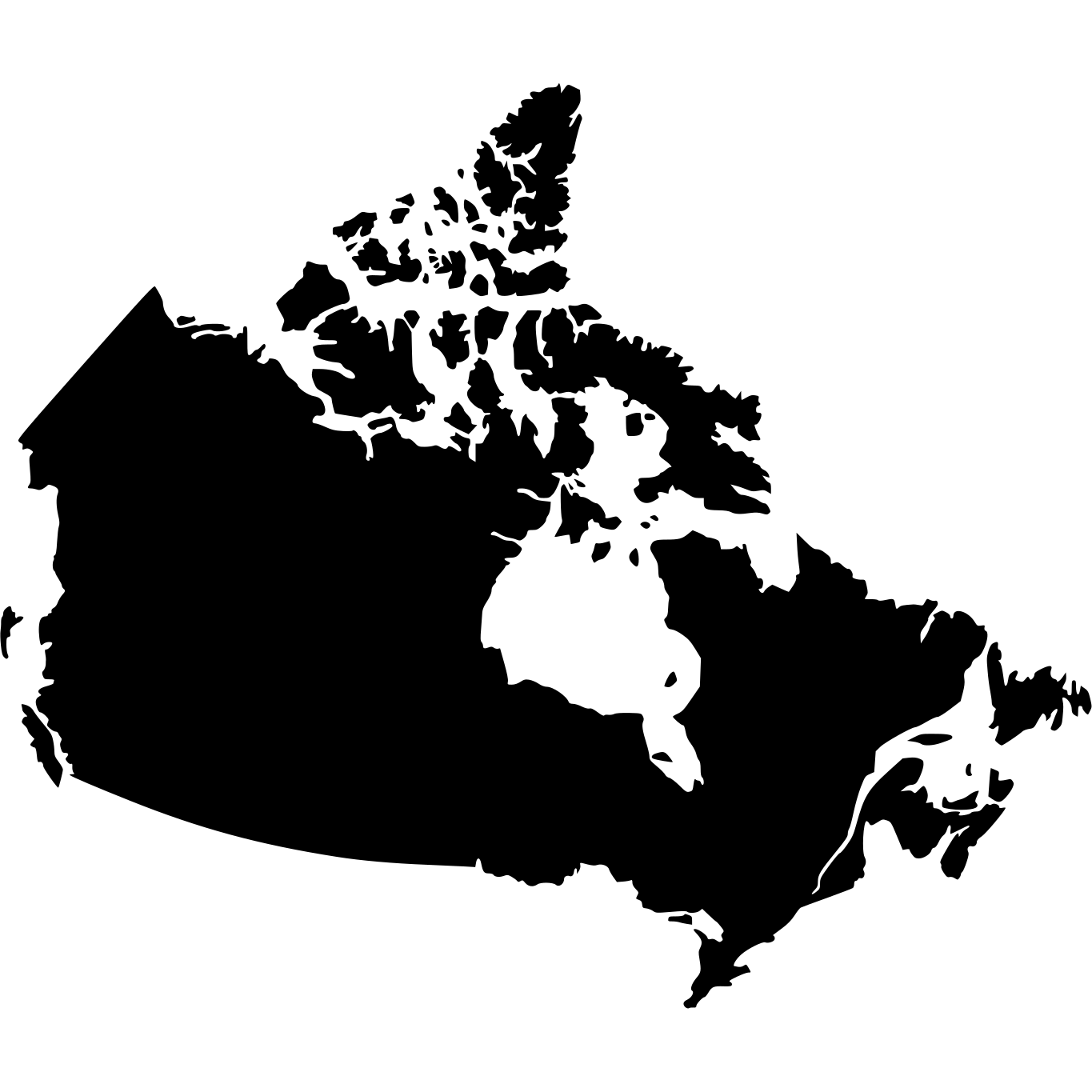
Eminence Organics is a Canadian brand
Often compared with

We're dedicated to providing you with the most up-to-date and science-backed ingredient info out there.
The data we've presented on this page has been verified by a member of the SkinSort Team.
Read more about us· Published February 9, 2023 • Added by KateLexington_47


