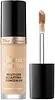
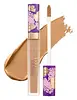
Too Faced Born This Way Super Coverage Multi-Use Concealer Versus Tarte Maracuja Creaseless Concealer

What's inside
What's inside
 Key Ingredients
Benefits
Concerns
Ingredients Side-by-side
Water
Skin ConditioningCyclopentasiloxane
Emollient
Butylene Glycol Dicaprylate/Dicaprate
EmollientTriethylhexanoin
MaskingIsoamyl Laurate
Emollient

Methyl Trimethicone
Skin Conditioning
Pentylene Glycol
Skin Conditioning
Polyglyceryl-4 Diisostearate/Polyhydroxystearate/Sebacate
Emulsifying
Hydrogenated Starch Hydrolysate
HumectantCetyl PEG/PPG-10/1 Dimethicone
Emulsifying
Trimethylsiloxysilicate
Emollient
Silica
Abrasive


Perfluorooctyl Triethoxysilane
Aluminum Hydroxide
EmollientHydroxyacetophenone
Antioxidant
Sodium Chloride
MaskingDisteardimonium Hectorite
StabilisingDimethicone
Emollient
Acrylates/Polytrimethylsiloxymethacrylate Copolymer
Skin Conditioning1,2-Hexanediol
Skin Conditioning
Caprylyl Glycol
Emollient
Dimethicone/Vinyl Dimethicone Crosspolymer
Skin Conditioning
Trisodium Ethylenediamine Disuccinate
ChelatingGlycerin
Humectant
Cocos Nucifera Water
Masking

Sodium Hyaluronate
Humectant


Cocos Nucifera Fruit Juice
Emollient
Rhododendron Ferrugineum Extract
MaskingPotassium Sorbate
Preservative
Sodium Benzoate
Masking
CI 77891
Cosmetic ColorantIron Oxides
Water, Cyclopentasiloxane, Butylene Glycol Dicaprylate/Dicaprate, Triethylhexanoin, Isoamyl Laurate, Methyl Trimethicone, Pentylene Glycol, Polyglyceryl-4 Diisostearate/Polyhydroxystearate/Sebacate, Hydrogenated Starch Hydrolysate, Cetyl PEG/PPG-10/1 Dimethicone, Trimethylsiloxysilicate, Silica, Perfluorooctyl Triethoxysilane, Aluminum Hydroxide, Hydroxyacetophenone, Sodium Chloride, Disteardimonium Hectorite, Dimethicone, Acrylates/Polytrimethylsiloxymethacrylate Copolymer, 1,2-Hexanediol, Caprylyl Glycol, Dimethicone/Vinyl Dimethicone Crosspolymer, Trisodium Ethylenediamine Disuccinate, Glycerin, Cocos Nucifera Water, Sodium Hyaluronate, Cocos Nucifera Fruit Juice, Rhododendron Ferrugineum Extract, Potassium Sorbate, Sodium Benzoate, CI 77891, Iron Oxides
Caprylic/Capric Triglyceride
Masking
Bis-Diglyceryl Polyacyladipate-2
Emollient
Cetyl Alcohol
Emollient
Vp/Hexadecene Copolymer
Silica Dimethyl Silylate
EmollientAluminum Hydroxide
EmollientAscorbyl Palmitate
Antioxidant

Passiflora Edulis Seed Oil
Emollient
Tocopherol
Antioxidant

Cera Microcristallina
Emulsion StabilisingPhenoxyethanol
Preservative
Tocopheryl Acetate
Antioxidant
Caprylyl Glycol
Emollient
Kaolin
Abrasive
CI 77891
Cosmetic ColorantIron Oxides
Caprylic/Capric Triglyceride, Bis-Diglyceryl Polyacyladipate-2, Cetyl Alcohol, Vp/Hexadecene Copolymer, Silica Dimethyl Silylate, Aluminum Hydroxide, Ascorbyl Palmitate, Passiflora Edulis Seed Oil, Tocopherol, Cera Microcristallina, Phenoxyethanol, Tocopheryl Acetate, Caprylyl Glycol, Kaolin, CI 77891, Iron Oxides
Reviews
Ingredients Explained
These ingredients are found in both products.
Ingredients higher up in an ingredient list are typically present in a larger amount.
Aluminum Hydroxide is a form of aluminum. It can be naturally found in nature as the mineral gibbsite. In cosmetics, Aluminum Hydroxide is used as a colorant, pH adjuster, and absorbent.
As a colorant, Aluminum Hydroxide may add opacity, or reduce the transparency. Aluminum hydroxide is contains both basic and acidic properties.
According to manufacturers, this ingredient is an emollient and humectant. This means it helps hydrate the skin.
In medicine, this ingredient is used to help relieve heartburn and help heal ulcers.
There is currently no credible scientific evidence linking aluminum hydroxide in cosmetics to increased cancer risk.
Major health organizations allow the use of aluminum hydroxide in personal care products and have not flagged it as a carcinogenic risk at typical usage levels.
Learn more about Aluminum HydroxideCaprylyl Glycol is a humectant, skin conditioner, emollient, and preservative booster derived from either caprylic acid or synthetically created.
Typical use levels vary from 0.3-1% as a preservative booster and go up to 2% to condition skin.
Because it is not a free-fatty acid, this ingredient is fungal acne safe (there's nothing for Malassezia to feed on).
Learn more about Caprylyl GlycolCi 77891 is a white pigment from Titanium dioxide. It is naturally found in minerals such as rutile and ilmenite.
It's main function is to add a white color to cosmetics. It can also be mixed with other colors to create different shades.
Ci 77891 is commonly found in sunscreens due to its ability to block UV rays.
Learn more about CI 77891This ingredient is a combination of red, black, and yellow iron oxide pigments. This combination of colors is usually found in foundation, because it results in a "skin" color.
The EU typically uses CI numbers for colorants when applicable, such as CI 77489. In the US, iron oxides are regulated as color additives and "iron oxides" is the most commonly used name in US cosmetic practice.
A 2021 paper looked at skincare formulations containing iron oxides and found that they reduced transmission of blue light when measured optically. In simple terms, the pigment particles helped block or scatter part of the visible light spectrum in lab testing and the authors suggest this could translate into better protection against blue-light-related skin effects.
There is also clinical and experimental research showing that tinted products containing iron oxides can reduce visible light-induced pigmentation:
Please note, whether a product reduces visible or blue light depends on things like:
In the EU's CosIng database, iron oxides are only listed as a colorant. CosIng groups ingredients by their main cosmetic role, such as colorant, preservative, or UV filter.
Though studies say iron oxides can "attenuate blue light", they're describing an optical property and not an officially recognized cosmetic function.
So CosIng isn’t contradicting the research. It’s just classifying iron oxides by what they officially are: pigments that add color.
Learn more about Iron Oxides

