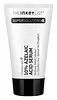
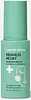
The INKEY List SuperSolutions 10% Azelaic Serum Redness Relief Solution Versus Peach Slices Redness Relief Soothing Serum
This calming serum is formulated around Azelaic Acid to calm redness and clear breakouts.
This calming serum is formulated around Ceramide AP and Panthenol to calm redness and strengthen the skin barrier.


What's inside
What's inside
 Key Ingredients
Benefits
Concerns
No concerns
Ingredients Side-by-side
Water
Skin ConditioningAzelaic Acid
Buffering









Propanediol
Solvent

Hydroxyethyl Acrylate/Sodium Acryloyldimethyl Taurate Copolymer
Emulsion StabilisingPhenoxyethanol
Preservative
Acacia Senegal Gum
MaskingXanthan Gum
EmulsifyingAllantoin
Skin Conditioning
Glycerin
Humectant
Ethylhexylglycerin
Skin ConditioningPolysorbate 60
Emulsifying

Sorbitan Isostearate
Emulsifying
Maltodextrin
Absorbent
Sodium Hydroxide
BufferingHydrolyzed Gardenia Florida Extract
Antioxidant
Gardenia Florida Fruit Extract
Skin ConditioningPolylysine
Water, Azelaic Acid, Propanediol, Hydroxyethyl Acrylate/Sodium Acryloyldimethyl Taurate Copolymer, Phenoxyethanol, Acacia Senegal Gum, Xanthan Gum, Allantoin, Glycerin, Ethylhexylglycerin, Polysorbate 60, Sorbitan Isostearate, Maltodextrin, Sodium Hydroxide, Hydrolyzed Gardenia Florida Extract, Gardenia Florida Fruit Extract, Polylysine
Water
Skin ConditioningButylene Glycol
Humectant
Glycerin
Humectant
Ceramide AP
Skin Conditioning

1,2-Hexanediol
Skin Conditioning
Dipropylene Glycol
HumectantPropanediol
Solvent
Panthenol
Skin Conditioning
Rhodomyrtus Tomentosa Fruit Extract
HumectantArtemisia Vulgaris Extract
Skin Conditioning
Centella Asiatica Extract
Cleansing
Brassica Oleracea Acephala Leaf Extract
HumectantSodium Hyaluronate
Humectant
Hydrolyzed Hyaluronic Acid
Humectant
Hyaluronic Acid
Humectant
Melia Azadirachta Leaf Extract
Skin ConditioningSpinacia Oleracea Leaf Extract
Skin ConditioningSpirulina Platensis Extract
Skin ProtectingSpirulina Platensis Powder
Skin ProtectingAllantoin
Skin Conditioning
Acrylates/C10-30 Alkyl Acrylate Crosspolymer
Emulsion StabilisingHydrolyzed Malt Extract
Skin ConditioningTromethamine
BufferingTrisodium Ethylenediamine Disuccinate
Ethylhexylglycerin
Skin ConditioningHydrolyzed Gardenia Florida Extract
Antioxidant
Melia Azadirachta Flower Extract
Skin ConditioningHydrolyzed Viola Tricolor Extract
Skin ProtectingMalic Acid
Buffering


Water, Butylene Glycol, Glycerin, Ceramide AP, 1,2-Hexanediol, Dipropylene Glycol, Propanediol, Panthenol, Rhodomyrtus Tomentosa Fruit Extract, Artemisia Vulgaris Extract, Centella Asiatica Extract, Brassica Oleracea Acephala Leaf Extract, Sodium Hyaluronate, Hydrolyzed Hyaluronic Acid, Hyaluronic Acid, Melia Azadirachta Leaf Extract, Spinacia Oleracea Leaf Extract, Spirulina Platensis Extract, Spirulina Platensis Powder, Allantoin, Acrylates/C10-30 Alkyl Acrylate Crosspolymer, Hydrolyzed Malt Extract, Tromethamine, Trisodium Ethylenediamine Disuccinate, Ethylhexylglycerin, Hydrolyzed Gardenia Florida Extract, Melia Azadirachta Flower Extract, Hydrolyzed Viola Tricolor Extract, Malic Acid
Reviews
Ingredients Explained
These ingredients are found in both products.
Ingredients higher up in an ingredient list are typically present in a larger amount.
Allantoin is a soothing ingredient known for its protective and moisturizing properties; it's basically a quiet workhorse ingredient you can find in a huge range of cosmetics.
Though it can be derived from the comfrey plant, allantoin is produced synthetically for cosmetic products to ensure purity.
Research shows it can encourage your skin cells to turn over and renew by stimulating keratinocyte and fibroblast proliferation.
It also has mild keratolytic properties to help loosen and shed dead skin cells without being harsh.
Studies also suggest allantoin can help calm inflammation by dialing down some of the chemical signals your skin sends out when it is irritated.
This ingredient is typically used in the 0.1-0.5% range, and the FDA recognizes it as a skin protectant in OTC products up to 2%.
Overall, allantoin is a wonderful addition to most routines; it is stable across a wide pH range (~4-8), works well with other ingredients, and is considered non-sensitizing/non-irritating.
Fun fact: Allantoin is naturally occurring in comfrey root, beets, chamomile, and wheat sprouts. Our bodies even produce it as a byproduct of uric acid metabolism.
Learn more about AllantoinEthylhexylglycerin is created from glycerin. It is a multitasker ingredient that:
The CIR Expert Panel found minimal skin absorption or sensitization of any kind in a safety assessment. Though this ingredient is considered well-tolerated, a small number of cases of allergic dermatitis have been published since 2002. Just be sure to patch test if you are unsure.
Industry-reported use ranges from 8% in rinse-off products and 2% in leave-on formulations.
Learn more about EthylhexylglycerinGlycerin (or glycerol) is a compound naturally found in your skin. It's a powerhouse humectant that pulls water into the stratum corneum.
Topically, glycerin does several things at once:
Your skin makes glycerin on its own (mostly from sebaceous oil breakdown) and shuttles it to your outermost layer of skin, or your epidermis, via aquaporin-3.
Aquaporin-3 is a transporter that is essential for normal skin hydration, elasticity, and repair. Interestingly, mice lacking in AQP3 have dry and less elastic skin that can be fully corrected with glycerin.
This ingredient is non-irritating, plays well with almost every ingredient, and works across all skin types. Typical use is anywhere between 3-10% but can go up to 79% in some leave-on products.
Just know very high concentrations (>40%) can feel tacky in low humidity.
Glycerin is the name for this ingredient in American English. British English uses Glycerol/Glycerine.
Learn more about GlycerinThis ingredient is the hydrolyzed form of Gardenia florida, a shrub native to East Asia. It has antioxidant properties because the plant is rich in polyphenolic compounds like catechin, rutin, quercetin, and gallic acid.
Lab studies confirm that gardenia extracts demonstrate free-radical scavenging activity and a peer-reviewed study showing gardenia fruit extract can calm UV-triggered skin inflammation.
Propanediol is an all-star ingredient. It softens, hydrates, and smooths the skin.
It’s often used to:
Propanediol is not likely to cause sensitivity and considered safe to use. It is derived from corn or petroleum with a clear color and no scent.
Learn more about PropanediolWater. It's the most common cosmetic ingredient of all. You'll usually see it at the top of ingredient lists, meaning that it makes up the largest part of the product.
So why is it so popular? Water most often acts as a solvent - this means that it helps dissolve other ingredients into the formulation.
You'll also recognize water as that liquid we all need to stay alive. If you see this, drink a glass of water. Remember to stay hydrated!
Learn more about Water

