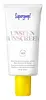
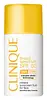
Supergoop! Unseen Sunscreen SPF 40 PA+++ Versus Clinique Broad Spectrum SPF 50 Mineral Sunscreen Fluid for Face
This chemical sunscreen covers most of the UV range, lighter on the deep UVA that drives aging.
This hybrid sunscreen covers the full UV range and blocks ~98% of UVB at SPF 50.

What's inside
What's inside
 Key Ingredients
Benefits
Concerns
Ingredients Side-by-side
Butyl Methoxydibenzoylmethane 3%
UV Absorber
Homosalate 8%
Skin Conditioning
Ethylhexyl Salicylate 5%
UV Absorber
Octocrylene 4%
UV Absorber

Isododecane
EmollientDimethicone Crosspolymer
Emulsion Stabilising
Dimethicone/Bis-Isobutyl PPG-20 Crosspolymer
Emollient
Polymethylsilsesquioxane
Isohexadecane
EmollientDicaprylyl Carbonate
EmollientMeadowfoam Estolide
Skin ConditioningCaprylic/Capric Triglyceride
Masking


Polyester-7
Skin ConditioningNeopentyl Glycol Diheptanoate
EmollientLithothamnion Calcareum Extract
Skin ConditioningCaprylyl Glycol
Emollient
Butyrospermum Parkii Butter
Skin Conditioning



Jojoba Esters
Emollient
Mannitol
Humectant
Boswellia Serrata Resin Extract
SmoothingLecithin
Emollient
Microcrystalline Cellulose
AbsorbentDiatomaceous Earth
Abrasive

Zinc Sulfate
Antimicrobial
Silica
Abrasive
Tocopherol
Antioxidant





Butyl Methoxydibenzoylmethane 3%, Homosalate 8%, Ethylhexyl Salicylate 5%, Octocrylene 4%, Isododecane, Dimethicone Crosspolymer, Dimethicone/Bis-Isobutyl PPG-20 Crosspolymer, Polymethylsilsesquioxane, Isohexadecane, Dicaprylyl Carbonate, Meadowfoam Estolide, Caprylic/Capric Triglyceride, Polyester-7, Neopentyl Glycol Diheptanoate, Lithothamnion Calcareum Extract, Caprylyl Glycol, Butyrospermum Parkii Butter, Jojoba Esters, Mannitol, Boswellia Serrata Resin Extract, Lecithin, Microcrystalline Cellulose, Diatomaceous Earth, Zinc Sulfate, Silica, Tocopherol
Titanium Dioxide 6.3%
Cosmetic Colorant
Zinc Oxide 4%
Cosmetic Colorant
Water
Skin ConditioningDimethicone
Emollient
Butyloctyl Salicylate
Skin Conditioning
Polydiethylsiloxane
Emollient
C12-15 Alkyl Benzoate
AntimicrobialIsononyl Isononanoate
EmollientDiethylhexyl Succinate
EmollientNeopentyl Glycol Diheptanoate
EmollientMethyl Trimethicone
Skin Conditioning
Butylene Glycol
Humectant
Ethylhexyl Methoxycrylene
Skin Conditioning
Lauryl PEG-9 Polydimethylsiloxyethyl Dimethicone
Skin Conditioning
Silica
Abrasive
Dipentaerythrityl Tri-Polyhydroxystearate
Emollient
Laureth-4
Emulsifying
Cetyl PEG/PPG-10/1 Dimethicone
Emulsifying
Dimethicone/PEG-10/15 Crosspolymer
Dimethicone Silylate
Hydrolyzed Wheat Protein/Pvp Crosspolymer
Triethoxycaprylylsilane
Dimethicone Crosspolymer-3
Skin Conditioning
Isostearic Acid
Cleansing
Caprylyl Glycol
Emollient
Polyhydroxystearic Acid
Emulsifying
Dipropylene Glycol
HumectantPhenoxyethanol
Preservative
CI 77492
Cosmetic ColorantCI 77491
Cosmetic ColorantTitanium Dioxide 6.3%, Zinc Oxide 4%, Water, Dimethicone, Butyloctyl Salicylate, Polydiethylsiloxane, C12-15 Alkyl Benzoate, Isononyl Isononanoate, Diethylhexyl Succinate, Neopentyl Glycol Diheptanoate, Methyl Trimethicone, Butylene Glycol, Ethylhexyl Methoxycrylene, Lauryl PEG-9 Polydimethylsiloxyethyl Dimethicone, Silica, Dipentaerythrityl Tri-Polyhydroxystearate, Laureth-4, Cetyl PEG/PPG-10/1 Dimethicone, Dimethicone/PEG-10/15 Crosspolymer, Dimethicone Silylate, Hydrolyzed Wheat Protein/Pvp Crosspolymer, Triethoxycaprylylsilane, Dimethicone Crosspolymer-3, Isostearic Acid, Caprylyl Glycol, Polyhydroxystearic Acid, Dipropylene Glycol, Phenoxyethanol, CI 77492, CI 77491
Reviews
Ingredients Explained
These ingredients are found in both products.
Ingredients higher up in an ingredient list are typically present in a larger amount.
Caprylyl Glycol is a humectant, skin conditioner, emollient, and preservative booster derived from either caprylic acid or synthetically created.
Typical use levels vary from 0.3-1% as a preservative booster and go up to 2% to condition skin.
Because it is not a free-fatty acid, this ingredient is fungal acne safe (there's nothing for Malassezia to feed on).
Learn more about Caprylyl GlycolNeopentyl Glycol Diheptanoate is a lightweight synthetic emollient that also helps improve how a product feels and spreads.
In a formula, it's a workhorse that:
The Cosmetic Ingredient Review panel has concluded this ingredient to be safe in cosmetics and found to be a non-ocular (eye) irritant at 100% in rabbits.
Usage levels vary depending on product type; industry surveys report it around 2.2% in baby products, 19.5% in hair sprays, and 1-20% in skincare.
Learn more about Neopentyl Glycol DiheptanoateSilica, also known as silicon dioxide, is a naturally occurring mineral. It is used as a fine, spherical, and porous powder in cosmetics.
Though it has exfoliant properties, the function of silica varies depending on the product.
The unique structure of silica enhances the spreadability and adds smoothness, making it a great texture enhancer.
It is also used as an active carrier, emulsifier, and mattifier due to its ability to absorb excess oil.
In some products, tiny microneedles called spicules are made from silica or hydrolyzed sponge. When you rub them in, they lightly polish away dead skin layers and enhance the penetration of active ingredients.
Learn more about Silica

