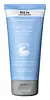
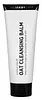
REN Clean Skincare Rosa Centifolia™ No.1 Purity Cleansing Balm Versus The INKEY List Oat Cleansing Balm
This oil-based cleanser uses mild cleansing ingredients, but contains alcohol that may feel drying for some.
This oil-based makeup remover is made to dissolve makeup, sunscreen, and daily buildup.

What's inside
What's inside
 Key Ingredients
Benefits
Concerns
Ingredients Side-by-side
Prunus Amygdalus Dulcis Oil
Skin Conditioning





Cetearyl Ethylhexanoate
Emollient
Glyceryl Cocoate
Emollient

Caprylic/Capric Triglyceride
Masking
Glyceryl Stearate
Emollient
Glyceryl Dibehenate
Emollient
Tribehenin
Emollient
Glyceryl Behenate
Emollient
Butyrospermum Parkii Butter
Skin Conditioning
Sodium Cocoyl Glutamate
Cleansing
Parfum
Masking


Rosa Centifolia Flower Extract
Astringent
Cymbopogon Martini Oil
Masking
Viola Odorata Extract
Skin ConditioningAnthemis Nobilis Flower Oil
Masking

Lecithin
Emollient
Benzyl Alcohol
Perfuming

Oryzanol
Skin ConditioningTocopherol
Antioxidant





Citronellol
Perfuming
Geraniol
Perfuming
Eugenol
Perfuming
Linalool
Perfuming
Prunus Amygdalus Dulcis Oil, Cetearyl Ethylhexanoate, Glyceryl Cocoate, Caprylic/Capric Triglyceride, Glyceryl Stearate, Glyceryl Dibehenate, Tribehenin, Glyceryl Behenate, Butyrospermum Parkii Butter, Sodium Cocoyl Glutamate, Parfum, Rosa Centifolia Flower Extract, Cymbopogon Martini Oil, Viola Odorata Extract, Anthemis Nobilis Flower Oil, Lecithin, Benzyl Alcohol, Oryzanol, Tocopherol, Citronellol, Geraniol, Eugenol, Linalool
Prunus Amygdalus Dulcis Oil
Skin Conditioning
Cetearyl Alcohol
Emollient
PEG-6 Caprylic/Capric Glycerides
EmulsifyingAvena Sativa Kernel Oil
Skin Conditioning
Candelilla Cera
Emollient
Silica
Abrasive


Sorbitan Stearate
Emulsifying
Tribehenin
Emollient
PEG-60 Almond Glycerides
Emulsifying
Avena Sativa Kernel Flour
Abrasive
Water
Skin ConditioningBenzyl Alcohol
Perfuming
Phenoxyethanol
Preservative
Lecithin
Emollient
1,2-Hexanediol
Skin Conditioning
Ascorbyl Palmitate
Antioxidant

Tocopherol
Antioxidant
Biosaccharide Gum-4
Skin Conditioning
Helianthus Annuus Seed Oil
Emollient
Prunus Amygdalus Dulcis Oil, Cetearyl Alcohol, PEG-6 Caprylic/Capric Glycerides, Avena Sativa Kernel Oil, Candelilla Cera, Silica, Sorbitan Stearate, Tribehenin, PEG-60 Almond Glycerides, Avena Sativa Kernel Flour, Water, Benzyl Alcohol, Phenoxyethanol, Lecithin, 1,2-Hexanediol, Ascorbyl Palmitate, Tocopherol, Biosaccharide Gum-4, Helianthus Annuus Seed Oil
Reviews
Ingredients Explained
These ingredients are found in both products.
Ingredients higher up in an ingredient list are typically present in a larger amount.
Benzyl Alcohol is an aromatic alcohol with several roles: it's a preservative, solvent, and mild fragrance component with a floral scent.
This ingredient has been deemed safe for use in cosmetic formulations at concentrations up to 5%, and up to 10% in hair dyes. You'll typically see 0.5-2% in most rinse-off or leave-on products.
As a preservative, it works by disrupting the membrane of microbial proteins. This helps keep bacteria and fungi from growing in your products.
The sensitization picture is actually quite assuring as well:of nearly 71,000 patients patch tested with benzyl alcohol, only 0.21% showed a positive reaction with most of them being weakly positive.
This led researchers to conclude that benzyl alcohol cannot be regarded as a significant contact allergen.
It is worth noting this ingredient is classified as one of the EU's regulated fragrance allergens and restricted to 1% in finished products.
Labels must also declare it in concentrations above 0.001% in leave-on products and 0.01% in rinse-off products.
At concentrations around 5%, localized redness and itching can appear as a direct irritant response and not as a true allergic reaction.
Learn more about Benzyl AlcoholLecithin is a term for a group of substances found in the cell membranes of plants, animals, and humans. They are made up of phospholipids.
Thanks to its amphiphilic structure (water-loving head and oil-loving tail), it is a true multitasker:
It plays well with most ingredients and is typically used at 0.1-1%. However, concentrations up to 50% have been reported in moisturizers.
Learn more about LecithinThis ingredient is also known as sweet almond oil. It is a lightweight, cold-pressed oil from the ripe seeds of the sweet almond tree.
Sweet almond oil is rich in skin-nourishing fatty acids such as oleic acid (55-86%) and linolenic acid (7-35%).
As an emollient, it softens and hydrates skin by forming a thin barrier that locks in moisture.
Clinical studies have found it to be non-irritating and non-sensitizing. The CIR Expert Panel has evaluated the available safety data and concluded it is safe for topical use.
Because of the oleic acid content, this ingredient may not be fungal acne safe.
Learn more about Prunus Amygdalus Dulcis OilTocopherol is a fat-soluble antioxidant known as Vitamin E.
You'll find this ingredient in the vast majority of skincare (for good reason). It works to neutralize free radicals, or unstable molecules generated by UV exposure, pollution, and other environmental stressors, before they can cause oxidative damage to your skin cells.
Topically applied tocopherol has been shown to protect against UV damage by ramping up the skin's own natural defense enzymes.
It also acts as a skin conditioning agent; some studies show that regular topical use can improve the skin's water-binding capacity over 2-4 weeks.
This ingredient is especially loved for being a team player. When combined with Vitamin C, the photoprotective effect of both ingredients roughly doubles and the combo also helps reduce UV-induced DNA damage.
This ingredient has some brightening potential but it's more of a prevention ingredient than spot-fader. Cell studies show it can slow down melanin production but it's worth noting that it's not the most powerful brightener out there.
In formulations, it also serves as a stabilizer that helps protect other oxidation-prone ingredients from degrading.
Concentrations usually range from 0.1-1% in most leave-on products.
Learn more about TocopherolTribehenin is the triglyceride of glycerin and behenic acid. It is an emollient that helps soften and condition skin.
Safety-wise, this is a well-vetted ingredient. Repeated-insult patch tests of 0.38% tribehenin did not trigger sensitization.
This ingredient may not be fungal acne safe because behenic acid falls into the chain-length range that Malassezia yeasts can feed on.
Learn more about Tribehenin

