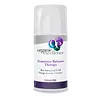
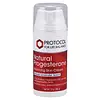
Organic Excellence Feminine Balance Therapy Versus Protocol Natural Progesterone Balancing Skin Cream

What's inside
What's inside
 Key Ingredients
Benefits
Concerns
Ingredients Side-by-side
Water
Skin ConditioningAloe Barbadensis Extract
Skin Conditioning


Persea Gratissima Oil
Skin Conditioning




Glycerin
Humectant

Viburnum Opulus Extract
Antioxidant
Progesterone
Cymbopogon Schoenanthus Oil
Masking

Rosmarinus Officinalis Extract
AntimicrobialSilybum Marianum Extract
Skin Conditioning
Stearic Acid
Cleansing
Chamomilla Vulgaris Extract
Skin ProtectingDaucus Carota Sativa Seed Oil
Emollient
Tocopherol
Antioxidant



Vitis Vinifera Seed Extract
Antimicrobial
Retinyl Palmitate
Skin Conditioning
Dioscorea Opposita Root
Skin ConditioningWater, Aloe Barbadensis Extract, Persea Gratissima Oil, Glycerin, Viburnum Opulus Extract, Progesterone, Cymbopogon Schoenanthus Oil, Rosmarinus Officinalis Extract, Silybum Marianum Extract, Stearic Acid, Chamomilla Vulgaris Extract, Daucus Carota Sativa Seed Oil, Tocopherol, Vitis Vinifera Seed Extract, Retinyl Palmitate, Dioscorea Opposita Root
Water
Skin ConditioningAloe Barbadensis Leaf Juice
Skin Conditioning
Glyceryl Stearate Se
Emulsifying
Glycerin
Humectant
Stearic Acid
Cleansing
Cetearyl Alcohol
Emollient

Caprylic/Capric Triglyceride
Masking
Helianthus Annuus Seed Oil
Emollient
Simmondsia Chinensis Seed Oil
Emollient
Cetearyl Glucoside
Emulsifying
Progesterone
Phenoxyethanol
Preservative
Ethylhexylglycerin
Skin ConditioningLavandula Angustifolia Oil
Masking

Parfum
Masking
Anthemis Nobilis Flower Oil
Masking
Citrus Aurantium Bergamia Fruit Oil
Masking
Rosmarinus Officinalis Leaf Extract
AntimicrobialXanthan Gum
EmulsifyingPotassium Sorbate
Preservative
Panthenol
Skin Conditioning
Retinyl Palmitate
Skin Conditioning
Tocopherol
Antioxidant
Serenoa Serrulata Fruit Extract
Skin Conditioning
Chamomilla Recutita Flower Extract
Masking
Citric Acid
Buffering
Water, Aloe Barbadensis Leaf Juice, Glyceryl Stearate Se, Glycerin, Stearic Acid, Cetearyl Alcohol, Caprylic/Capric Triglyceride, Helianthus Annuus Seed Oil, Simmondsia Chinensis Seed Oil, Cetearyl Glucoside, Progesterone, Phenoxyethanol, Ethylhexylglycerin, Lavandula Angustifolia Oil, Parfum, Anthemis Nobilis Flower Oil, Citrus Aurantium Bergamia Fruit Oil, Rosmarinus Officinalis Leaf Extract, Xanthan Gum, Potassium Sorbate, Panthenol, Retinyl Palmitate, Tocopherol, Serenoa Serrulata Fruit Extract, Chamomilla Recutita Flower Extract, Citric Acid
Ingredients Explained
These ingredients are found in both products.
Ingredients higher up in an ingredient list are typically present in a larger amount.
Glycerin (or glycerol) is a compound naturally found in your skin. It's a powerhouse humectant that pulls water into the stratum corneum.
Topically, glycerin does several things at once:
Your skin makes glycerin on its own (mostly from sebaceous oil breakdown) and shuttles it to your outermost layer of skin, or your epidermis, via aquaporin-3.
Aquaporin-3 is a transporter that is essential for normal skin hydration, elasticity, and repair. Interestingly, mice lacking in AQP3 have dry and less elastic skin that can be fully corrected with glycerin.
This ingredient is non-irritating, plays well with almost every ingredient, and works across all skin types. Typical use is anywhere between 3-10% but can go up to 79% in some leave-on products.
Just know very high concentrations (>40%) can feel tacky in low humidity.
Glycerin is the name for this ingredient in American English. British English uses Glycerol/Glycerine.
Learn more about GlycerinRetinyl Palmitate is a form of retinoid. Retinoids are the superstar class of anti-aging ingredients that include Tretinoin and Retinol.
This particular ingredient has had a bumpy year with its rise and fall in popularity.
First, Retinyl Palmitate is created from Palmitic Acid and Retinol. It is a Retinol ester and considered one of the weaker forms of retinoid.
This is because all retinoids have to be converted to Tretinoin, AKA Retinoic Acid.
Retinyl Palmitate is pretty far down the line and has to go through multiple conversions before its effects are seen. Once it's on your skin, enzymes called esterases convert it into Retinol, then into Retinal, and finally into Retinoic Acid; that's three steps with a little lost at each one.
The benefits of Retinyl Palmitate are debated due to this long and ineffective conversion line.
So why use it at all?
The answer is stability. Retinol and Retinoic Acid break down fast when they hit light, heat, and air, and Retinoic Acid can be pretty irritating on top of that.
Retinyl Palmitate is much more stable and gentler, making it easier to formulate with and easier on sensitive skin (even if it's weaker gram for gram).
Studies show Retinyl Palmitate to help:
Newer research from 2023-2025 also found that Retinyl Palmitate works especially well when paired with Retinol. The two seem to cover each other's weak spots; retinol brings the potency while Retinyl Palmitate brings the stability and gentleness. Together, they repair UV damage better than either one does alone.
This ingredient used to be found in sunscreens to boost the efficacy of sunscreen filters.
The downfall of Retinyl Palmitate was due to released reports about the ingredient being correlated to sun damage and skin tumors.
Most of this traces back to a 2012 US National Toxicology Program (NTP) study where hairless mice coated in Retinyl Palmitate cream and exposed to UV light developed skin tumors faster.
Here's the nuance, though.
When the Cosmetic Ingredient Review (CIR) Expert Panel went back through that study, they found methodological flaws and decided the results couldn't be interpreted as proof of extra risk.
The EU's Scientific Committee on Consumer Safety (SCCS) said the mouse findings might point to a concern but they're hard to apply to humans since hairless mouse skin and human skin behave differently.
While there is a study showing this ingredient to cause DNA damage when exposed to UVA, there is no concrete proof of it being linked to skin cancer. It is completely safe to use when used correctly.
Both the CIR and the SCCS consider it safe at the concentrations used in cosmetics; the SCCS specifically cleared retinoids up to 0.05% in body lotions and 0.3% in face creams, hand creams, and rinse-off products.
As of 2025, the EU has written those limits into law, plus a label warning about your total Vitamin A intake from all sources.
All retinoids increase your skin's sensitivity to the sun in the first few months of usage. Be especially careful with reapplying sunscreen when using any form of retinoid.
One more note: if you're pregnant, high doses of Vitamin A can be a concern, so a lot of people skip topical retinoids (including Retinyl Palmitate) during pregnancy just to be safe. Check with your doctor if you're unsure.
Fun fact: This ingredient is often added to low-fat milk to increase the levels of Vitamin A.
Learn more about Retinyl PalmitateStearic Acid is a fatty acid that is already found in your skin. It's one of the free fatty acids that works alongside ceramides and cholesterols to maintain your barrier.
In cosmetics, it is a multitasker:
Safety-wise, the CIR Expert Panel has concluded it to be safe in cosmetics when formulated to be non-irritating and non-sensitizing.
Free stearic acid is a C18 fatty acid that the Malassezia yeast can substrate, so this ingredient may not be fungal acne safe.
Learn more about Stearic AcidTocopherol is a fat-soluble antioxidant known as Vitamin E.
You'll find this ingredient in the vast majority of skincare (for good reason). It works to neutralize free radicals, or unstable molecules generated by UV exposure, pollution, and other environmental stressors, before they can cause oxidative damage to your skin cells.
Topically applied tocopherol has been shown to protect against UV damage by ramping up the skin's own natural defense enzymes.
It also acts as a skin conditioning agent; some studies show that regular topical use can improve the skin's water-binding capacity over 2-4 weeks.
This ingredient is especially loved for being a team player. When combined with Vitamin C, the photoprotective effect of both ingredients roughly doubles and the combo also helps reduce UV-induced DNA damage.
This ingredient has some brightening potential but it's more of a prevention ingredient than spot-fader. Cell studies show it can slow down melanin production but it's worth noting that it's not the most powerful brightener out there.
In formulations, it also serves as a stabilizer that helps protect other oxidation-prone ingredients from degrading.
Concentrations usually range from 0.1-1% in most leave-on products.
Learn more about TocopherolWater. It's the most common cosmetic ingredient of all. You'll usually see it at the top of ingredient lists, meaning that it makes up the largest part of the product.
So why is it so popular? Water most often acts as a solvent - this means that it helps dissolve other ingredients into the formulation.
You'll also recognize water as that liquid we all need to stay alive. If you see this, drink a glass of water. Remember to stay hydrated!
Learn more about WaterThis is not an official INCI ingredient. It is a steroid hormone. Please consult with a medical professional about using this ingredient.


