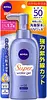
This chemical sunscreen covers most of the UV range, lighter on the deep UVA that drives aging.
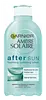
This hydrating after sun care is formulated around Butyrospermum Parkii Butter and Aloe Barbadensis Leaf Extract to hydrate skin and calm redness.


What's inside
What's inside
 Key Ingredients
Benefits
Concerns
Ingredients Side-by-side
Water
Skin ConditioningEthylhexyl Methoxycinnamate
UV Absorber


Alcohol
Antimicrobial



Propylene Glycol
Humectant
Dimethicone
Emollient

Ethylhexyl Triazone
UV Absorber
Diethylamino Hydroxybenzoyl Hexyl Benzoate
UV Filter
Butylene Glycol
Humectant
Sodium Dilauramidoglutamide Lysine
HumectantPyrus Cydonia Seed Extract
MaskingGeranium Robertianum Extract
AstringentPhellodendron Amurense Bark Extract
Skin ConditioningSodium Hyaluronate
Humectant


Acrylates/C10-30 Alkyl Acrylate Crosspolymer
Emulsion StabilisingCarbomer
Emulsion StabilisingTocopheryl Acetate
Antioxidant


Sodium Hydroxide
BufferingBHT
Antioxidant
Methylparaben
Preservative

Water, Ethylhexyl Methoxycinnamate, Alcohol, Propylene Glycol, Dimethicone, Ethylhexyl Triazone, Diethylamino Hydroxybenzoyl Hexyl Benzoate, Butylene Glycol, Sodium Dilauramidoglutamide Lysine, Pyrus Cydonia Seed Extract, Geranium Robertianum Extract, Phellodendron Amurense Bark Extract, Sodium Hyaluronate, Acrylates/C10-30 Alkyl Acrylate Crosspolymer, Carbomer, Tocopheryl Acetate, Sodium Hydroxide, BHT, Methylparaben
Water
Skin ConditioningParaffinum Liquidum
Emollient

Glycerin
Humectant
Butyrospermum Parkii Butter
Skin Conditioning

PEG-100 Stearate
Surfactant
Glyceryl Stearate
Emollient
Dimethicone
Emollient
Cetearyl Alcohol
Emollient

Sodium Hydroxide
BufferingPhenoxyethanol
Preservative
Limonene
Perfuming

Xanthan Gum
EmulsifyingZinc Gluconate
Skin Conditioning



Linalool
Perfuming
Aloe Barbadensis Leaf Extract
Emollient
Aloe Barbadensis Leaf Juice
Skin Conditioning
Carbomer
Emulsion StabilisingFarnesol
Perfuming
Geraniol
Perfuming
Bisabolol
Antioxidant
Methylparaben
Preservative
Citronellol
Perfuming
Citral
Perfuming
Parfum
Masking
Water, Paraffinum Liquidum, Glycerin, Butyrospermum Parkii Butter, PEG-100 Stearate, Glyceryl Stearate, Dimethicone, Cetearyl Alcohol, Sodium Hydroxide, Phenoxyethanol, Limonene, Xanthan Gum, Zinc Gluconate, Linalool, Aloe Barbadensis Leaf Extract, Aloe Barbadensis Leaf Juice, Carbomer, Farnesol, Geraniol, Bisabolol, Methylparaben, Citronellol, Citral, Parfum
Reviews
Ingredients Explained
These ingredients are found in both products.
Ingredients higher up in an ingredient list are typically present in a larger amount.
Carbomer is a synthetic thickening and gelling agent. It's basically the ingredient that gives a lot of serums, gels, creams, and sunscreens their smooth, non-sticky texture.
Although legally permitted at very high levels, carbomers are normally used at concentrations below 1%.
It also needs to be neutralized to actually thicken, and because it is a large molecule, it doesn't really penetrate the skin barrier.
Allergy-wise, the risk is very low. Clinical studies show carbomers have low potential for skin irritation/sensitization even at concentrations up to 100%.
A 2024 UK study patch-tested 1,302 patients and found true allergy to the parent group of carbomer to be rare with no confirmed relevant reactions.
Learn more about CarbomerDimethicone is a type of synthetic silicone created from natural materials such as quartz. It is also known as polydimethylsiloxane.
What it does:
Dimethicone comes in different viscosities:
Depending on the viscosity, dimethicone has different properties.
Ingredients lists don't always show which type is used, so we recommend reaching out to the brand if you have questions about the viscosity.
This ingredient is unlikely to cause irritation because it does not get absorbed into skin. However, people with silicone allergies should be careful about using this ingredient.
Note: Dimethicone may contribute to pilling. This is because it is not oil or water soluble, so pilling may occur when layered with products. When mixed with heavy oils in a formula, the outcome is also quite greasy.
Learn more about DimethiconeMethylparaben is a synthetic preservative and one of the most widely used in the world. It has a simple, but important job: prevent your products from going bad by stopping bacteria, yeast, and mold from growing.
Typical use levels are low, often 0.1-0.3%.
This is also one of the most heavily studied preservatives out there and major regulatory bodies have repeatedly given it the green light.
In 2023, the EU's Scientific Committee on Consumer Safety (SCCS) confirmed that this ingredient is safe up to 0.4% on its own, of up to 0.8% when mixed with other paraben esters.
Here's the science behind the noise behind parabens/hormones as well:
Methylparaben shows very weak estrogen-like activity in vitro tests (more than 1,000x weaker than your body's own estradiol). In vivo (live-organism) studies don't support a meaningful endocrine-disrupting effect either.
You get a stronger estrogenic effect from eating tofu, actually.
It's also a low sensitizer and allergic reactions are uncommon; they usually happen on damage or broken skin.
There is a caveat: France has proposed to formally re-examine its endocrine classification in 2025 so the regulatory conversation isn't fully closed as of yet.
But as it stands today, this ingredient is considered safe at permitted levels.
Learn more about MethylparabenSodium Hydroxide is also known as lye or caustic soda. It is used to adjust the pH of products; many ingredients require a specific pH to be effective.
In small amounts, sodium hydroxide is considered safe to use. However, large amounts may cause chemical burns due to its high alkaline.
Your skin has a natural pH and acid mantle. This acid mantle helps prevent harmful bacteria from breaking through. The acid mantle also helps keep your skin hydrated.
"Alkaline" refers to a high pH level. A low pH level would be considered acidic.
Learn more about Sodium HydroxideWater. It's the most common cosmetic ingredient of all. You'll usually see it at the top of ingredient lists, meaning that it makes up the largest part of the product.
So why is it so popular? Water most often acts as a solvent - this means that it helps dissolve other ingredients into the formulation.
You'll also recognize water as that liquid we all need to stay alive. If you see this, drink a glass of water. Remember to stay hydrated!
Learn more about Water

