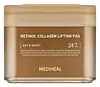
This anti-aging toner pad uses a pre-saturated pad with Retinol and Adenosine to soften the look of wrinkles and refine skin texture.
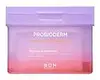
This anti-aging toner pad uses a pre-saturated pad with Niacinamide and Collagen Extract to soften the look of wrinkles and refine the look of pores.

What's inside
What's inside
 Key Ingredients
Benefits
Concerns
Ingredients Side-by-side
Water
Skin ConditioningDipropylene Glycol
HumectantGlycereth-26
Humectant
Betaine
Humectant

1,2-Hexanediol
Skin Conditioning
Glycerin
Humectant
Diphenyl Dimethicone
Emollient
Hydroxyacetophenone
Antioxidant
Triethylhexanoin
MaskingHydrogenated Lecithin
Emulsifying
Allantoin
Skin Conditioning
Octyldodeceth-16
EmulsifyingPolyglyceryl-10 Oleate
Skin Conditioning

Sphingomonas Ferment Extract
Skin Conditioning
Adenosine
Skin Conditioning
Disodium EDTA
Sodium Polyacrylate
Absorbent
Hydrolyzed Collagen
Emollient
Lavandula Angustifolia Oil
Masking




Phytosterols
Skin Conditioning
Anthemis Nobilis Flower Oil
Masking
Retinol
Skin Conditioning






Beta-Glucan
Skin Conditioning
Ceramide NP
Skin Conditioning
Water, Dipropylene Glycol, Glycereth-26, Betaine, 1,2-Hexanediol, Glycerin, Diphenyl Dimethicone, Hydroxyacetophenone, Triethylhexanoin, Hydrogenated Lecithin, Allantoin, Octyldodeceth-16, Polyglyceryl-10 Oleate, Sphingomonas Ferment Extract, Adenosine, Disodium EDTA, Sodium Polyacrylate, Hydrolyzed Collagen, Lavandula Angustifolia Oil, Phytosterols, Anthemis Nobilis Flower Oil, Retinol, Beta-Glucan, Ceramide NP
Water
Skin ConditioningButylene Glycol
Humectant
Niacinamide
Smoothing
1,2-Hexanediol
Skin Conditioning
Collagen Extract
Skin Conditioning
Diethoxyethyl Succinate
SolventHydroxyethyl Urea
Humectant
Polyglyceryl-10 Laurate
Skin Conditioning
Xanthan Gum
EmulsifyingGlyceryl Caprylate
EmollientEthylhexylglycerin
Skin ConditioningAdenosine
Skin Conditioning
Sodium Phytate
Panthenol
Skin Conditioning
Citric Acid
Buffering
Capryloyl Salicylic Acid
Exfoliating
Camellia Japonica Flower Extract
EmollientTocopherol
Antioxidant
Lactobacillus Ferment Lysate
Skin Conditioning
Soluble Collagen
Humectant
Acetyl Hexapeptide-8
Humectant
Palmitoyl Pentapeptide-4
Skin Conditioning
Acetyl Tetrapeptide-3
Skin Protecting
Palmitoyl Tetrapeptide-7
Skin Conditioning
Dipeptide-2
Skin Conditioning
Copper Tripeptide-1
Skin Conditioning
Palmitoyl Tripeptide-1
Skin Conditioning
Acetyl Tetrapeptide-5
Humectant
Nonapeptide-1
Skin Conditioning
Pentapeptide-3
Skin Conditioning
Dipeptide Diaminobutyroyl Benzylamide Diacetate
Skin Conditioning
Palmitoyl Tripeptide-5
Skin Conditioning
Palmitoyl Hexapeptide-12
Skin Conditioning
Tripeptide-1
Skin Conditioning
Hexapeptide-9
Skin Conditioning
Hexapeptide-11
Skin Conditioning
Oligopeptide-1
Skin Conditioning
Arginine/Lysine Polypeptide
Skin Conditioning
Water, Butylene Glycol, Niacinamide, 1,2-Hexanediol, Collagen Extract, Diethoxyethyl Succinate, Hydroxyethyl Urea, Polyglyceryl-10 Laurate, Xanthan Gum, Glyceryl Caprylate, Ethylhexylglycerin, Adenosine, Sodium Phytate, Panthenol, Citric Acid, Capryloyl Salicylic Acid, Camellia Japonica Flower Extract, Tocopherol, Lactobacillus Ferment Lysate, Soluble Collagen, Acetyl Hexapeptide-8, Palmitoyl Pentapeptide-4, Acetyl Tetrapeptide-3, Palmitoyl Tetrapeptide-7, Dipeptide-2, Copper Tripeptide-1, Palmitoyl Tripeptide-1, Acetyl Tetrapeptide-5, Nonapeptide-1, Pentapeptide-3, Dipeptide Diaminobutyroyl Benzylamide Diacetate, Palmitoyl Tripeptide-5, Palmitoyl Hexapeptide-12, Tripeptide-1, Hexapeptide-9, Hexapeptide-11, Oligopeptide-1, Arginine/Lysine Polypeptide
Reviews
Ingredients Explained
These ingredients are found in both products.
Ingredients higher up in an ingredient list are typically present in a larger amount.
1,2-Hexanediol is a synthetic liquid and another multi-functional powerhouse.
It is a:
- Humectant, drawing moisture into the skin
- Emollient, helping to soften skin
- Solvent, dispersing and stabilizing formulas
- Preservative booster, enhancing the antimicrobial activity of other preservatives
Adenosine is a purine nucleoside that your body already makes in every cell. In skincare, it acts mainly as a skin conditioning and anti-aging agent.
The way it works is fairly well mapped out:
Your skin has cells called fibroblasts that build collagen (the stuff that keeps skin firm and smooth). Adenosine basically flips a switch on these cells that tells them to get to work making more collagen and other proteins. These cells slow down on their own as skin ages, so Adenosine helps give them a little nudge to keep going.
The clinical backing is pretty solid too.
A blind, randomized, placebo-controlled trial of 126 women aged 45-65 tested a 0.1% cream twice daily and found real improvements in crow's feet and frown lines using a precise 3D skin-mapping technique; these changes showed up by week 3 and held at 2 months.
A later study using Adenosine-loaded dissolving microneedle patches reported gains in wrinkle depth, dermal density, elasticity, and hydration.
On concentrations, South Korea's Ministry of Food and Drug Safety has set 0.04% as the approved functional anti-wrinkle level. You'll typically see this ingredient used somewhere in the 0.04-0.1% range since it works at low doses.
This ingredient has been found safe for cosmetics with the data showing no irritation or sensitization.
Overall, this is a great ingredient for any anti-aging routine and has no photosensitizing effect, so it suits both AM and PM use.
Learn more about AdenosineWater. It's the most common cosmetic ingredient of all. You'll usually see it at the top of ingredient lists, meaning that it makes up the largest part of the product.
So why is it so popular? Water most often acts as a solvent - this means that it helps dissolve other ingredients into the formulation.
You'll also recognize water as that liquid we all need to stay alive. If you see this, drink a glass of water. Remember to stay hydrated!
Learn more about Water

