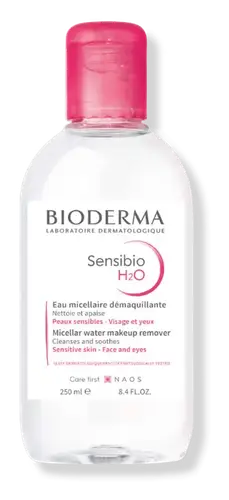
This oil-based cleanser is made to cleanse without leaving your skin tight or dry.
This oil-based makeup remover is made to dissolve makeup, sunscreen, and daily buildup.

What's inside
What's inside
 Key Ingredients
Benefits
Concerns
Ingredients Side-by-side
Isopropyl Palmitate
Emollient




Caprylic/Capric Triglyceride
Masking


PEG-20 Glyceryl Triisostearate
Emollient
Isohexadecane
EmollientPentaerythrityl Tetraethylhexanoate
Emollient
PEG-8 Diisostearate
Emulsifying
Coco-Caprylate/Caprate
Emollient
Triisostearin
Skin Conditioning
PEG-12 Diisostearate
Emulsifying
Paeonia Albiflora Flower Extract
TonicCamellia Japonica Seed Oil
Emollient
Simmondsia Chinensis Seed Oil
Emollient
Limnanthes Alba Seed Oil
Skin Conditioning
Helianthus Annuus Seed Oil
Emollient
Zea Mays Oil
Emulsifying
Water
Skin ConditioningCaprylyl Glycol
Emollient
Butylene Glycol
Humectant
Polyglyceryl-2 Triisostearate
Emulsifying
Hexylene Glycol
EmulsifyingDipentaerythrityl Tri-Polyhydroxystearate
Emollient
Parfum
Masking

Tocopheryl Acetate
Antioxidant


Phenoxyethanol
Preservative
Isopropyl Palmitate, Caprylic/Capric Triglyceride, PEG-20 Glyceryl Triisostearate, Isohexadecane, Pentaerythrityl Tetraethylhexanoate, PEG-8 Diisostearate, Coco-Caprylate/Caprate, Triisostearin, PEG-12 Diisostearate, Paeonia Albiflora Flower Extract, Camellia Japonica Seed Oil, Simmondsia Chinensis Seed Oil, Limnanthes Alba Seed Oil, Helianthus Annuus Seed Oil, Zea Mays Oil, Water, Caprylyl Glycol, Butylene Glycol, Polyglyceryl-2 Triisostearate, Hexylene Glycol, Dipentaerythrityl Tri-Polyhydroxystearate, Parfum, Tocopheryl Acetate, Phenoxyethanol
Reviews
Ingredients Explained
These ingredients are found in both products.
Ingredients higher up in an ingredient list are typically present in a larger amount.
Caprylyl Glycol is a humectant, skin conditioner, emollient, and preservative booster derived from either caprylic acid or synthetically created.
Typical use levels vary from 0.3-1% as a preservative booster and go up to 2% to condition skin.
Because it is not a free-fatty acid, this ingredient is fungal acne safe (there's nothing for Malassezia to feed on).
Learn more about Caprylyl GlycolPEG-12 Diisostearate isn't fungal acne safe.
PEG-20 Glyceryl Triisostearate is a synthetic, oil-loving helper ingredient that does two jobs:
This ingredient is made by joining three building blocks: PEG, Isostearic Acid and glycerin. The PEG gives it the oil-and-water blending power.
This ingredient has been found safe for use in cosmetics and broader PEG family testing shows minimal irritation/sensitization. The molecule's large size also means it isn't expected to penetrate skin to any meaningful degree.
Fungal acne note: This ingredient may not be fungal acne safe due to isostearic acid (C18). Isostearic acid falls into the C11-24 range that Malassezia can feed on.
Learn more about PEG-20 Glyceryl TriisostearatePEG-8 Diisostearate isn't fungal acne safe.
Tocopheryl Acetate is a stable, shelf-friendly form of vitamin E.
Formulators love it because plain vitamin E oxidizes quickly once it hits air. This acetate version stays stable and resists going off, helping to extend a product's shelf life.
It's actually inactive on its own and works like a slow-release "storage" form; the enzymes in your skin called esterases gradually convert it into active vitamin E over time.
One in vivo study showed 5% of the acetate in the living layer of the epidermis converted to vitamin E after 5 days of application. This study also found the skin gained protection against UV damage even though the conversion was slow and small.
Once converted, vitamin E acts as a skin's main fat-soluble antioxidant that fights free radicals to protect skin from damage.
Topical vitamin E generally boosts the skin's photoprotection, and it reduced UV-damage in animal models.
This ingredient has some brightening potential but it's more of a prevention ingredient than spot-fader. Cell studies show it can slow down melanin production but it's worth noting that it's not the most powerful brightener out there.
Overall, it has a pretty solid safety profile and has been found to be non-irritating and non-comedogenic. Allergic reactions may happen but stay rare due to how widely the ingredient gets used.
The concentration will vary depending on the formula; industry data shows 0.1% in baby lotions, 3% in lipsticks, and 5% in foot powders. You can also find this ingredient at 100% in a pure vitamin E oil.
Most leave-on skincare keeps it at the lower end, often between 0.5-1%.
Learn more about Tocopheryl AcetateWater. It's the most common cosmetic ingredient of all. You'll usually see it at the top of ingredient lists, meaning that it makes up the largest part of the product.
So why is it so popular? Water most often acts as a solvent - this means that it helps dissolve other ingredients into the formulation.
You'll also recognize water as that liquid we all need to stay alive. If you see this, drink a glass of water. Remember to stay hydrated!
Learn more about Water