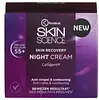
This barrier-repair night moisturizer is formulated around Panthenol to strengthen the skin barrier and hydrate skin.
This barrier-repair night moisturizer is formulated around Niacinamide to strengthen the skin barrier and soften the look of wrinkles.


What's inside
What's inside
 Key Ingredients
Benefits
Concerns
No concerns
Ingredients Side-by-side
Water
Skin ConditioningGlycerin
Humectant


Caprylic/Capric Triglyceride
Masking
Butyrospermum Parkii Butter
Skin Conditioning




Cetearyl Alcohol
Emollient
Cetearyl Isononanoate
Emollient
Ethylhexyl Stearate
Emollient
Glyceryl Stearate
Emollient
Glyceryl Stearate Citrate
Emollient
Persea Gratissima Oil
Skin Conditioning
Distarch Phosphate
AbsorbentTocopheryl Acetate
Antioxidant


Panthenol
Skin Conditioning

Hydrolyzed Ulva Lactuca Extract
Skin ConditioningNarcissus Poeticus Callus Extract
Antioxidant
Helianthus Annuus Seed Oil
Emollient
Carbomer
Emulsion StabilisingXanthan Gum
EmulsifyingTocopherol
Antioxidant

Sodium Hydroxide
BufferingSodium Hyaluronate
Humectant
Ethyl Ferulate
Antioxidant
Citric Acid
Buffering
Rosmarinus Officinalis Leaf Extract
AntimicrobialParfum
Masking


Linalool
Perfuming
Benzyl Alcohol
Perfuming

Caprylyl Glycol
Emollient
Phenoxyethanol
Preservative
CI 16035
Cosmetic ColorantWater, Glycerin, Caprylic/Capric Triglyceride, Butyrospermum Parkii Butter, Cetearyl Alcohol, Cetearyl Isononanoate, Ethylhexyl Stearate, Glyceryl Stearate, Glyceryl Stearate Citrate, Persea Gratissima Oil, Distarch Phosphate, Tocopheryl Acetate, Panthenol, Hydrolyzed Ulva Lactuca Extract, Narcissus Poeticus Callus Extract, Helianthus Annuus Seed Oil, Carbomer, Xanthan Gum, Tocopherol, Sodium Hydroxide, Sodium Hyaluronate, Ethyl Ferulate, Citric Acid, Rosmarinus Officinalis Leaf Extract, Parfum, Linalool, Benzyl Alcohol, Caprylyl Glycol, Phenoxyethanol, CI 16035






Ingredients Explained
These ingredients are found in both products.
Ingredients higher up in an ingredient list are typically present in a larger amount.
Caprylic/Capric Triglyceride (aka MCT Oil) is a lightweight emollient, solvent, and texture enhancer. It is considered a skin-softener by helping to prevent moisture loss.
Though it behaves like an oil, it is not technically one due to its chemical composition. One perk of this ingredient is that it is very stable, resistant to oxidation, and unlikely to go rancid.
In practice, that translates to a long shelf life and a consistently elegant skin feel.
While there is an assumption Caprylic Triglyceride can clog pores due to it being derived from coconut oil, there is no research supporting this. Just patch test if you have concerns.
Fractionated coconut oil and MCT Oil are both listed as Caprylic/Capric Triglyceride according to INCI. This is because INCI names are based on the ingredient’s final chemical composition and not its marketing name or source.
This ingredient is treated as the gold standard fungal acne safe oil. Even though it is coconut derived, the problematic lauric acid is stripped out.
This leaves just caprylic (C8) and capric (C10) acid. These chain lengths actually trend antifungal; a 2020 study found caprylic acid was enough to disrupt Malassezia furfur cell membrane, with a caprylic acid derivative damaging membrane structures at concentrations as low as 0.2%.
Learn more about Caprylic/Capric TriglycerideCarbomer is a synthetic thickening and gelling agent. It's basically the ingredient that gives a lot of serums, gels, creams, and sunscreens their smooth, non-sticky texture.
Although legally permitted at very high levels, carbomers are normally used at concentrations below 1%.
It also needs to be neutralized to actually thicken, and because it is a large molecule, it doesn't really penetrate the skin barrier.
Allergy-wise, the risk is very low. Clinical studies show carbomers have low potential for skin irritation/sensitization even at concentrations up to 100%.
A 2024 UK study patch-tested 1,302 patients and found true allergy to the parent group of carbomer to be rare with no confirmed relevant reactions.
Learn more about CarbomerPanthenol is a common ingredient that helps hydrate and soothe the skin. It is found naturally in our skin and hair.
There are two forms of panthenol: D and L.
D-panthenol is also known as dexpanthenol. Most cosmetics use dexpanthenol or a mixture of D and L-panthenol.
Panthenol is famous due to its ability to go deeper into the skin's layers. Using this ingredient has numerous pros (and no cons):
Like hyaluronic acid, panthenol is a humectant. Humectants are able to bind and hold large amounts of water to keep skin hydrated.
This ingredient works well for wound healing. It works by increasing tissue in the wound and helps close open wounds.
Once oxidized, panthenol converts to pantothenic acid. Panthothenic acid is found in all living cells.
This ingredient is also referred to as pro-vitamin B5.
Learn more about PanthenolSodium Hyaluronate is the salt form of hyaluronic acid. It is a long sugar chain that is naturally found in your skin, joints, and connective tissue that maintains hydration and elasticity.
In skincare, it works as a humectant. It pulls water from the environment and deeper layers of skin and binds it to the surface.
Interestingly, the size of the molecule affects its behavior:
Some clinical evidence links low molecular weight versions to improved wrinkle depth, elasticity, anti-inflammatory effects, and barrier repair.
Many serums use a blend of both weights so you can get surface hydration plus longer-lasting and deeper effects.
You'll typically see concentrations between 0.1-2% for this ingredient.
Learn more about Sodium HyaluronateSodium Hydroxide is also known as lye or caustic soda. It is used to adjust the pH of products; many ingredients require a specific pH to be effective.
In small amounts, sodium hydroxide is considered safe to use. However, large amounts may cause chemical burns due to its high alkaline.
Your skin has a natural pH and acid mantle. This acid mantle helps prevent harmful bacteria from breaking through. The acid mantle also helps keep your skin hydrated.
"Alkaline" refers to a high pH level. A low pH level would be considered acidic.
Learn more about Sodium HydroxideWater. It's the most common cosmetic ingredient of all. You'll usually see it at the top of ingredient lists, meaning that it makes up the largest part of the product.
So why is it so popular? Water most often acts as a solvent - this means that it helps dissolve other ingredients into the formulation.
You'll also recognize water as that liquid we all need to stay alive. If you see this, drink a glass of water. Remember to stay hydrated!
Learn more about WaterXanthan gum is used as a stabilizer and thickener within cosmetic products. It helps give products a sticky, thick feeling - preventing them from being too runny.
On the technical side of things, xanthan gum is a polysaccharide - a combination consisting of multiple sugar molecules bonded together.
Xanthan gum is a pretty common and great ingredient. It is a natural, non-toxic, non-irritating ingredient that is also commonly used in food products.
Learn more about Xanthan Gum

