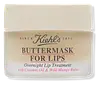
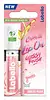
Kiehl's Buttermask For Lips Versus Labello Lip Oil
This hydrating lip mask is formulated around Bis-Diglyceryl Polyacyladipate-2 and Butyrospermum Parkii Butter to hydrate lips and strengthen the lip barrier.


What's inside
What's inside
 Key Ingredients
Benefits
Concerns
Ingredients Side-by-side
Bis-Diglyceryl Polyacyladipate-2
Emollient


Butyrospermum Parkii Butter
Skin Conditioning



Cocos Nucifera Oil
Masking


Beeswax
Emulsion Stabilising
Ricinus Communis Seed Oil
Masking
Candelilla Cera
Emollient
Euphorbia Cerifera Cera
Astringent
Theobroma Cacao Seed Butter
Emollient
Jojoba Esters
Emollient
Simmondsia Chinensis Seed Oil
Emollient
Octyldodecanol
Emollient
Helianthus Annuus Seed Wax
Skin Conditioning
Irvingia Gabonensis Kernel Butter
Skin Conditioning
Water
Skin ConditioningHydrogenated Coco-Glycerides
Emollient
Caprylic/Capric Triglyceride
Masking
Salix Nigra Bark Extract
Skin ProtectingTocopherol
Antioxidant





Acacia Decurrens Flower Wax
Emollient
Polyglycerin-3
Humectant
Sorbic Acid
Preservative
Vanilla Planifolia Fruit Extract
Skin Conditioning
Stevia Rebaudiana Leaf/Stem Extract
MaskingGlycine Soja Oil
Emollient
Citric Acid
Buffering
Bis-Diglyceryl Polyacyladipate-2, Butyrospermum Parkii Butter, Cocos Nucifera Oil, Beeswax, Ricinus Communis Seed Oil, Candelilla Cera, Euphorbia Cerifera Cera, Theobroma Cacao Seed Butter, Jojoba Esters, Simmondsia Chinensis Seed Oil, Octyldodecanol, Helianthus Annuus Seed Wax, Irvingia Gabonensis Kernel Butter, Water, Hydrogenated Coco-Glycerides, Caprylic/Capric Triglyceride, Salix Nigra Bark Extract, Tocopherol, Acacia Decurrens Flower Wax, Polyglycerin-3, Sorbic Acid, Vanilla Planifolia Fruit Extract, Stevia Rebaudiana Leaf/Stem Extract, Glycine Soja Oil, Citric Acid
Caprylic/Capric Triglyceride
Masking
Ricinus Communis Seed Oil
Masking
Cocoglycerides
Emollient
Octyldodecanol
Emollient
Vegetable Oil
Skin Conditioning
Ethylcellulose
Simmondsia Chinensis Seed Oil
Emollient
Helianthus Annuus Seed Oil
Emollient
Mica
Cosmetic ColorantAscorbyl Palmitate
Antioxidant
Tocopherol
Antioxidant
Propyl Gallate
Antioxidant

Aroma
CI 77891
Cosmetic ColorantCI 77492
Cosmetic ColorantCI 15850
Cosmetic Colorant
Reviews
Ingredients Explained
These ingredients are found in both products.
Ingredients higher up in an ingredient list are typically present in a larger amount.
Caprylic/Capric Triglyceride (aka MCT Oil) is a lightweight emollient, solvent, and texture enhancer. It is considered a skin-softener by helping to prevent moisture loss.
Though it behaves like an oil, it is not technically one due to its chemical composition. One perk of this ingredient is that it is very stable, resistant to oxidation, and unlikely to go rancid.
In practice, that translates to a long shelf life and a consistently elegant skin feel.
While there is an assumption Caprylic Triglyceride can clog pores due to it being derived from coconut oil, there is no research supporting this. Just patch test if you have concerns.
Fractionated coconut oil and MCT Oil are both listed as Caprylic/Capric Triglyceride according to INCI. This is because INCI names are based on the ingredient’s final chemical composition and not its marketing name or source.
This ingredient is treated as the gold standard fungal acne safe oil. Even though it is coconut derived, the problematic lauric acid is stripped out.
This leaves just caprylic (C8) and capric (C10) acid. These chain lengths actually trend antifungal; a 2020 study found caprylic acid was enough to disrupt Malassezia furfur cell membrane, with a caprylic acid derivative damaging membrane structures at concentrations as low as 0.2%.
Learn more about Caprylic/Capric TriglycerideOctyldodecanol is a fatty alcohol sourced from plant oils like coconut or palm (or made synthetically).
It is:
You'll likely see this in many BHA products because this is the go-to solvent for salicylic acid.
This ingredient is typically used at levels between 2-20%.
Regarding fungal acne:
In 2019, this ingredient was tested against multiple Malassezia species (the yeast that causes fungal acne) and showed no growth.
This ingredient is also known as castor oil. It is a skin conditioning ingredient.
The star component of castor oil is ricinoleic acid, an unusual fatty acid that makes up ~80-92% of its composition.
In skincare, it is an emollient that dries down to a solid film with water-binding properties. This helps keep skin hydrated and helps reduce transepidermal water loss (TEWL).
A 2026 dermatology review pulls together its broader uses:
Human clinical testing found this ingredient to be non-irritating and non-sensitizing.
Because castor oil contains fatty acids in the C11-24 range, this ingredient may not be fungal acne safe.
At this time, the literature does not support castor oil in regrowing hair. A 2022 systematic review found no strong evidence that it supports hair growth and only weak evidence that it improves hair shine.
Castor oil itself carries "perfuming" and "masking" function tags according to the official CosIng database. This is because of its mild odor and odor-dampening properties.
Learn more about Ricinus Communis Seed OilJojoba oil is one of the most well-studied plant-derived ingredients in cosmetics. It is an emollient with a special structure.
Because it is made up of 97-98% wax esters, it closely mirrors the linear monoesters found in human sebum. This makes it skin compatible, non-greasy, and lightweight.
Unlike other plant oils, jojoba wax doesn't easily penetrate skin. It mostly works in the uppermost layers as an emollient. This just means it forms a light barrier on the skin to help retain moisture.
Formulations with jojoba esters up to 90% reduced transepidermal water loss (TEWL) and increased barrier recovery by 81% (outperforming bisabolol at 47%).
Besides barrier support, the science also suggests jojoba to have anti-inflammatory effects and potential applications for skin infections, aging, and wound healing.
Fun fact: Indigenous cultures have used jojoba as a moisturizer and to help treat burns for centuries.
Fungal acne: The Malassezia yeast is known to metabolize fatty acids in the C11-24 range and jojoba's dominant fatty acid components fall into this range. This ingredient may not be fungal acne safe.
Learn more about Simmondsia Chinensis Seed OilTocopherol is a fat-soluble antioxidant known as Vitamin E.
You'll find this ingredient in the vast majority of skincare (for good reason). It works to neutralize free radicals, or unstable molecules generated by UV exposure, pollution, and other environmental stressors, before they can cause oxidative damage to your skin cells.
Topically applied tocopherol has been shown to protect against UV damage by ramping up the skin's own natural defense enzymes.
It also acts as a skin conditioning agent; some studies show that regular topical use can improve the skin's water-binding capacity over 2-4 weeks.
This ingredient is especially loved for being a team player. When combined with Vitamin C, the photoprotective effect of both ingredients roughly doubles and the combo also helps reduce UV-induced DNA damage.
This ingredient has some brightening potential but it's more of a prevention ingredient than spot-fader. Cell studies show it can slow down melanin production but it's worth noting that it's not the most powerful brightener out there.
In formulations, it also serves as a stabilizer that helps protect other oxidation-prone ingredients from degrading.
Concentrations usually range from 0.1-1% in most leave-on products.
Learn more about Tocopherol

