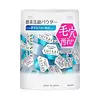
This lactic acid powder cleanser is formulated around Lactic Acid to exfoliate and smooth skin.
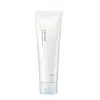
This salicylic acid foaming cleanser is formulated around Salicylic Acid to clear breakouts and unclog pores.

What's inside
What's inside
 Key Ingredients
Benefits
Concerns
Ingredients Side-by-side
Carrageenan



Silk
Methicone
Emollient
Isostearyl Alcohol
Emollient


BHT
Antioxidant
Lactic Acid
Buffering








Sodium Myristoyl Glutamate
CleansingSodium Lauroyl Glutamate
SurfactantLipase
Skin ConditioningTalc
Abrasive
Protease
Exfoliating
Sodium Cocoyl Isethionate
Cleansing
Tar Oil
Masking
Potassium Hydroxide
BufferingSodium C14-16 Olefin Sulfonate
Cleansing
Water
Skin ConditioningPotassium Laurate
EmulsifyingDipropylene Glycol
HumectantLactobacillus
Skin ConditioningLactobacillus/Soymilk Ferment Filtrate
Skin ConditioningPolyquaternium-51
Skin Conditioning

Butylene Glycol
Humectant
Alcohol
Antimicrobial

Methylparaben
Preservative


Sodium Laurate
CleansingEthyl Glucoside
HumectantSodium Hyaluronate
Humectant

Phenoxyethanol
Preservative
Potassium Oxide
BufferingBrassica Nigra Seed Extract
Skin ConditioningSodium C14-18 Olefin Sulfonate
CleansingCarrageenan, Silk, Methicone, Isostearyl Alcohol, BHT, Lactic Acid, Sodium Myristoyl Glutamate, Sodium Lauroyl Glutamate, Lipase, Talc, Protease, Sodium Cocoyl Isethionate, Tar Oil, Potassium Hydroxide, Sodium C14-16 Olefin Sulfonate, Water, Potassium Laurate, Dipropylene Glycol, Lactobacillus, Lactobacillus/Soymilk Ferment Filtrate, Polyquaternium-51, Butylene Glycol, Alcohol, Methylparaben, Sodium Laurate, Ethyl Glucoside, Sodium Hyaluronate, Phenoxyethanol, Potassium Oxide, Brassica Nigra Seed Extract, Sodium C14-18 Olefin Sulfonate
Glycerin
Humectant
Myristic Acid
Cleansing
Water
Skin ConditioningPotassium Hydroxide
BufferingPalmitic Acid
Emollient
PEG-32
HumectantPEG-6
HumectantDipropylene Glycol
HumectantLauric Acid
Cleansing
Glyceryl Stearate Se
Emulsifying
Sodium Methyl Cocoyl Taurate
Cleansing
Moroccan Lava Clay
Abrasive
Kaolin
Abrasive
Parfum
Masking

Tetrasodium EDTA
ChelatingSodium Lauroyl Glutamate
SurfactantPolyquaternium-7
Sodium Hyaluronate
Humectant
Prunus Armeniaca Juice
MoisturisingSodium Benzoate
Masking
Ethyl Glucoside
HumectantSalicylic Acid
Masking
Glycerin, Myristic Acid, Water, Potassium Hydroxide, Palmitic Acid, PEG-32, PEG-6, Dipropylene Glycol, Lauric Acid, Glyceryl Stearate Se, Sodium Methyl Cocoyl Taurate, Moroccan Lava Clay, Kaolin, Parfum, Tetrasodium EDTA, Sodium Lauroyl Glutamate, Polyquaternium-7, Sodium Hyaluronate, Prunus Armeniaca Juice, Sodium Benzoate, Ethyl Glucoside, Salicylic Acid
Ingredients Explained
These ingredients are found in both products.
Ingredients higher up in an ingredient list are typically present in a larger amount.
Dipropylene Glycol is a synthetically created humectant, stabilizer, and solvent.
This ingredient helps:
Dipropylene glycol is technically an alcohol, but it belongs to the glycol family (often considered part of the ‘good’ alcohols). This means it is hydrating and gentle on skin unlike drying solvent alcohols like denatured alcohol.
As a masking agent, Dipropylene Glycol can be used to cover the smell of other ingredients. However, it does not have a scent.
Studies show Dipropylene Glycol is considered safe to use in skincare.
Learn more about Dipropylene GlycolWe don't have a description for Ethyl Glucoside yet.
Potassium Hydroxide (also known as potash) is a strong alkaline ingredient that does one job: it nudges a product's pH up so the whole formula lands in a skin-friendly range.
It's also the base that turns oils into liquid soap during the soap making process.
An expert safety panel reviewed it and found it safe when formulations are made to be non-irritating.
As a pH adjuster, it's typically used well under 1% though regulatory caps go much higher: 5% in nail cuticle removers and 2-4.5% in hair straighteners.
Though there is some concern for irritation from raw or high pH material, a well-balanced formula will be a non-issue for the vast majority of people.
Learn more about Potassium HydroxideSodium Hyaluronate is the salt form of hyaluronic acid. It is a long sugar chain that is naturally found in your skin, joints, and connective tissue that maintains hydration and elasticity.
In skincare, it works as a humectant. It pulls water from the environment and deeper layers of skin and binds it to the surface.
Interestingly, the size of the molecule affects its behavior:
Some clinical evidence links low molecular weight versions to improved wrinkle depth, elasticity, anti-inflammatory effects, and barrier repair.
Many serums use a blend of both weights so you can get surface hydration plus longer-lasting and deeper effects.
You'll typically see concentrations between 0.1-2% for this ingredient.
Learn more about Sodium HyaluronateSodium Lauroyl Glutamate is an amino-acid based mild surfactant that is used in formulas as a primary or secondary cleansing agent. This means it helps lift away oil, dirt, and makeup.
You'll see this ingredient in facial cleansers, shampoos, and even toothpaste because it foams reasonably well while being much gentler than harsher surfactants like SLS.
A study comparing surfactant mixtures found that Sodium Lauroyl Glutamate caused visibly less disruption to skin lipid structure and less irritation than SLS when tested on human subjects; this correlated with the data from in vivo results as well.
The Tenside, Surfactants, Detergents cosmetics industry journal has also concluded that amino acid based surfactants are generally milder than their corresponding alkyl sulfate counterparts. They also stated glutamates in particular are considered one of the gentler options in the category.
The Cosmetic Ingredient Review (CIR) Expert Panel has reviewed dermal irritation and sensitization data for this ingredient at the highest reported use concentration and concluded it to be safe in present practices.
Typical use concentrations tend to run low (generally less than 10%) though the CIR's review noted the highest reported use concentration was 40% as a raw material blend (and not a diluted finished cosmetic product).
Learn more about Sodium Lauroyl GlutamateWater. It's the most common cosmetic ingredient of all. You'll usually see it at the top of ingredient lists, meaning that it makes up the largest part of the product.
So why is it so popular? Water most often acts as a solvent - this means that it helps dissolve other ingredients into the formulation.
You'll also recognize water as that liquid we all need to stay alive. If you see this, drink a glass of water. Remember to stay hydrated!
Learn more about Water

