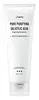
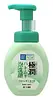
JUMISO Pore Purifying Salicylic Acid Foaming Cleanser Versus Hada Labo Gokujyun Hatomugi Bubble Face Wash
This salicylic acid foaming cleanser is formulated around Salicylic Acid to clear breakouts and unclog pores.


What's inside
What's inside
 Key Ingredients
Benefits
Concerns
Ingredients Side-by-side
Water
Skin ConditioningGlycerin
Humectant


Sodium Cocoyl Glycinate
Cleansing
Sodium Lauroyl Glutamate
SurfactantSodium Methyl Cocoyl Taurate
Cleansing
Butylene Glycol
Humectant
Glyceryl Stearate
Emollient

1,2-Hexanediol
Skin Conditioning
Salicylic Acid
Masking









Citric Acid
Buffering
Dimethyl Sulfone
SolventMontmorillonite
AbsorbentIllite
Abrasive
Dextrin
AbsorbentGardenia Florida Fruit Extract
Skin ConditioningMalic Acid
Buffering
Pyrus Malus Fruit Extract
Skin Conditioning
Water, Glycerin, Sodium Cocoyl Glycinate, Sodium Lauroyl Glutamate, Sodium Methyl Cocoyl Taurate, Butylene Glycol, Glyceryl Stearate, 1,2-Hexanediol, Salicylic Acid, Citric Acid, Dimethyl Sulfone, Montmorillonite, Illite, Dextrin, Gardenia Florida Fruit Extract, Malic Acid, Pyrus Malus Fruit Extract
Water
Skin ConditioningLauric Acid
Cleansing

Sorbitol
Humectant
PEG-75
HumectantCocamide DEA
Emulsifying
Decyl Glucoside
Cleansing
Butylene Glycol
Humectant
Dipotassium Glycyrrhizate
Humectant

Aminocaproic Acid
Coix Lacryma-Jobi Ma-Yuen Seed Extract
Skin ConditioningHouttuynia Cordata Extract
Skin Conditioning
Sodium Hyaluronate
Humectant

Squalane
Emollient
Camphor
Masking
Glycerin
Humectant
Rosmarinus Officinalis Leaf Oil
Masking
Palmitoyl Pentapeptide-4
Skin Conditioning
PEG-80 Sorbitan Laurate
Surfactant
Steareth-20
CleansingDisodium EDTA
ChelatingAlcohol Denat.
Antimicrobial
Ethylparaben
Preservative

Phenoxyethanol
Preservative
Water, Lauric Acid, Sorbitol, PEG-75, Cocamide DEA, Decyl Glucoside, Butylene Glycol, Dipotassium Glycyrrhizate, Aminocaproic Acid, Coix Lacryma-Jobi Ma-Yuen Seed Extract, Houttuynia Cordata Extract, Sodium Hyaluronate, Squalane, Camphor, Glycerin, Rosmarinus Officinalis Leaf Oil, Palmitoyl Pentapeptide-4, PEG-80 Sorbitan Laurate, Steareth-20, Disodium EDTA, Alcohol Denat., Ethylparaben, Phenoxyethanol
Reviews
Ingredients Explained
These ingredients are found in both products.
Ingredients higher up in an ingredient list are typically present in a larger amount.
Butylene Glycol (or BG) is used within cosmetic products for a few different reasons:
Overall, Butylene Glycol is a safe and well-rounded ingredient that works well with other ingredients.
Though this ingredient works well with most skin types, some people with sensitive skin may experience a reaction such as allergic rashes, closed comedones, or itchiness.
Learn more about Butylene GlycolGlycerin (or glycerol) is a compound naturally found in your skin. It's a powerhouse humectant that pulls water into the stratum corneum.
Topically, glycerin does several things at once:
Your skin makes glycerin on its own (mostly from sebaceous oil breakdown) and shuttles it to your outermost layer of skin, or your epidermis, via aquaporin-3.
Aquaporin-3 is a transporter that is essential for normal skin hydration, elasticity, and repair. Interestingly, mice lacking in AQP3 have dry and less elastic skin that can be fully corrected with glycerin.
This ingredient is non-irritating, plays well with almost every ingredient, and works across all skin types. Typical use is anywhere between 3-10% but can go up to 79% in some leave-on products.
Just know very high concentrations (>40%) can feel tacky in low humidity.
Glycerin is the name for this ingredient in American English. British English uses Glycerol/Glycerine.
Learn more about GlycerinWater. It's the most common cosmetic ingredient of all. You'll usually see it at the top of ingredient lists, meaning that it makes up the largest part of the product.
So why is it so popular? Water most often acts as a solvent - this means that it helps dissolve other ingredients into the formulation.
You'll also recognize water as that liquid we all need to stay alive. If you see this, drink a glass of water. Remember to stay hydrated!
Learn more about Water

