
What's inside
What's inside
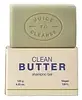 Key Ingredients
No key ingredients
Benefits
Concerns
Ingredients Side-by-side
Sodium Cocoyl Isethionate
Cleansing
Coco-Betaine
Cleansing
Ricinus Communis Seed Oil
Masking




Butyrospermum Parkii Butter
Skin Conditioning



Zea Mays Starch
Absorbent
Glycerin
Humectant
Cedrus Atlantica Wood Oil
Perfuming


Laminaria Japonica Extract
Skin Protecting

Camellia Sinensis Leaf Extract
Antimicrobial



Acorus Calamus Root Extract
Perfuming
Glycine Soja Seed Extract
Skin Conditioning
Citrus Unshiu Fruit Extract
Antioxidant
Argania Spinosa Kernel Oil
Emollient
Camellia Japonica Seed Oil
Emollient
Spinacia Oleracea Leaf Powder
Skin ConditioningIndigofera Tinctoria Leaf Powder
Skin ConditioningNiacinamide
Smoothing


Panthenol
Skin Conditioning
Biotin
AntiseborrhoeicSodium Hyaluronate
Humectant
Citric Acid
Buffering
Sodium Cocoyl Isethionate, Coco-Betaine, Ricinus Communis Seed Oil, Butyrospermum Parkii Butter, Zea Mays Starch, Glycerin, Cedrus Atlantica Wood Oil, Laminaria Japonica Extract, Camellia Sinensis Leaf Extract, Acorus Calamus Root Extract, Glycine Soja Seed Extract, Citrus Unshiu Fruit Extract, Argania Spinosa Kernel Oil, Camellia Japonica Seed Oil, Spinacia Oleracea Leaf Powder, Indigofera Tinctoria Leaf Powder, Niacinamide, Panthenol, Biotin, Sodium Hyaluronate, Citric Acid
Sodium Cocoyl Isethionate
Cleansing
Coco-Betaine
Cleansing
Cocos Nucifera Oil
Masking
Argania Spinosa Kernel Oil
Emollient
Ricinus Communis Seed Oil
Masking
Butyrospermum Parkii Butter
Skin Conditioning
Camellia Japonica Seed Oil
Emollient
Olea Europaea Fruit Oil
Masking
Acorus Calamus Root Extract
Perfuming
Centella Asiatica Extract
Cleansing
Camellia Sinensis Leaf Powder
Urtica Dioica Extract
AstringentCitrus Aurantium Bergamia Fruit Oil
Masking
Sodium Cocoyl Isethionate, Coco-Betaine, Cocos Nucifera Oil, Argania Spinosa Kernel Oil, Ricinus Communis Seed Oil, Butyrospermum Parkii Butter, Camellia Japonica Seed Oil, Olea Europaea Fruit Oil, Acorus Calamus Root Extract, Centella Asiatica Extract, Camellia Sinensis Leaf Powder, Urtica Dioica Extract, Citrus Aurantium Bergamia Fruit Oil
Ingredients Explained
These ingredients are found in both products.
Ingredients higher up in an ingredient list are typically present in a larger amount.
Acorus Calamus Root Extract is a fragrance.
You may know this ingredient as argan oil. It has emollient and skin conditioning properties that help soften skin and reinforce the lipid barrier.
The fatty acid profile of argan oil is roughly 45-55% oleic acid, 28-36% linoleic acid, 10-15% palmitic acid, and 5-7% stearic acid. It also contains vitamin E, sterols, squalene, and polyphenols like ferulic acid.
Two clinical studies in postmenopausal women found that applying argan oil for 60 days significantly improved skin elasticity and moisturization (reduced transepidermal water loss and increased epidermal water content).
Since it is high in oleic and linoleic acid, this ingredient may not be fungal acne safe. Both of these fall in the C11-C24 range that Malassezia yeast can metabolize.
Learn more about Argania Spinosa Kernel OilThis ingredient is also known as shea butter. It is a plant-derived extract from the nuts of the Africa shea tree and one of the most well-studied emollients.
Because it has a high concentration of fatty acids (primarily oleic, stearic, and linoleic) it is able to form a protective barrier on the skin's surface. This helps seal in moisture and prevents transepidermal water loss (TEWL).
In vitro research found an increase in skin hydration by 58% and a decrease in TEWL by 37.8% after 24 hours of applying this ingredient (pretty impressive for a single ingredient!).
Besides hydration, shea butter also contains triterpenes that have anti-inflammatory potential. In particule, lupeol cinnamate has shown the highest anti-inflammatory activity in vivo.
Shea butter also contains vitamins A and E which may contribute to antioxidant activity.
While Shea Butter has an SPF rating of about 3-4, it is not a sunscreen replacement.
This ingredient may not be fungal acne safe because its fatty acids fall within the C11-C24 range that the Malassezia yeast can metabolize.
This ingredient shows up on a lot of "pore-clogging" lists but there's no real evidence behind that. It doesn't even have a comedogenic rating from an actual study; the numbers you'll find online come from blogs citing other blogs.
Ratings for other ingredients mostly come from a 1980s rabbit ear test. This test doesn't translate well to human skin or to real products because the ingredient sits at a much lower percentage.
Some people still find it breaks them out. So if that's you, definitely trust your skin. Just know this one's based on experience and not evidence.
Learn more about Butyrospermum Parkii ButterThis ingredient is also known as Tsubaki oil, or the fixed oil from the seeds of the Japanese camellia.
It's basically a fatty acid delivery system (~75-85% oleic acid) plus some minor extras like squalene, tocopherols, and phytosterols.
That profile makes it a classic emollient; it works by hanging out with the skin's surface lipids, softens, and slows down water loss.
The most cited study on it was done on skin cells in a dish where this oil got them to make more of the building blocks for collagen while also slowing down the enzyme that breaks collagen down. Researchers tested this on human skin too; it didn't cause irritation and helped skin hold onto moisture better.
Another study done on cells and mice found this oil quieted down some of the body's inflammation signals.
These studies are still small, early, and not done on humans, so it's best to think of this ingredient as a great supporting ingredient for the rest of your routine and not the main active.
Concentrations can range from 1-5% in serums to 100% as a single face oil (how it's most traditionally used).
Because this ingredient is a triglyceride of long-chain fatty acids, this ingredient may not be Malassezia safe.
Allergies to this protein are quite rare as the refined seed oil contains very little residual protein. Human irritation testing also came back clean. But it is a plant and as with any botanical ingredient, contact allergy is possible.
Learn more about Camellia Japonica Seed OilCoco-Betaine is the natural version of Cocamidopropyl Betaine. It is often derived from coconuts.
Coco-Betaine is a surfactant, meaning it helps remove dirt and oil from the skin.
This ingredient is also known as castor oil. It is a skin conditioning ingredient.
The star component of castor oil is ricinoleic acid, an unusual fatty acid that makes up ~80-92% of its composition.
In skincare, it is an emollient that dries down to a solid film with water-binding properties. This helps keep skin hydrated and helps reduce transepidermal water loss (TEWL).
A 2026 dermatology review pulls together its broader uses:
Human clinical testing found this ingredient to be non-irritating and non-sensitizing.
Because castor oil contains fatty acids in the C11-24 range, this ingredient may not be fungal acne safe.
At this time, the literature does not support castor oil in regrowing hair. A 2022 systematic review found no strong evidence that it supports hair growth and only weak evidence that it improves hair shine.
Castor oil itself carries "perfuming" and "masking" function tags according to the official CosIng database. This is because of its mild odor and odor-dampening properties.
Learn more about Ricinus Communis Seed OilSodium cocoyl isethionate is a natural ingredient from coconut oil. It is an ultra gentle cleanser that gives a nice foam without drying the skin or impacting the skin barrier.
The amount of foam created depends on the amount of sodium cocoyl isethionate used in the product.
This ingredient also helps improve the spreadability of a product.
This ingredient hasn’t been shown in studies to feed fungal acne yeast.
Learn more about Sodium Cocoyl Isethionate

