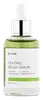
This calming serum is formulated around Melaleuca Alternifolia Leaf Water and Centella Asiatica Leaf Water to calm redness and clear breakouts.
This calming ampoule is formulated around Propolis Extract and Panthenol to calm redness and hydrate skin.

What's inside
What's inside
 Key Ingredients
Benefits
Ingredients Side-by-side
Melaleuca Alternifolia Leaf Water
Antimicrobial


Centella Asiatica Leaf Water
Skin Conditioning

Butylene Glycol
Humectant
1,2-Hexanediol
Skin Conditioning
Niacinamide
Smoothing






Glycereth-26
Humectant
Triticum Vulgare Sprout Extract
Skin ConditioningBrassica Oleracea Italica Extract
AstringentPortulaca Oleracea Extract
Skin Conditioning
Brassica Oleracea Capitata Leaf Extract
Skin ConditioningMedicago Sativa Extract
TonicRaphanus Sativus Seed Extract
Skin ConditioningBeta-Glucan
Skin Conditioning
Perilla Frutescens Leaf Extract
MaskingBrassica Campestris Extract
Skin ConditioningAspalathus Linearis Extract
Skin ConditioningCommiphora Myrrha Resin Extract
Skin ConditioningCentella Asiatica Extract
Cleansing
Glycyrrhiza Glabra Root Extract
Bleaching
Water
Skin ConditioningBetaine
Humectant
Allantoin
Skin Conditioning
Chlorophyllin-Copper Complex
Antioxidant
Cellulose Gum
Emulsion StabilisingXanthan Gum
EmulsifyingDipotassium Glycyrrhizate
Humectant
Adenosine
Skin Conditioning
Sodium Hyaluronate
Humectant
Glycerin
Humectant
Pentylene Glycol
Skin Conditioning
Caprylyl Glycol
Emollient
Ethylhexylglycerin
Skin ConditioningMelaleuca Alternifolia Leaf Water, Centella Asiatica Leaf Water, Butylene Glycol, 1,2-Hexanediol, Niacinamide, Glycereth-26, Triticum Vulgare Sprout Extract, Brassica Oleracea Italica Extract, Portulaca Oleracea Extract, Brassica Oleracea Capitata Leaf Extract, Medicago Sativa Extract, Raphanus Sativus Seed Extract, Beta-Glucan, Perilla Frutescens Leaf Extract, Brassica Campestris Extract, Aspalathus Linearis Extract, Commiphora Myrrha Resin Extract, Centella Asiatica Extract, Glycyrrhiza Glabra Root Extract, Water, Betaine, Allantoin, Chlorophyllin-Copper Complex, Cellulose Gum, Xanthan Gum, Dipotassium Glycyrrhizate, Adenosine, Sodium Hyaluronate, Glycerin, Pentylene Glycol, Caprylyl Glycol, Ethylhexylglycerin

Reviews
Ingredients Explained
These ingredients are found in both products.
Ingredients higher up in an ingredient list are typically present in a larger amount.
1,2-Hexanediol is a synthetic liquid and another multi-functional powerhouse.
It is a:
- Humectant, drawing moisture into the skin
- Emollient, helping to soften skin
- Solvent, dispersing and stabilizing formulas
- Preservative booster, enhancing the antimicrobial activity of other preservatives
Betaine is a humectant. Like hyaluronic acid, it helps attract and retain moisture in the skin. It’s known for being gentle and for helping the skin maintain balanced hydration.
Betaine is mainly used to improve hydration and support calmer skin. It helps skin cells regulate water balance because it functions as an osmolyte.
Some studies suggest betaine may support making skin tone more even.
Fun fact: Betaine naturally exists in the skin and the body. In cosmetic products, it can be either plant-derived (most commonly from sugar beets) or synthetically produced for consistency and stability.
Betaine is also known as trimethylglycine.
Learn more about BetaineButylene Glycol (or BG) is used within cosmetic products for a few different reasons:
Overall, Butylene Glycol is a safe and well-rounded ingredient that works well with other ingredients.
Though this ingredient works well with most skin types, some people with sensitive skin may experience a reaction such as allergic rashes, closed comedones, or itchiness.
Learn more about Butylene GlycolGlycerin (or glycerol) is a compound naturally found in your skin. It's a powerhouse humectant that pulls water into the stratum corneum.
Topically, glycerin does several things at once:
Your skin makes glycerin on its own (mostly from sebaceous oil breakdown) and shuttles it to your outermost layer of skin, or your epidermis, via aquaporin-3.
Aquaporin-3 is a transporter that is essential for normal skin hydration, elasticity, and repair. Interestingly, mice lacking in AQP3 have dry and less elastic skin that can be fully corrected with glycerin.
This ingredient is non-irritating, plays well with almost every ingredient, and works across all skin types. Typical use is anywhere between 3-10% but can go up to 79% in some leave-on products.
Just know very high concentrations (>40%) can feel tacky in low humidity.
Glycerin is the name for this ingredient in American English. British English uses Glycerol/Glycerine.
Learn more about GlycerinSodium Hyaluronate is the salt form of hyaluronic acid. It is a long sugar chain that is naturally found in your skin, joints, and connective tissue that maintains hydration and elasticity.
In skincare, it works as a humectant. It pulls water from the environment and deeper layers of skin and binds it to the surface.
Interestingly, the size of the molecule affects its behavior:
Some clinical evidence links low molecular weight versions to improved wrinkle depth, elasticity, anti-inflammatory effects, and barrier repair.
Many serums use a blend of both weights so you can get surface hydration plus longer-lasting and deeper effects.
You'll typically see concentrations between 0.1-2% for this ingredient.
Learn more about Sodium Hyaluronate

