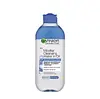
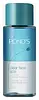
Garnier Micellar Cleansing Water In Oil Delicate Eyes & Skin Versus Pond's Clear Face Spa Lip & Eye Make-Up Remover
This micellar makeup remover is made to dissolve makeup, sunscreen, and daily buildup.
This micellar makeup remover is made to dissolve makeup, sunscreen, and daily buildup.


What's inside
What's inside
 Key Ingredients
No key ingredients
Benefits
Concerns
Ingredients Side-by-side
Water
Skin ConditioningCyclopentasiloxane
Emollient
Isohexadecane
EmollientCentaurea Cyanus Flower Water
Skin Conditioning
Potassium Phosphate
BufferingSodium Chloride
MaskingArginine
Masking

Coco-Betaine
Cleansing
Poloxamer 184
EmulsifyingDipotassium Phosphate
BufferingDisodium EDTA
ChelatingPropanediol
Solvent
Citric Acid
Buffering


Hexylene Glycol
EmulsifyingMyrtrimonium Bromide
Preservative
CI 60725
Cosmetic ColorantCI 61565
Cosmetic ColorantLinalool
Perfuming



Geraniol
Perfuming
Limonene
Perfuming
Benzyl Alcohol
Perfuming

Benzyl Salicylate
Perfuming
Parfum
Masking
Water, Cyclopentasiloxane, Isohexadecane, Centaurea Cyanus Flower Water, Potassium Phosphate, Sodium Chloride, Arginine, Coco-Betaine, Poloxamer 184, Dipotassium Phosphate, Disodium EDTA, Propanediol, Citric Acid, Hexylene Glycol, Myrtrimonium Bromide, CI 60725, CI 61565, Linalool, Geraniol, Limonene, Benzyl Alcohol, Benzyl Salicylate, Parfum
Water
Skin ConditioningCyclopentasiloxane
Emollient
Isohexadecane
EmollientIsododecane
EmollientHexylene Glycol
EmulsifyingSodium Chloride
MaskingDisodium EDTA
ChelatingPoloxamer 184
EmulsifyingPhenoxyethanol
Preservative
Sodium Citrate
BufferingBenzyl Alcohol
Perfuming
Benzalkonium Chloride
Antimicrobial
Citric Acid
Buffering
Pinus Sylvestris Leaf Extract
TonicDipotassium Glycyrrhizate
Humectant
Saccharomyces/Zinc Ferment
Skin Conditioning
Saccharomyces/Magnesium Ferment
Vitis Vinifera Seed Extract
Antimicrobial
Camellia Sinensis Leaf Extract
Antimicrobial


Quinine
MaskingWater, Cyclopentasiloxane, Isohexadecane, Isododecane, Hexylene Glycol, Sodium Chloride, Disodium EDTA, Poloxamer 184, Phenoxyethanol, Sodium Citrate, Benzyl Alcohol, Benzalkonium Chloride, Citric Acid, Pinus Sylvestris Leaf Extract, Dipotassium Glycyrrhizate, Saccharomyces/Zinc Ferment, Saccharomyces/Magnesium Ferment, Vitis Vinifera Seed Extract, Camellia Sinensis Leaf Extract, Quinine
Ingredients Explained
These ingredients are found in both products.
Ingredients higher up in an ingredient list are typically present in a larger amount.
Benzyl Alcohol is an aromatic alcohol with several roles: it's a preservative, solvent, and mild fragrance component with a floral scent.
This ingredient has been deemed safe for use in cosmetic formulations at concentrations up to 5%, and up to 10% in hair dyes. You'll typically see 0.5-2% in most rinse-off or leave-on products.
As a preservative, it works by disrupting the membrane of microbial proteins. This helps keep bacteria and fungi from growing in your products.
The sensitization picture is actually quite assuring as well:of nearly 71,000 patients patch tested with benzyl alcohol, only 0.21% showed a positive reaction with most of them being weakly positive.
This led researchers to conclude that benzyl alcohol cannot be regarded as a significant contact allergen.
It is worth noting this ingredient is classified as one of the EU's regulated fragrance allergens and restricted to 1% in finished products.
Labels must also declare it in concentrations above 0.001% in leave-on products and 0.01% in rinse-off products.
At concentrations around 5%, localized redness and itching can appear as a direct irritant response and not as a true allergic reaction.
Learn more about Benzyl AlcoholCitric Acid is an alpha hydroxy acid (AHA) naturally found in citrus fruits like oranges, lemons, and limes.
Like other AHAs, citric acid can exfoliate skin by breaking down the bonds that hold dead skin cells together. This helps reveal smoother and brighter skin underneath.
However, this exfoliating effect only happens at high concentrations (20%) which can be hard to find in cosmetic products.
Due to this, citric acid is usually included in small amounts as a pH adjuster. This helps keep products slightly more acidic and compatible with skin's natural pH.
In skincare formulas, citric acid can:
While it can provide some skin benefits, research shows lactic acid and glycolic acid are generally more effective and less irritating exfoliants.
Most citric acid used in skincare today is made by fermenting sugars (usually from molasses). This synthetic version is identical to the natural citrus form but easier to stabilize and use in formulations.
Rosacea skin has a lower threshold for acids generally, with 62.5% of rosacea subjects in one study reacting to lactic acid in a sting test. This is why we mark citric acid as a potential rosacea trigger.
However, this ingredient shows up as a pH adjuster or chelator at roughly 0.1-1% in many products. These low levels are unlikely to be an issue for rosacea skin and becomes a potential trigger at exfoliating concentrations (20%). Because everybody's skin is unique, we recommend a patch test if you are unsure.
Learn more about Citric AcidCyclopentasiloxane (D5) is a lightweight silicone that mostly acts as an emollient and solvent in cosmetics. Its the reason your products feel silky, fast-spreading, and non-greasy.
Since D5 is volatile, it does its thing and then evaporates off the skin quickly.
The safety profile of this ingredient is reassuring; the US CIR Expert Panel concluded D5 is safe as used in cosmetics and Health Canada concluded that D5 is not harmful to human health or the environment as currently used in cosmetics
There's a study that people mention about D5 in a rat study showing tumors. This study is related to long-term inhalation of high D5 levels.
Regulatory bodies have judged this study to be not applicable in topical skincare since skin absorption of D5 is very low and we're not really inhaling huge amounts of D5.
The only restriction for this ingredient is environmental. The European Chemicals Agency (ECHA) restricted D5 in wash-off cosmetics at or above 0.1% due to their persistence in water.
Learn more about CyclopentasiloxaneDisodium EDTA is a chelating agent. It grabs onto and deactivates metal ions that sneak into your products from water, packaging, or air.
This ingredient mainly works behind the scenes and helps with:
On top of that, this ingredient can counteract the effects of hard water by binding to the minerals in it.
One thing worth knowing is that Disodium EDTA has been shown to be a mild penetration enhancer. It can help other ingredients absorb into skin more effectively which can be a double-edged sword (great for actives, but can also make the active too strong if you have sensitive skin).
Clinical patch testing showed no significant skin irritation at typical use concentrations and minimal dermal absorption.
You'll most likely see this ingredient near the end of an ingredient list. It's typically found in concentrations less than 1%.
Learn more about Disodium EDTAHexylene Glycol is a multitasker ingredient that works as a solvent, humectant, emulsifier, viscosity reducer, and preservative booster.
It is able to dissolve both water and oil-soluble ingredients to stabilize tricky actives and make products spread more easily.
As a humectant, it pulls water into the skin. But it's a pretty minor moisturizing ingredient compared to other humectants, like glycerin.
Interestingly, it can act as a mild penetration enhancer. One in vitro study on human skin found a 12% concentration upped the absorption of mometasone furoate (a medicinal ingredient used to treat inflammatory skin conditions) up to 7%.
This ingredient is typically used at levels of 0.1-10% depending on the role it's playing.
A patch test study on eczema patients didn't find a significant increase in irritation versus the control group, but the potential for irritation rises at higher concentrations.
Learn more about Hexylene GlycolIsohexadecane is added to enhance texture, emulsify, and to help cleanse. It is an isoparrafin. It is a component of petrolatum.
Due to its large size, Isohexadecane is not absorbed by the skin. Instead, it sits on top and acts as an emollient. Emollients help keep your skin soft and smooth by trapping moisture within.
Isohexadecane is often used in products designed to help oily skin. It is lightweight and non-greasy while helping to moisturize. When mixed with silicones, it gives a product a silky feel.
Learn more about IsohexadecanePoloxamer 184 is a surfactant and emulsifier made from polyoxyethylene and polyoxypropylene units.
It allows ingredients that don't normally mix (like water and oil) to blend together and stay stable; this makes it easier for cleansers and makeup removers to grab onto dirt, oil, and makeup to be rinsed away more easily.
Chances are, you eat sodium chloride every day. Sodium Chloride is also known as table salt. This ingredient has many purposes in skincare: thickener, emulsifier, and exfoliator.
You'll most likely find this ingredient in cleansers where it is used to create a gel-like texture. As an emulsifier, it also prevents ingredients from separating.
You might see people debate whether Sodium Chloride is comedogenic, but there actually haven't been any comedogenic tests done on it. Either way, the overall formulation of a product matters a lot more than any single ingredient.
You might see this ingredient used in scrubs as a primary exfoliating ingredient.
Learn more about Sodium ChlorideWater. It's the most common cosmetic ingredient of all. You'll usually see it at the top of ingredient lists, meaning that it makes up the largest part of the product.
So why is it so popular? Water most often acts as a solvent - this means that it helps dissolve other ingredients into the formulation.
You'll also recognize water as that liquid we all need to stay alive. If you see this, drink a glass of water. Remember to stay hydrated!
Learn more about Water

