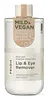
Frudia Re:Proust Essential Deep Clean Lip & Eye Remover Versus Judydoll Essence Eye And Lip Makeup Remover
This mild micellar makeup remover is made to dissolve makeup, sunscreen, and daily buildup.
This mild micellar makeup remover is made to dissolve makeup, sunscreen, and daily buildup.


What's inside
What's inside
 Key Ingredients
Benefits
Concerns
Ingredients Side-by-side
Water
Skin ConditioningIsohexadecane
EmollientIsododecane
EmollientHexylene Glycol
Emulsifying1,2-Hexanediol
Skin Conditioning
Sodium Chloride
MaskingSodium Citrate
BufferingArginine
Masking
Dipotassium Glycyrrhizate
Humectant

Panthenol
Skin Conditioning
Citric Acid
Buffering


Decyl Glucoside
Cleansing
Coco-Glucoside
Cleansing
Butylene Glycol
Humectant
Simmondsia Chinensis Seed Oil
Emollient

Saccharomyces Cerevisiae Extract
Skin Conditioning
Selaginella Tamariscina Extract
Skin ConditioningGypsophila Paniculata Root Extract
Skin ConditioningPassiflora Incarnata Extract
AstringentAlbizia Julibrissin Bark Extract
MaskingPeucedanum Graveolens Extract
TonicAscorbic Acid
Antioxidant




Biotin
AntiseborrhoeicCyanocobalamin
Skin ConditioningNiacinamide
Smoothing



Riboflavin
Cosmetic ColorantDisodium EDTA
ChelatingWater, Isohexadecane, Isododecane, Hexylene Glycol, 1,2-Hexanediol, Sodium Chloride, Sodium Citrate, Arginine, Dipotassium Glycyrrhizate, Panthenol, Citric Acid, Decyl Glucoside, Coco-Glucoside, Butylene Glycol, Simmondsia Chinensis Seed Oil, Saccharomyces Cerevisiae Extract, Selaginella Tamariscina Extract, Gypsophila Paniculata Root Extract, Passiflora Incarnata Extract, Albizia Julibrissin Bark Extract, Peucedanum Graveolens Extract, Ascorbic Acid, Biotin, Cyanocobalamin, Niacinamide, Riboflavin, Disodium EDTA
Water
Skin ConditioningIsododecane
EmollientEthylhexyl Palmitate
Emollient


1,2-Hexanediol
Skin Conditioning
Sodium Chloride
MaskingPoloxamer 184
EmulsifyingPolyquaternium-7
Panthenol
Skin Conditioning
Octyldodecyl Myristate
EmollientDipotassium Phosphate
BufferingPotassium Phosphate
Buffering3-O-Ethyl Ascorbic Acid
Skin Conditioning
Lithospermum Officinale Root Extract
Skin ConditioningButylene Glycol
Humectant
Citrus Reticulata Fruit Extract
Skin ProtectingAloe Barbadensis Leaf Extract
Emollient
Hydroxyacetophenone
Antioxidant
Water, Isododecane, Ethylhexyl Palmitate, 1,2-Hexanediol, Sodium Chloride, Poloxamer 184, Polyquaternium-7, Panthenol, Octyldodecyl Myristate, Dipotassium Phosphate, Potassium Phosphate, 3-O-Ethyl Ascorbic Acid, Lithospermum Officinale Root Extract, Butylene Glycol, Citrus Reticulata Fruit Extract, Aloe Barbadensis Leaf Extract, Hydroxyacetophenone
Ingredients Explained
These ingredients are found in both products.
Ingredients higher up in an ingredient list are typically present in a larger amount.
1,2-Hexanediol is a synthetic liquid and another multi-functional powerhouse.
It is a:
- Humectant, drawing moisture into the skin
- Emollient, helping to soften skin
- Solvent, dispersing and stabilizing formulas
- Preservative booster, enhancing the antimicrobial activity of other preservatives
Butylene Glycol (or BG) is used within cosmetic products for a few different reasons:
Overall, Butylene Glycol is a safe and well-rounded ingredient that works well with other ingredients.
Though this ingredient works well with most skin types, some people with sensitive skin may experience a reaction such as allergic rashes, closed comedones, or itchiness.
Learn more about Butylene GlycolIsododecane is a fragrance, emollient, and solvent.
As an emollient, it helps your skin stay soft and hydrated. Emollients help trap moisture into your skin.
Isododecane's role as a solvent makes it a great texture enhancer. It spreads smoothly on skin and does not leave a sticky feeling behind. Isododecane also helps prevent color transfer in makeup products.
Isododecane is not absorbed into skin.
The chemical name for this ingredient is 2,2,4,6,6-PENTAMETHYLHEPTANE.
Learn more about IsododecanePanthenol is a common ingredient that helps hydrate and soothe the skin. It is found naturally in our skin and hair.
There are two forms of panthenol: D and L.
D-panthenol is also known as dexpanthenol. Most cosmetics use dexpanthenol or a mixture of D and L-panthenol.
Panthenol is famous due to its ability to go deeper into the skin's layers. Using this ingredient has numerous pros (and no cons):
Like hyaluronic acid, panthenol is a humectant. Humectants are able to bind and hold large amounts of water to keep skin hydrated.
This ingredient works well for wound healing. It works by increasing tissue in the wound and helps close open wounds.
Once oxidized, panthenol converts to pantothenic acid. Panthothenic acid is found in all living cells.
This ingredient is also referred to as pro-vitamin B5.
Learn more about PanthenolChances are, you eat sodium chloride every day. Sodium Chloride is also known as table salt. This ingredient has many purposes in skincare: thickener, emulsifier, and exfoliator.
You'll most likely find this ingredient in cleansers where it is used to create a gel-like texture. As an emulsifier, it also prevents ingredients from separating.
You might see people debate whether Sodium Chloride is comedogenic, but there actually haven't been any comedogenic tests done on it. Either way, the overall formulation of a product matters a lot more than any single ingredient.
You might see this ingredient used in scrubs as a primary exfoliating ingredient.
Learn more about Sodium ChlorideWater. It's the most common cosmetic ingredient of all. You'll usually see it at the top of ingredient lists, meaning that it makes up the largest part of the product.
So why is it so popular? Water most often acts as a solvent - this means that it helps dissolve other ingredients into the formulation.
You'll also recognize water as that liquid we all need to stay alive. If you see this, drink a glass of water. Remember to stay hydrated!
Learn more about Water

