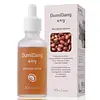
This pore-care serum is formulated around Niacinamide to refine the look of pores.

What's inside
What's inside
 Key Ingredients
Benefits
Concerns
Ingredients Side-by-side
Water
Skin ConditioningButylene Glycol
Humectant

Glycerin
Humectant
Dipropylene Glycol
Humectant1,2-Hexanediol
Skin Conditioning
Niacinamide
Smoothing









Pentylene Glycol
Skin Conditioning
Phaseolus Angularis Seed Extract
Antioxidant
PEG-60 Hydrogenated Castor Oil
Emulsifying


Carbomer
Emulsion StabilisingTromethamine
BufferingCellulose Gum
Emulsion StabilisingMaltodextrin
Absorbent
Xanthan Gum
EmulsifyingEthylhexylglycerin
Skin ConditioningCaramel
Cosmetic ColorantSodium Hyaluronate
Humectant
Disodium EDTA
Oryza Sativa Bran Extract
Skin Conditioning
Laminaria Japonica Extract
Skin Protecting
Parfum
Masking



Water, Butylene Glycol, Glycerin, Dipropylene Glycol, 1,2-Hexanediol, Niacinamide, Pentylene Glycol, Phaseolus Angularis Seed Extract, PEG-60 Hydrogenated Castor Oil, Carbomer, Tromethamine, Cellulose Gum, Maltodextrin, Xanthan Gum, Ethylhexylglycerin, Caramel, Sodium Hyaluronate, Disodium EDTA, Oryza Sativa Bran Extract, Laminaria Japonica Extract, Parfum
Water
Skin ConditioningGlycerin
Humectant
Dipropylene Glycol
Humectant1,2-Hexanediol
Skin Conditioning
Phaseolus Angularis Seed Extract
Antioxidant
Propanediol
Solvent
PEG-60 Hydrogenated Castor Oil
Emulsifying
Sodium Hyaluronate
Humectant
Maltodextrin
Absorbent
Chamaecyparis Obtusa Water
MaskingPanthenol
Skin Conditioning
Allantoin
Skin Conditioning
Caramel
Cosmetic ColorantRosa Rugosa Flower Extract
Skin ConditioningMelissa Officinalis Leaf Extract
Skin ConditioningTromethamine
BufferingButylene Glycol
Humectant
Ceratonia Siliqua Fruit Extract
MaskingLens Esculenta Fruit Extract
Skin ConditioningArachis Hypogaea Fruit Extract
Skin ConditioningGlycine Soja Seed Extract
Skin Conditioning
Phaseolus Radiatus Seed Extract
Skin ConditioningGlycine Max Seed Extract
Skin ConditioningPhaseolus Vulgaris Seed Extract
Skin ConditioningLactobacillus/Soymilk Ferment Filtrate
Skin ConditioningParfum
Masking
Water, Glycerin, Dipropylene Glycol, 1,2-Hexanediol, Phaseolus Angularis Seed Extract, Propanediol, PEG-60 Hydrogenated Castor Oil, Sodium Hyaluronate, Maltodextrin, Chamaecyparis Obtusa Water, Panthenol, Allantoin, Caramel, Rosa Rugosa Flower Extract, Melissa Officinalis Leaf Extract, Tromethamine, Butylene Glycol, Ceratonia Siliqua Fruit Extract, Lens Esculenta Fruit Extract, Arachis Hypogaea Fruit Extract, Glycine Soja Seed Extract, Phaseolus Radiatus Seed Extract, Glycine Max Seed Extract, Phaseolus Vulgaris Seed Extract, Lactobacillus/Soymilk Ferment Filtrate, Parfum
Ingredients Explained
These ingredients are found in both products.
Ingredients higher up in an ingredient list are typically present in a larger amount.
1,2-Hexanediol is a synthetic liquid and another multi-functional powerhouse.
It is a:
- Humectant, drawing moisture into the skin
- Emollient, helping to soften skin
- Solvent, dispersing and stabilizing formulas
- Preservative booster, enhancing the antimicrobial activity of other preservatives
Butylene Glycol (or BG) is used within cosmetic products for a few different reasons:
Overall, Butylene Glycol is a safe and well-rounded ingredient that works well with other ingredients.
Though this ingredient works well with most skin types, some people with sensitive skin may experience a reaction such as allergic rashes, closed comedones, or itchiness.
Learn more about Butylene GlycolWe don't have a description for Caramel yet.
Dipropylene Glycol is a synthetically created humectant, stabilizer, and solvent.
This ingredient helps:
Dipropylene glycol is technically an alcohol, but it belongs to the glycol family (often considered part of the ‘good’ alcohols). This means it is hydrating and gentle on skin unlike drying solvent alcohols like denatured alcohol.
As a masking agent, Dipropylene Glycol can be used to cover the smell of other ingredients. However, it does not have a scent.
Studies show Dipropylene Glycol is considered safe to use in skincare.
Learn more about Dipropylene GlycolGlycerin (or glycerol) is a compound naturally found in your skin. It's a powerhouse humectant that pulls water into the stratum corneum.
Topically, glycerin does several things at once:
Your skin makes glycerin on its own (mostly from sebaceous oil breakdown) and shuttles it to your outermost layer of skin, or your epidermis, via aquaporin-3.
Aquaporin-3 is a transporter that is essential for normal skin hydration, elasticity, and repair. Interestingly, mice lacking in AQP3 have dry and less elastic skin that can be fully corrected with glycerin.
This ingredient is non-irritating, plays well with almost every ingredient, and works across all skin types. Typical use is anywhere between 3-10% but can go up to 79% in some leave-on products.
Just know very high concentrations (>40%) can feel tacky in low humidity.
Glycerin is the name for this ingredient in American English. British English uses Glycerol/Glycerine.
Learn more about GlycerinMaltodextrin is a plant-derived carbohydrate made by breaking down starch (usually from corn, potato, or rice). In cosmetic formulas, it's a multitasking absorbent, emulsion stabilizer, and skin conditioner.
This ingredient is mostly used to stabilize emulsions and improve the powdery, non-greasy feel of products (like dry shampoos).
Safety-wise, this ingredient is pretty solid; it's even recognized as a food additive. Both animal and clinical studies found no adverse effects at the levels used in cosmetics.
Industry data shows this ingredient is used up to 45.7% in spray products and up to 33% in powder products.
Learn more about MaltodextrinParfum is a catch-all term for an ingredient or more that is used to give a scent to products.
Also called "fragrance", this ingredient can be a blend of hundreds of chemicals or plant oils. This means every product with "fragrance" or "parfum" in the ingredients list is a different mixture.
For instance, Habanolide is a proprietary trade name for a specific aroma chemical. When used as a fragrance ingredient in cosmetics, most aroma chemicals fall under the broad labeling category of “FRAGRANCE” or “PARFUM” according to EU and US regulations.
The term 'parfum' or 'fragrance' is not regulated in many countries. In many cases, it is up to the brand to define this term.
For instance, many brands choose to label themselves as "fragrance-free" because they are not using synthetic fragrances. However, their products may still contain ingredients such as essential oils that are considered a fragrance by INCI standards.
One example is Calendula flower extract. Calendula is an essential oil that still imparts a scent or 'fragrance'.
Depending on the blend, the ingredients in the mixture can cause allergies and sensitivities on the skin. Some ingredients that are known EU allergens include linalool and citronellol.
Parfum can also be used to mask or cover an unpleasant scent.
The bottom line is: not all fragrances/parfum/ingredients are created equally. If you are worried about fragrances, we recommend taking a closer look at an ingredient. And of course, we always recommend speaking with a professional.
Learn more about ParfumPeg-60 Hydrogenated Castor Oil comes from hydrogenated castor oil. It is a solubilizer and emulsifier.
As a solubilizer, it helps dissolve ingredients into a water-based version. It is also an emulsifer. Emulsifier help prevent oils and water from separating. Both these properties help create evenly-spread and uniform products.
Basically, Peg-60 Hydrogenated Castor Oil helps hold ingredients together.
Learn more about PEG-60 Hydrogenated Castor OilPhaseolus Angularis Seed Extract is an antioxidant.
Sodium Hyaluronate is the salt form of hyaluronic acid. It is a long sugar chain that is naturally found in your skin, joints, and connective tissue that maintains hydration and elasticity.
In skincare, it works as a humectant. It pulls water from the environment and deeper layers of skin and binds it to the surface.
Interestingly, the size of the molecule affects its behavior:
Some clinical evidence links low molecular weight versions to improved wrinkle depth, elasticity, anti-inflammatory effects, and barrier repair.
Many serums use a blend of both weights so you can get surface hydration plus longer-lasting and deeper effects.
You'll typically see concentrations between 0.1-2% for this ingredient.
Learn more about Sodium HyaluronateTromethamine (aka THAM) is a synthetic amino acid that shows up in skincare as a helper ingredient.
It functions as a pH adjuster to help neutralize acidic ingredients and set a formula's pH to the right spot.
This matters a lot because a lot of actives (like vitamin C) needs a specific pH to work well and feel comfortable on skin.
Concentration use ranges from 0.1-1.0% depending on the formula.
Learn more about TromethamineWater. It's the most common cosmetic ingredient of all. You'll usually see it at the top of ingredient lists, meaning that it makes up the largest part of the product.
So why is it so popular? Water most often acts as a solvent - this means that it helps dissolve other ingredients into the formulation.
You'll also recognize water as that liquid we all need to stay alive. If you see this, drink a glass of water. Remember to stay hydrated!
Learn more about Water

