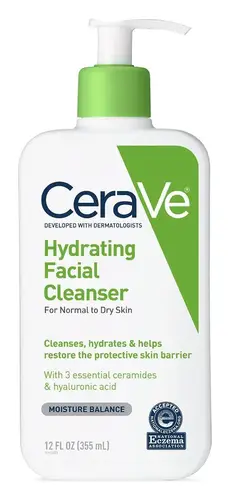
This mild gel cleanser is mild enough to cleanse without leaving skin feeling tight or stripped.

What's inside
What's inside
 Key Ingredients
No key ingredients
Benefits
Concerns
Ingredients Side-by-side





Water
Skin ConditioningGlycerin
Humectant


Bentonite
Absorbent


Butylene Glycol
Humectant
Sorbitol
Humectant
Sodium Cocoyl Glutamate
Cleansing
Isomalt
HumectantPentylene Glycol
Skin Conditioning
Sea Silt
Skin ConditioningKaolin
Abrasive

Aloe Barbadensis Leaf Extract
Emollient
Yogurt
Skin ProtectingLactobacillus
Skin ConditioningDipotassium Glycyrrhizate
Humectant
Rosmarinus Officinalis Leaf Extract
AntimicrobialLavandula Angustifolia Oil
Masking




Rosmarinus Officinalis Leaf Oil
Masking
Silica
Abrasive
Sodium Carbomer
Emulsion StabilisingMaltodextrin
Absorbent
Water, Glycerin, Bentonite, Butylene Glycol, Sorbitol, Sodium Cocoyl Glutamate, Isomalt, Pentylene Glycol, Sea Silt, Kaolin, Aloe Barbadensis Leaf Extract, Yogurt, Lactobacillus, Dipotassium Glycyrrhizate, Rosmarinus Officinalis Leaf Extract, Lavandula Angustifolia Oil, Rosmarinus Officinalis Leaf Oil, Silica, Sodium Carbomer, Maltodextrin
Reviews
Ingredients Explained
These ingredients are found in both products.
Ingredients higher up in an ingredient list are typically present in a larger amount.
Glycerin (or glycerol) is a compound naturally found in your skin. It's a powerhouse humectant that pulls water into the stratum corneum.
Topically, glycerin does several things at once:
Your skin makes glycerin on its own (mostly from sebaceous oil breakdown) and shuttles it to your outermost layer of skin, or your epidermis, via aquaporin-3.
Aquaporin-3 is a transporter that is essential for normal skin hydration, elasticity, and repair. Interestingly, mice lacking in AQP3 have dry and less elastic skin that can be fully corrected with glycerin.
This ingredient is non-irritating, plays well with almost every ingredient, and works across all skin types. Typical use is anywhere between 3-10% but can go up to 79% in some leave-on products.
Just know very high concentrations (>40%) can feel tacky in low humidity.
Glycerin is the name for this ingredient in American English. British English uses Glycerol/Glycerine.
Learn more about GlycerinSodium Cocoyl Glutamate is a gentle cleanser and surfactant. It is the sodium salt of the Cocoyl Glutamic Acid and comes from coconut oil. As a surfactant, it helps lift dirt and oil to be washed away.
Sodium Cocoyl Glutamate also has an emolliating effect and can help leave the skin feeling soft.
Sorbitol is a sugar alcohol. It is a hydrating and moisturizing agent created from the reduction process of glucose.
Most sorbitol is usually made from potato starch. It is also found in fruits such as apples and pears.
As a humectant, Sorbitol helps draw water to the skin. This helps keep the skin hydrated. Sorbitol also helps create a thicker texture in products. You might find sorbitol in your toothpaste and other gels.
It is a non-irritating ingredient that is great for those with dry skin.
Sorbitol is a prebiotic. It helps promote the growth of healthy bacteria on your skin. The bacteria on your skin form a microbiome. This microbiome helps protect your skin from infection and harmful bacteria.
Learn more about SorbitolWater. It's the most common cosmetic ingredient of all. You'll usually see it at the top of ingredient lists, meaning that it makes up the largest part of the product.
So why is it so popular? Water most often acts as a solvent - this means that it helps dissolve other ingredients into the formulation.
You'll also recognize water as that liquid we all need to stay alive. If you see this, drink a glass of water. Remember to stay hydrated!
Learn more about Water