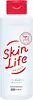
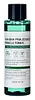
Cow Brand Mutenka Skin Life Medicated Lotion (Quasi-drug) Unscented Versus Some By Mi AHA BHA PHA 30 Days Miracle Exfoliating Toner
This calming toner is formulated around Centella Asiatica Extract and Sodium Ascorbyl Phosphate to calm redness.
This smoothing exfoliator is formulated around Niacinamide and Melaleuca Alternifolia Leaf Water to refine skin texture and clear breakouts.


What's inside
What's inside
 Key Ingredients
Benefits
Concerns
Ingredients Side-by-side
O-Cymen-5-Ol
Antimicrobial
Centella Asiatica Extract
Cleansing





Sodium Hyaluronate
Humectant

Coix Lacryma-Jobi Ma-Yuen Seed Extract
Skin ConditioningSodium Ascorbyl Phosphate
Antioxidant



Butylene Glycol
Humectant
Glycerin
Humectant
Dipropylene Glycol
HumectantDiglycerin
Humectant
Polyglyceryl-10 Eicosanedioate/Tetradecanedioate
Skin ConditioningPolyglyceryl-3 Hydroxypropyl Ethylhexyl Ether
CleansingDisodium Lauroyl Glutamate
CleansingPolyglyceryl-3 Decyltetradecyl Ether
EmulsifyingXanthan Gum
EmulsifyingC4-18 Alkyl Methacrylate/Methacryloyloxyethyl Phosphorylcholine Copolymer
HumectantStyrene/Vp Copolymer
Sodium Malate
HumectantSorbic Acid
Preservative
Alcohol Denat.
Antimicrobial




Methylparaben
Preservative

O-Cymen-5-Ol, Centella Asiatica Extract, Sodium Hyaluronate, Coix Lacryma-Jobi Ma-Yuen Seed Extract, Sodium Ascorbyl Phosphate, Butylene Glycol, Glycerin, Dipropylene Glycol, Diglycerin, Polyglyceryl-10 Eicosanedioate/Tetradecanedioate, Polyglyceryl-3 Hydroxypropyl Ethylhexyl Ether, Disodium Lauroyl Glutamate, Polyglyceryl-3 Decyltetradecyl Ether, Xanthan Gum, C4-18 Alkyl Methacrylate/Methacryloyloxyethyl Phosphorylcholine Copolymer, Styrene/Vp Copolymer, Sodium Malate, Sorbic Acid, Alcohol Denat., Methylparaben
Water
Skin ConditioningButylene Glycol
Humectant
Dipropylene Glycol
HumectantGlycerin
Humectant
Niacinamide
Smoothing



Melaleuca Alternifolia Leaf Water
Antimicrobial
Polyglyceryl-4 Caprate
EmulsifyingCarica Papaya Fruit Extract
Skin ConditioningLens Esculenta Seed Extract
Skin ProtectingHamamelis Virginiana Extract
Antiseborrhoeic
Nelumbo Nucifera Flower Extract
Skin ConditioningSwiftlet Nest Extract
Skin ConditioningSodium Hyaluronate
Humectant
Fructan
Skin ConditioningAllantoin
Skin Conditioning
Adenosine
Skin Conditioning
Hydroxyethyl Urea
Humectant
Xylitol
Humectant
Salicylic Acid
Masking
Lactobionic Acid
Buffering
Citric Acid
Buffering
Sodium Citrate
Buffering1,2-Hexanediol
Skin Conditioning
Benzyl Glycol
SolventEthylhexylglycerin
Skin ConditioningRaspberry Ketone
Masking

Mentha Piperita Oil
Masking


Water, Butylene Glycol, Dipropylene Glycol, Glycerin, Niacinamide, Melaleuca Alternifolia Leaf Water, Polyglyceryl-4 Caprate, Carica Papaya Fruit Extract, Lens Esculenta Seed Extract, Hamamelis Virginiana Extract, Nelumbo Nucifera Flower Extract, Swiftlet Nest Extract, Sodium Hyaluronate, Fructan, Allantoin, Adenosine, Hydroxyethyl Urea, Xylitol, Salicylic Acid, Lactobionic Acid, Citric Acid, Sodium Citrate, 1,2-Hexanediol, Benzyl Glycol, Ethylhexylglycerin, Raspberry Ketone, Mentha Piperita Oil
Reviews
Ingredients Explained
These ingredients are found in both products.
Ingredients higher up in an ingredient list are typically present in a larger amount.
Butylene Glycol (or BG) is used within cosmetic products for a few different reasons:
Overall, Butylene Glycol is a safe and well-rounded ingredient that works well with other ingredients.
Though this ingredient works well with most skin types, some people with sensitive skin may experience a reaction such as allergic rashes, closed comedones, or itchiness.
Learn more about Butylene GlycolDipropylene Glycol is a synthetically created humectant, stabilizer, and solvent.
This ingredient helps:
Dipropylene glycol is technically an alcohol, but it belongs to the glycol family (often considered part of the ‘good’ alcohols). This means it is hydrating and gentle on skin unlike drying solvent alcohols like denatured alcohol.
As a masking agent, Dipropylene Glycol can be used to cover the smell of other ingredients. However, it does not have a scent.
Studies show Dipropylene Glycol is considered safe to use in skincare.
Learn more about Dipropylene GlycolGlycerin (or glycerol) is a compound naturally found in your skin. It's a powerhouse humectant that pulls water into the stratum corneum.
Topically, glycerin does several things at once:
Your skin makes glycerin on its own (mostly from sebaceous oil breakdown) and shuttles it to your outermost layer of skin, or your epidermis, via aquaporin-3.
Aquaporin-3 is a transporter that is essential for normal skin hydration, elasticity, and repair. Interestingly, mice lacking in AQP3 have dry and less elastic skin that can be fully corrected with glycerin.
This ingredient is non-irritating, plays well with almost every ingredient, and works across all skin types. Typical use is anywhere between 3-10% but can go up to 79% in some leave-on products.
Just know very high concentrations (>40%) can feel tacky in low humidity.
Glycerin is the name for this ingredient in American English. British English uses Glycerol/Glycerine.
Learn more about GlycerinSodium Hyaluronate is the salt form of hyaluronic acid. It is a long sugar chain that is naturally found in your skin, joints, and connective tissue that maintains hydration and elasticity.
In skincare, it works as a humectant. It pulls water from the environment and deeper layers of skin and binds it to the surface.
Interestingly, the size of the molecule affects its behavior:
Some clinical evidence links low molecular weight versions to improved wrinkle depth, elasticity, anti-inflammatory effects, and barrier repair.
Many serums use a blend of both weights so you can get surface hydration plus longer-lasting and deeper effects.
You'll typically see concentrations between 0.1-2% for this ingredient.
Learn more about Sodium Hyaluronate

