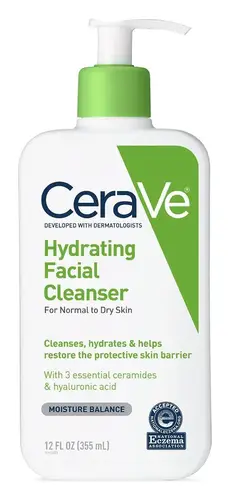
Cetaphil Healthy Radiance Gentle PHA Exfoliating Cleanser Versus Cetaphil Gentle Clear Clarifying Acne Cream Cleanser
This gel cleanser uses mild cleansing ingredients, but contains alcohol that may feel drying for some.
This cream cleanser uses mild cleansing ingredients, but contains alcohol that may feel drying for some.

What's inside
What's inside
 Key Ingredients
Benefits
Concerns
Ingredients Side-by-side
Water
Skin ConditioningGlycerin
Humectant


Cocamidopropyl Betaine
Cleansing



Gluconolactone
Chelating






Niacinamide
Smoothing



Sodium Methyl Cocoyl Taurate
Cleansing
PEG-120 Methyl Glucose Trioleate
Cleansing
Sodium Lauroyl Methyl Isethionate
CleansingSodium Chloride
MaskingDi-PPG-2 Myreth-10 Adipate
Emollient
Sodium Benzoate
Masking
PEG-150 Distearate
Emulsifying
Sodium Methyl Oleoyl Taurate
CleansingSodium Cocoyl Isethionate
Cleansing
Propanediol
Solvent
Coconut Acid
Cleansing
Alcohol
Antimicrobial

Sodium Hydroxide
BufferingAchillea Millefolium Flower/Leaf/Stem Extract
Skin ConditioningTrisodium Ethylenediamine Disuccinate
ChelatingMalva Sylvestris Flower/Leaf/Stem Extract
Skin ConditioningMelissa Officinalis Leaf Extract
Skin ConditioningMentha Piperita Leaf Extract
Skin ConditioningPrimula Veris Flower Extract
Skin ConditioningAlchemilla Vulgaris Flower/Leaf/Stem Extract
AstringentVeronica Officinalis Flower/Leaf/Stem Extract
AstringentBHA
Antioxidant
Water, Glycerin, Cocamidopropyl Betaine, Gluconolactone, Niacinamide, Sodium Methyl Cocoyl Taurate, PEG-120 Methyl Glucose Trioleate, Sodium Lauroyl Methyl Isethionate, Sodium Chloride, Di-PPG-2 Myreth-10 Adipate, Sodium Benzoate, PEG-150 Distearate, Sodium Methyl Oleoyl Taurate, Sodium Cocoyl Isethionate, Propanediol, Coconut Acid, Alcohol, Sodium Hydroxide, Achillea Millefolium Flower/Leaf/Stem Extract, Trisodium Ethylenediamine Disuccinate, Malva Sylvestris Flower/Leaf/Stem Extract, Melissa Officinalis Leaf Extract, Mentha Piperita Leaf Extract, Primula Veris Flower Extract, Alchemilla Vulgaris Flower/Leaf/Stem Extract, Veronica Officinalis Flower/Leaf/Stem Extract, BHA
Water
Skin ConditioningCocamidopropyl Betaine
Cleansing
Distearyl Phthalic Acid Amide
EmollientSodium Methyl Cocoyl Taurate
Cleansing
Sodium Chloride
MaskingCetyl Alcohol
Emollient
Stearyl Alcohol
Emollient
PEG-120 Methyl Glucose Dioleate
Emulsifying
Phenoxyethanol
Preservative
Sodium Hydroxide
BufferingCaprylyl Glycol
Emollient
Ethylhexylglycerin
Skin ConditioningHexylene Glycol
EmulsifyingDisodium EDTA
ChelatingIsopropyl Alcohol
Solvent
Aloe Barbadensis Leaf Juice
Skin Conditioning
Butylene Glycol
Humectant
Camellia Sinensis Leaf Extract
Antimicrobial
Water, Cocamidopropyl Betaine, Distearyl Phthalic Acid Amide, Sodium Methyl Cocoyl Taurate, Sodium Chloride, Cetyl Alcohol, Stearyl Alcohol, PEG-120 Methyl Glucose Dioleate, Phenoxyethanol, Sodium Hydroxide, Caprylyl Glycol, Ethylhexylglycerin, Hexylene Glycol, Disodium EDTA, Isopropyl Alcohol, Aloe Barbadensis Leaf Juice, Butylene Glycol, Camellia Sinensis Leaf Extract
Ingredients Explained
These ingredients are found in both products.
Ingredients higher up in an ingredient list are typically present in a larger amount.
Cocamidopropyl Betaine is a fatty acid created by mixing similar compounds in coconut oil and dimethylaminopropylamine, a compound with two amino groups.
This ingredient is a surfactant and cleanser. It helps gather the dirt, pollutants, and other impurities in your skin to be washed away. It also helps thicken a product and make the texture more creamy.
Being created from coconut oil means Cocamidopropyl Betaine is hydrating for the skin.
While Cocamidopropyl Betaine was believed to be an allergen, a study from 2012 disproved this. It found two compounds in unpure Cocamidopropyl Betaine to be the irritants: aminoamide and 3-dimethylaminopropylamine. High-grade and pure Cocamidopropyl Betaine did not induce allergic reactions during this study.
Learn more about Cocamidopropyl BetaineChances are, you eat sodium chloride every day. Sodium Chloride is also known as table salt. This ingredient has many purposes in skincare: thickener, emulsifier, and exfoliator.
You'll most likely find this ingredient in cleansers where it is used to create a gel-like texture. As an emulsifier, it also prevents ingredients from separating.
You might see people debate whether Sodium Chloride is comedogenic, but there actually haven't been any comedogenic tests done on it. Either way, the overall formulation of a product matters a lot more than any single ingredient.
You might see this ingredient used in scrubs as a primary exfoliating ingredient.
Learn more about Sodium ChlorideSodium Hydroxide is also known as lye or caustic soda. It is used to adjust the pH of products; many ingredients require a specific pH to be effective.
In small amounts, sodium hydroxide is considered safe to use. However, large amounts may cause chemical burns due to its high alkaline.
Your skin has a natural pH and acid mantle. This acid mantle helps prevent harmful bacteria from breaking through. The acid mantle also helps keep your skin hydrated.
"Alkaline" refers to a high pH level. A low pH level would be considered acidic.
Learn more about Sodium HydroxideSodium Methyl Cocoyl Taurate is a gentle, coconut-derived cleansing surfactant. It's most commonly found in "sulfate-free" cleansers.
As a taurate, it belongs to a class of anionic surfactants prized for being efficient at cleansing without harshness, good performance in hard water, stability across a wide pH range, and easily biodegradable.
It is able to lift away oil and grime and make a nice lather without stripping your skin, so it's a good pick for sensitive skin.
Safety-wise, it has a good record. The CIR Expert Panel has concluded this ingredient to be safe in cosmetics and concentrations go up to 11% in leave-on products or 13% in rinse-off products.
Despite being derived from coconut oil, this ingredient is fungal acne safe. It's a water-soluble surfactant with no fatty oils or esters left intact on skin for the Malassezia yeast to feed.
Learn more about Sodium Methyl Cocoyl TaurateWater. It's the most common cosmetic ingredient of all. You'll usually see it at the top of ingredient lists, meaning that it makes up the largest part of the product.
So why is it so popular? Water most often acts as a solvent - this means that it helps dissolve other ingredients into the formulation.
You'll also recognize water as that liquid we all need to stay alive. If you see this, drink a glass of water. Remember to stay hydrated!
Learn more about Water