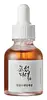
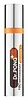
Beauty of Joseon Revive Repair Serum: Ginseng + Snail Mucin Versus Dr. Pong 15C Antioxidant Vitamin C Shake Shake Serum
This calming serum is formulated around Panax Ginseng Root Water and Snail Secretion Filtrate to calm redness and strengthen the skin barrier.
This brightening serum is formulated around Ascorbic Acid and Glutathione to brighten dull-looking skin and soften the look of wrinkles.


What's inside
What's inside
 Key Ingredients
Benefits
Concerns
No concerns
Ingredients Side-by-side
Panax Ginseng Root Water
Masking

Water
Skin ConditioningButylene Glycol
Humectant

Snail Secretion Filtrate
Skin Conditioning

Dipropylene Glycol
Humectant1,2-Hexanediol
Skin Conditioning
Glycerin
Humectant
Niacinamide
Smoothing







Propanediol
Solvent
Trehalose
Humectant
Carbomer
Emulsion StabilisingTromethamine
BufferingXanthan Gum
EmulsifyingCentella Asiatica Extract
Cleansing
Ganoderma Lucidum Extract
Skin Protecting
Panax Ginseng Root Extract
Emollient
Malt Extract
Skin ProtectingSodium Polyacrylate
Absorbent
Adenosine
Skin Conditioning
Glyceryl Acrylate/Acrylic Acid Copolymer
HumectantDisodium EDTA
Phellinus Linteus Extract
Skin ConditioningSodium Hyaluronate
Humectant
Hydrolyzed Hyaluronic Acid
Humectant
Forsythia Suspensa Fruit Extract
Antioxidant
Lonicera Japonica Flower Extract
Skin ConditioningScutellaria Baicalensis Root Extract
Astringent
Sodium Acetylated Hyaluronate
Humectant
Panax Ginseng Root Water, Water, Butylene Glycol, Snail Secretion Filtrate, Dipropylene Glycol, 1,2-Hexanediol, Glycerin, Niacinamide, Propanediol, Trehalose, Carbomer, Tromethamine, Xanthan Gum, Centella Asiatica Extract, Ganoderma Lucidum Extract, Panax Ginseng Root Extract, Malt Extract, Sodium Polyacrylate, Adenosine, Glyceryl Acrylate/Acrylic Acid Copolymer, Disodium EDTA, Phellinus Linteus Extract, Sodium Hyaluronate, Hydrolyzed Hyaluronic Acid, Forsythia Suspensa Fruit Extract, Lonicera Japonica Flower Extract, Scutellaria Baicalensis Root Extract, Sodium Acetylated Hyaluronate
Water
Skin ConditioningAscorbic Acid
Antioxidant
Propanediol
Solvent
Pentylene Glycol
Skin Conditioning
Hyaluronic Acid/Polyisopropylacrylamide Copolymer
Humectant
Butylene Glycol
Humectant
Glutathione
Sodium Hydroxide
BufferingGluconolactone
Skin Conditioning
Silanediol Salicylate
EmollientSodium Citrate
BufferingAdenosine
Skin Conditioning
Cyclodextrin
AbsorbentCitric Acid
Buffering

Fullerenes
AntimicrobialPvp
Emulsion StabilisingPhenoxyethanol
Preservative
EDTA
Reviews
Ingredients Explained
These ingredients are found in both products.
Ingredients higher up in an ingredient list are typically present in a larger amount.
Adenosine is a purine nucleoside that your body already makes in every cell. In skincare, it acts mainly as a skin conditioning and anti-aging agent.
The way it works is fairly well mapped out:
Your skin has cells called fibroblasts that build collagen (the stuff that keeps skin firm and smooth). Adenosine basically flips a switch on these cells that tells them to get to work making more collagen and other proteins. These cells slow down on their own as skin ages, so Adenosine helps give them a little nudge to keep going.
The clinical backing is pretty solid too.
A blind, randomized, placebo-controlled trial of 126 women aged 45-65 tested a 0.1% cream twice daily and found real improvements in crow's feet and frown lines using a precise 3D skin-mapping technique; these changes showed up by week 3 and held at 2 months.
A later study using Adenosine-loaded dissolving microneedle patches reported gains in wrinkle depth, dermal density, elasticity, and hydration.
On concentrations, South Korea's Ministry of Food and Drug Safety has set 0.04% as the approved functional anti-wrinkle level. You'll typically see this ingredient used somewhere in the 0.04-0.1% range since it works at low doses.
This ingredient has been found safe for cosmetics with the data showing no irritation or sensitization.
Overall, this is a great ingredient for any anti-aging routine and has no photosensitizing effect, so it suits both AM and PM use.
Learn more about AdenosineButylene Glycol (or BG) is used within cosmetic products for a few different reasons:
Overall, Butylene Glycol is a safe and well-rounded ingredient that works well with other ingredients.
Though this ingredient works well with most skin types, some people with sensitive skin may experience a reaction such as allergic rashes, closed comedones, or itchiness.
Learn more about Butylene GlycolPropanediol is an all-star ingredient. It softens, hydrates, and smooths the skin.
It’s often used to:
Propanediol is not likely to cause sensitivity and considered safe to use. It is derived from corn or petroleum with a clear color and no scent.
Learn more about PropanediolWater. It's the most common cosmetic ingredient of all. You'll usually see it at the top of ingredient lists, meaning that it makes up the largest part of the product.
So why is it so popular? Water most often acts as a solvent - this means that it helps dissolve other ingredients into the formulation.
You'll also recognize water as that liquid we all need to stay alive. If you see this, drink a glass of water. Remember to stay hydrated!
Learn more about Water

