Natura Siberica Biome Sensitive Face Peeling
A exfoliator with 28 ingredients, including AHA, exfoliants, and hyaluronic acid.
This smoothing exfoliator is formulated around Rice Ferment Filtrate and Glycolic Acid to refine skin texture.
Worth noting
Contains EU-listed fragrance allergens, including Benzyl Alcohol and Citronellol.
We independently verify ingredients, backed by peer-reviewed research. Suggest an update.
What's inside
Ingredients List
Phospholipids
Skin Conditioning

Rice Ferment Filtrate
Skin Conditioning

Bupleurum Falcatum Flower/Leaf/Stem Extract
HumectantRubus Arcticus Fruit Extract
Antioxidant
Rosa Davurica Leaf Extract
HumectantEmpetrum Nigrum Fruit Juice
Skin ConditioningGeranium Sibiricum Extract
HumectantGlycolic Acid
Buffering









Glycerin
Humectant
Sorbitol
Humectant
Lactic Acid
Buffering
Hydrogenated Lecithin
Emulsifying
Lactobacillus Ferment Lysate
Skin Conditioning
Bifida Ferment Lysate
Skin Conditioning
Lactococcus Ferment Lysate
Skin Conditioning
Shikimic Acid
Skin ConditioningPanthenol
Skin Conditioning
Pentylene Glycol
Skin Conditioning
Hydroxyethylcellulose
Emulsion StabilisingHeptyl Glucoside
SurfactantSodium Hyaluronate
Humectant
Menthyl Lactate
Masking
Benzyl Alcohol
Perfuming




Benzoic Acid
Masking
Sorbic Acid
Preservative
Sodium Hydroxide
BufferingParfum
Masking
Citronellol
Perfuming
Phospholipids, Rice Ferment Filtrate, Bupleurum Falcatum Flower/Leaf/Stem Extract, Rubus Arcticus Fruit Extract, Rosa Davurica Leaf Extract, Empetrum Nigrum Fruit Juice, Geranium Sibiricum Extract, Glycolic Acid, Glycerin, Sorbitol, Lactic Acid, Hydrogenated Lecithin, Lactobacillus Ferment Lysate, Bifida Ferment Lysate, Lactococcus Ferment Lysate, Shikimic Acid, Panthenol, Pentylene Glycol, Hydroxyethylcellulose, Heptyl Glucoside, Sodium Hyaluronate, Menthyl Lactate, Benzyl Alcohol, Benzoic Acid, Sorbic Acid, Sodium Hydroxide, Parfum, Citronellol
Key Ingredients
Benefits
Concerns
Ingredients Explained
Phospholipids are a family of skin-identical lipids that makeup the structural backbone of every cell membrane in your body.
In cosmetics, they function as skin conditioning agents with emulsifier and surfactant properties. They're typically sourced from soybean or sunflower lecithin (or sometimes egg yolk or marine sources).
Because they mirror the lipids naturally found in the deeper layers of your skin, topical phospholipids help reinforce the lipid matrix, reduce transepidermal water loss, and leave skin feeling conditioned.
They're also used to form liposomes, or tiny self-assembling vesible used to stabilize actives like vitamin c or retinol. This helps these ingredients integrate into the upper layers of skin more easily.
Phospholipids are compatible with everything and the CIR Expert Panel has concluded them to be safe at current use levels.
Some types of phospholipids include:
Learn more about PhospholipidsRice Ferment Filtrate is created by fermenting rice, or oryza sativa. A common name for this ingredient is sake, the traditional Japanese fermented rice alcoholic beverage.
Rice ferment is skin-conditioning and contains anti-aging components.
Rice contains numerous antioxidants which may help with anti-aging, such as vitamin E. Antioxidants help stabilize free-radical molecules. Unstable free-radical molecules may damage your skin cells and accelerate signs of aging.
A study from 2013 found fermented rice water to help decrease sun damage by increasing collagen production.
Learn more about Rice Ferment FiltrateWe don't have a description for Bupleurum Falcatum Flower/Leaf/Stem Extract yet.
Rubus Arcticus Fruit Extract is an antioxidant.
We don't have a description for Rosa Davurica Leaf Extract yet.
We don't have a description for Empetrum Nigrum Fruit Juice yet.
We don't have a description for Geranium Sibiricum Extract yet.
Glycolic Acid is arguably the most famous alpha hydroxy acid (AHA) with tons of research backing its benefits.
It is found naturally in sugar cane but the form used in skincare is usually synthetic for purity and stability.
Glycolic acid removes the top layer of dead skin cells to allow newer and fresher ones to emerge.
AHAs work by breaking down the structural “glue” that holds old skin cells in place. When that buildup is gone, your skin can renew itself more efficiently.
Research also shows glycolic acid stimulates collagen production, helping to firm and thicken the skin over time. This is one of its biggest advantages over other AHAs.
Overall, glycolic acid helps with:
Fun fact: Glycolic acid boosts skin hydration by helping it produce molecules that increase hyaluronic acid naturally.
To work best, glycolic acid products should have a pH between 3-4 (that’s where exfoliation is most effective but still gentle on skin).
The pH and concentration of a product are key to its effectiveness:
It is normal to feel a slight stinging sensation when using glycolic acid. This usually fades as your skin adjusts.
Because glycolic acid has the smallest molecular size in the AHA family, it can penetrate deeper, which enhances its effectiveness but also makes it more likely to irritate sensitive skin.
If your skin is very sensitive or prone to rosacea, glycolic acid may be too strong; in that case, try milder options like lactic acid or a PHA instead.
Recent studies suggest glycolic acid might even help protect against UV damage. But don’t skip sunscreen! Freshly exfoliated skin is more sensitive to the sun.
Glycolic acid is a skincare superstar. It smooths, brightens, hydrates, and firms the skin. Unless you’re highly sensitive, it’s well worth adding to your routine.
Read more about some other popular AHA's here:
Learn more about Glycolic AcidGlycerin (or glycerol) is a compound naturally found in your skin. It's a powerhouse humectant that pulls water into the stratum corneum.
Topically, glycerin does several things at once:
Your skin makes glycerin on its own (mostly from sebaceous oil breakdown) and shuttles it to your outermost layer of skin, or your epidermis, via aquaporin-3.
Aquaporin-3 is a transporter that is essential for normal skin hydration, elasticity, and repair. Interestingly, mice lacking in AQP3 have dry and less elastic skin that can be fully corrected with glycerin.
This ingredient is non-irritating, plays well with almost every ingredient, and works across all skin types. Typical use is anywhere between 3-10% but can go up to 79% in some leave-on products.
Just know very high concentrations (>40%) can feel tacky in low humidity.
Glycerin is the name for this ingredient in American English. British English uses Glycerol/Glycerine.
Learn more about GlycerinSorbitol is a sugar alcohol. It is a hydrating and moisturizing agent created from the reduction process of glucose.
Most sorbitol is usually made from potato starch. It is also found in fruits such as apples and pears.
As a humectant, Sorbitol helps draw water to the skin. This helps keep the skin hydrated. Sorbitol also helps create a thicker texture in products. You might find sorbitol in your toothpaste and other gels.
It is a non-irritating ingredient that is great for those with dry skin.
Sorbitol is a prebiotic. It helps promote the growth of healthy bacteria on your skin. The bacteria on your skin form a microbiome. This microbiome helps protect your skin from infection and harmful bacteria.
Learn more about SorbitolLactic Acid is another well-loved alpha hydroxy acid (AHA). It is gentler than glycolic acid but still highly effective.
Its main role is to exfoliate the surface of the skin by loosening the “glue” that holds dead skin cells together. Shedding those old cells leads to smoother, softer, and more even-toned skin.
Because lactic acid molecules are larger than glycolic acid, they don’t penetrate as deeply. This means they’re less likely to sting or irritate, making it a great choice for beginners or those with sensitive skin.
Like glycolic acid, it can:
Lactic acid also acts as a humectant (like hyaluronic acid). It can draw water into the skin to improve hydration and also plays a role in the skin's natural moisturizing factor (NMF) in the form of sodium lactate.
Studies show it can boost ceramide production to strengthen the skin barrier and even help balance the skin’s microbiome.
To get results, choose products with a pH between 3-4.
Lower strengths (5-12%) focus on surface exfoliation; higher strengths (12% and up) can reach deeper in the dermis (deeper, supportive layer) to improve skin texture and firmness over time.
Though it was originally derived from milk, most modern lactic acid used in skincare is vegan. It is made through non-dairy fermentation to create a bio-identical and stable form suitable for all formulations.
When lactic acid shows up near the end of an ingredient list, it usually means the brand added just a tiny amount to adjust the product’s pH.
Legend has it that Cleopatra used to bathe in sour milk to help reduce wrinkles.
Lactic acid is truly a gentle multitasker: it exfoliates, hydrates, strengthens, and brightens. It's a great ingredient for giving your skin a smooth, glowing, and healthy look without the harshness of stronger acids.
Read more about some other popular AHA's here:
Learn more about Lactic AcidHydrogenated Lecithin is a more stable version of lecithin.
It's made by taking lecithin (a phospholipid commonly found in soybeans and egg yolks) and hydrogenating it. This just means the unsaturated fatty acids are turned into saturated ones so they don't go bad as easily.
This ingredient is an emollient, emulsifier, and penetration enhancer. As an emollient, it helps soften and hydrate skin by trapping moisture within. As an emulsifier, it prevents oil and water ingredients from separating.
Hydrogenated Lecithin can form tiny spherical structures made of phospholipid bilayers called liposomes. These liposomes are able to capture compounds inside their structure and deliver them through the skin barrier.
Because phospholipids are a natural component of our cell membranes, this ingredient is inherently compatible with skin.
A 2021 study found lecithin-based surfactants were less harsh and more tolerable comared to Sodium Lauryl Sulfate (SLS).
Learn more about Hydrogenated LecithinLactobacillus Ferment Lysate is a postbiotic with skin soothing properties. Postbiotics are inactive molecules produced by probiotic bacteria that provide skin benefits.
This ingredient comes from the secretion of the bacteria, Lactobacillus.
Studies show this ingredient can help calm redness and may help treat the signs of photoaging; however, the evidence is inconclusive and further studies are needed.
Lactobacillus Ferment is generally considered safe for fungal-acne prone skin. The key thing to understand is that it comes from bacteria, not yeast or fungus.
Yeast-derived ferments (like galactomyces) have been shown to activate a protein that's linked to Malassezia-related skin issues whereas lactobacillus doesn't have that problem.
Its byproducts also don't contain the types of fatty acids (C11-24 chain lengths) that Malassezia feeds on.
Learn more about Lactobacillus Ferment LysateBifida Ferment Lysate is a postbiotic ingredient made by fermenting Bifidobacterium to extract a nutrient-rich mix of peptides, amino acids, vitamins, organic acids, and polysaccharides.
These components are basically the building blocks that your skin already uses to stay hydrated, repair itself, and maintain its barrier. That's why this ingredient helps your skin hold onto moisture and stay resilient against irritation.
One in-vitro study found that this ingredient tells your skin cells to produce more of the proteins (filaggrin, loricrin, and involucrin) for building a strong and healthy barrier. This study also found this ingredient to be a solid antioxidant that helped neutralize damage against UV and pollution.
A study with people from 2010 found that sensitive, reactive skin using a cream with 10% of this ingredient for a month became noticeably less dry, less reactive, and harder to irritate compared to the group using a plain cream.
In short, this ingredient is a well-tolerated ingredient that can help with barrier repair, antioxidant protection, and calming reactive skin.
This ingredient is generally considered fungal acne (Malassezia) safe; Bifidobacterium is a bacterium, not a yeast or fungus.
The fungal acne concern with fermented ingredients mainly applies to yeast-derived ferments like Saccharomyces and Galactomyces, because those are in the same kingdom as Malassezia and could theoretically contain residual compounds that feed it.
Bifida is a completely different organism, so on its own it doesn't provide a food source for the Malassezia yeast that causes fungal acne.
Learn more about Bifida Ferment LysateLactococcus Ferment Lysate is a postbiotic created by fermenting Lactoccus lactis, a type of bacteria more commonly used to create Lactic acid.
Postbiotics are inactive molecules produced by probiotic bacteria that provide skin benefits.
This ingredient offers promising benefits, but it is relatively new and more evidence is needed to prove its efficacy. The manufacturer claims this ingredient:
A study from 2022 found this ingredient helped protect skin against damaged from UV exposure (though this should not replace your sunscreen!).
The lysate in the ingredient name refers to a fluid that forms from breaking down the cell membrane.
Learn more about Lactococcus Ferment LysateWe don't have a description for Shikimic Acid yet.
Panthenol is a common ingredient that helps hydrate and soothe the skin. It is found naturally in our skin and hair.
There are two forms of panthenol: D and L.
D-panthenol is also known as dexpanthenol. Most cosmetics use dexpanthenol or a mixture of D and L-panthenol.
Panthenol is famous due to its ability to go deeper into the skin's layers. Using this ingredient has numerous pros (and no cons):
Like hyaluronic acid, panthenol is a humectant. Humectants are able to bind and hold large amounts of water to keep skin hydrated.
This ingredient works well for wound healing. It works by increasing tissue in the wound and helps close open wounds.
Once oxidized, panthenol converts to pantothenic acid. Panthothenic acid is found in all living cells.
This ingredient is also referred to as pro-vitamin B5.
Learn more about PanthenolPentylene Glycol (1,2-pentanediol) is a multitasking little diol with three main roles in a formula:
Research on alkanediols (the family pentylene glycol belongs to) show they work by disrupting microbial cell membranes. This disruption helps the primary preservative system in a product work more effectively at lower doses.
On the safety side, the Cosmetic Ingredient Review Expert Panel has concluded this ingredient to be safe as used in current cosmetic practices + concentrations.
Typical use levels in a formula run about 1-5%.
Learn more about Pentylene GlycolHydroxyethylcellulose is used to improve the texture of products. It is created from a chemical reaction involving ethylene oxide and alkali-cellulose. Cellulose is a sugar found in plant cell walls and help give plants structure.
This ingredient helps stabilize products by preventing ingredients from separating. It can also help thicken the texture of a product.
This ingredient can also be found in pill medicines to help our bodies digest other ingredients.
Learn more about HydroxyethylcelluloseWe don't have a description for Heptyl Glucoside yet.
Sodium Hyaluronate is the salt form of hyaluronic acid. It is a long sugar chain that is naturally found in your skin, joints, and connective tissue that maintains hydration and elasticity.
In skincare, it works as a humectant. It pulls water from the environment and deeper layers of skin and binds it to the surface.
Interestingly, the size of the molecule affects its behavior:
Some clinical evidence links low molecular weight versions to improved wrinkle depth, elasticity, anti-inflammatory effects, and barrier repair.
Many serums use a blend of both weights so you can get surface hydration plus longer-lasting and deeper effects.
You'll typically see concentrations between 0.1-2% for this ingredient.
Learn more about Sodium HyaluronateMenthyl lactate is an ester of menthol and lactic acid. It is often used as a cooling agent and fragrance.
When applied topically, this ingredient leaves a refreshing sensation like menthol, but is less irritating.
Benzyl Alcohol is an aromatic alcohol with several roles: it's a preservative, solvent, and mild fragrance component with a floral scent.
This ingredient has been deemed safe for use in cosmetic formulations at concentrations up to 5%, and up to 10% in hair dyes. You'll typically see 0.5-2% in most rinse-off or leave-on products.
As a preservative, it works by disrupting the membrane of microbial proteins. This helps keep bacteria and fungi from growing in your products.
The sensitization picture is actually quite assuring as well:of nearly 71,000 patients patch tested with benzyl alcohol, only 0.21% showed a positive reaction with most of them being weakly positive.
This led researchers to conclude that benzyl alcohol cannot be regarded as a significant contact allergen.
It is worth noting this ingredient is classified as one of the EU's regulated fragrance allergens and restricted to 1% in finished products.
Labels must also declare it in concentrations above 0.001% in leave-on products and 0.01% in rinse-off products.
At concentrations around 5%, localized redness and itching can appear as a direct irritant response and not as a true allergic reaction.
Learn more about Benzyl AlcoholBenzoic Acid is an organic acid that shows up in cosmetics as a preservative. It helps keep a product from spoiling by holding back the growth of yeast, mold, and some bacteria.
This ingredient also functions as a fragrance ingredient that helps mask the unpleasant scent of other ingredients.
The way it works is worth understanding; benzoic acid works when the formula is acidic. It is able to sneak into a microbe's cell and mess up how it functions to stop it from growing in an acidic product.
However, the acid switches to an inactive form and stops working if a product isn't acidic enough (above ~5 pH). This is why you'll often see it in low pH products or teamed up with other preservatives to cover the gap.
Safety wise, it's one of the better studied preservatives out there.
The Cosmetic Ingredient Review Expert Panel has concluded this ingredient to be safe for use in cosmetic formulations at concentrations up to 5%.
A large international review found this ingredient had no effects on the human body and had low irritation potential.
Just so you know, real world use is usually much lower than the 5% ceiling (usually 1% of less).
The EU caps it at 2.5% in rinse-off products, 1.7% in oral care, and 0.5% in leave-on products.
One thing worth mentioning (it's nothing to worry about): some people get a little stinging or flushing where they apply it. This isn't a true allergy; it's a temporary and harmless reaction. This is the same kind of mild tingle you might notice from sorbic acid.
Learn more about Benzoic AcidSorbic Acid is a preservative that stops your product from spoiling by stopping microbes from growing.
As a preservative, it's kind of a specialist: it has a broad spectrum of activity against yeast and molds but is weaker against bacteria. That's why it's often paired with another preservative to cover that gap.
This ingredient is also pretty picky about pH; it performs best at pH 6.5 or below.
At the right pH level, sorbic acid is "active" and can slip through the outer wall of a microbe. Once inside, it turns the cell's interior more acidic to shut down the microbe from the inside.
The EU caps this ingredient at 0.6% while the CIR has concluded it's safe at concentrations up to 1%. It's most often used around 0.05-0.2% in cosmetics.
Though this ingredient is considered low-sensitizing and well-tolerated, a very small number of people may have a contact allergy to it. Be sure to patch test if you have a history of allergies towards preservatives.
Learn more about Sorbic AcidSodium Hydroxide is also known as lye or caustic soda. It is used to adjust the pH of products; many ingredients require a specific pH to be effective.
In small amounts, sodium hydroxide is considered safe to use. However, large amounts may cause chemical burns due to its high alkaline.
Your skin has a natural pH and acid mantle. This acid mantle helps prevent harmful bacteria from breaking through. The acid mantle also helps keep your skin hydrated.
"Alkaline" refers to a high pH level. A low pH level would be considered acidic.
Learn more about Sodium HydroxideParfum is a catch-all term for an ingredient or more that is used to give a scent to products.
Also called "fragrance", this ingredient can be a blend of hundreds of chemicals or plant oils. This means every product with "fragrance" or "parfum" in the ingredients list is a different mixture.
For instance, Habanolide is a proprietary trade name for a specific aroma chemical. When used as a fragrance ingredient in cosmetics, most aroma chemicals fall under the broad labeling category of “FRAGRANCE” or “PARFUM” according to EU and US regulations.
The term 'parfum' or 'fragrance' is not regulated in many countries. In many cases, it is up to the brand to define this term.
For instance, many brands choose to label themselves as "fragrance-free" because they are not using synthetic fragrances. However, their products may still contain ingredients such as essential oils that are considered a fragrance by INCI standards.
One example is Calendula flower extract. Calendula is an essential oil that still imparts a scent or 'fragrance'.
Depending on the blend, the ingredients in the mixture can cause allergies and sensitivities on the skin. Some ingredients that are known EU allergens include linalool and citronellol.
Parfum can also be used to mask or cover an unpleasant scent.
The bottom line is: not all fragrances/parfum/ingredients are created equally. If you are worried about fragrances, we recommend taking a closer look at an ingredient. And of course, we always recommend speaking with a professional.
Learn more about ParfumCitronellol is used to add fragrance/parfum to a product. It is often derived from plants such as roses. In fact, it can be found in many essential oils including geranium, lavender, neroli, and more. The scent of Citronellol is often described as "fresh, grassy, and citrus-like".
Since the Citronellol molecule is already unstable, Citronellol becomes irritating on the skin when exposed to air.
Citronellol is a modified terpene. Terpenes are unsaturated hydrocarbons found in plants. They make up the primary part of essential oils.
Citronellol is not able to be absorbed into deeper layers of the skin. It has low permeability,
Citronellol is also a natural insect repellent.
Learn more about CitronellolReviews
No written reviews yet. Be the first to review this product.
Recent searches
Search reviews by skin type, ingredient, or keyword.
Where it's from
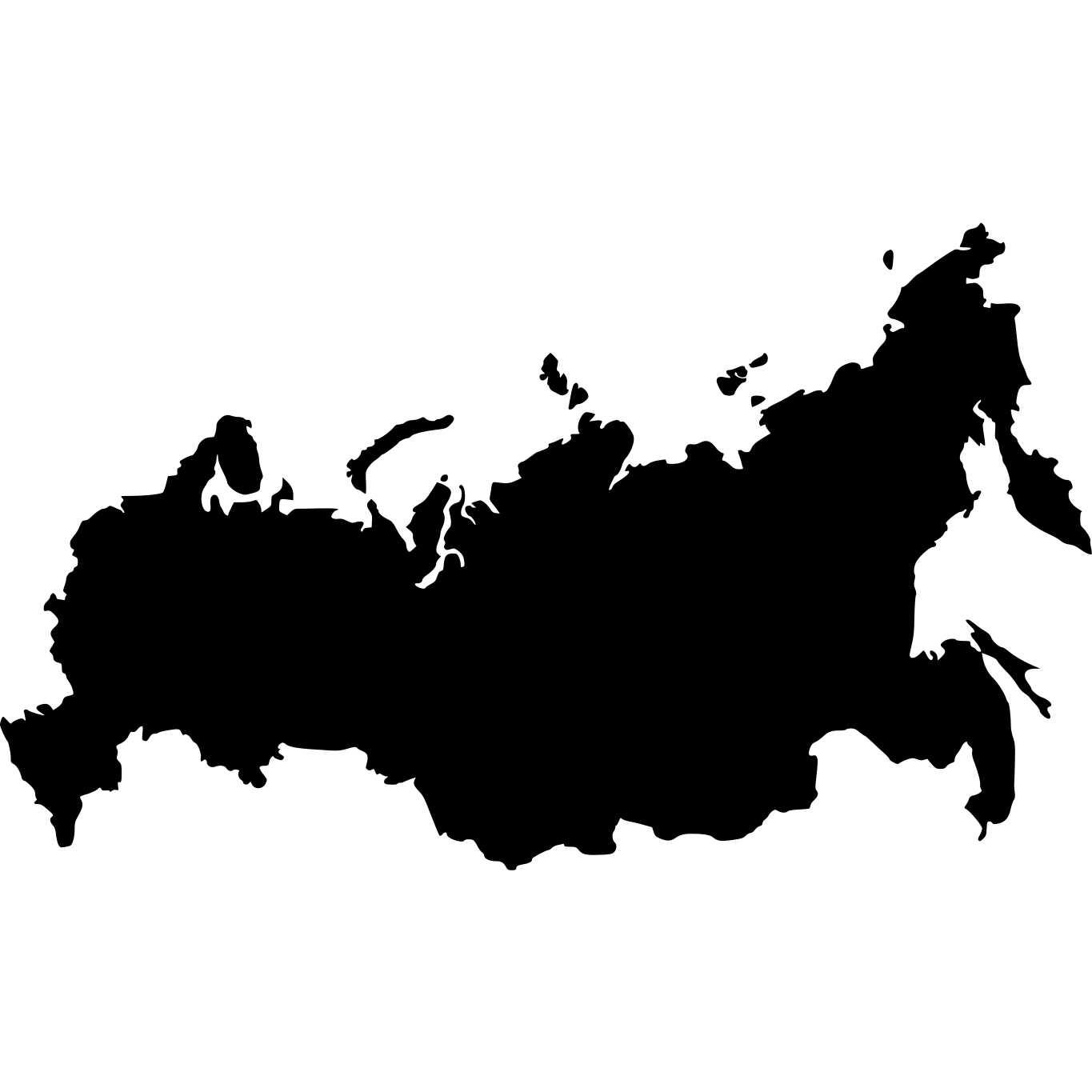
Natura Siberica is a Russian brand

We're dedicated to providing you with the most up-to-date and science-backed ingredient info out there.
The data we've presented on this page has been verified by a member of the SkinSort Team.
Read more about us· Updated June 30, 2026 • Added by dasha3


