Mango Butterfull Mango Afrika Spray Hydratant Et Nourrissant
A leave-in treatment with 34 ingredients, including vitamin E.
Leave-in treatment with 34 ingredients that contains Vitamin E
We independently verify ingredients, backed by peer-reviewed research. Suggest an update.
What's inside
Ingredients List
Water
Skin ConditioningPimenta Acris Fruit Extract
Perfuming
Mangifera Indica Pulp Extract
Skin ConditioningBrassica Nigra Seed Oil

Elaeis Guineensis Kernel Oil
Emollient



Persea Gratissima Cera
EmollientRicinus Communis Seed Oil
Masking
Olea Europaea Fruit Oil
Masking
Eugenia Caryophyllus Bud Extract
Perfuming
Hibiscus Sabdariffa Flower Extract
Skin ConditioningMentha Piperita Leaf Extract
Skin ConditioningMoringa Oleifera Leaf Extract
Skin ConditioningRosmarinus Officinalis Leaf Extract
AntimicrobialCinnamomum Zeylanicum Bark Extract
Antimicrobial
Zingiber Officinale Root Extract
Masking

Piper Nigrum Fruit Extract
Perfuming
Trigonella Foenum-Graecum Seed Powder
Withania Somnifera Root Powder
Skin ConditioningEmblica Officinalis Fruit
Skin ConditioningLepidium Meyenii Root Extract
Skin ConditioningEclipta Prostrata Extract
Skin Conditioning
Bacopa Monnieri Extract
Skin ConditioningAzadirachta Indica Leaf Extract
Skin ConditioningUrtica Dioica
Seeds
Beeswax
Emulsion Stabilising
Aloe Barbadensis Leaf Juice
Skin Conditioning
Glycerin
Humectant
Tocopherol
Antioxidant



Xanthan Gum
EmulsifyingLeuconostoc/Radish Root Ferment Filtrate
Antimicrobial
Sodium Benzoate
Masking
Potassium Sorbate
Preservative
Parfum
Masking

Water, Pimenta Acris Fruit Extract, Mangifera Indica Pulp Extract, Brassica Nigra Seed Oil, Elaeis Guineensis Kernel Oil, Persea Gratissima Cera, Ricinus Communis Seed Oil, Olea Europaea Fruit Oil, Eugenia Caryophyllus Bud Extract, Hibiscus Sabdariffa Flower Extract, Mentha Piperita Leaf Extract, Moringa Oleifera Leaf Extract, Rosmarinus Officinalis Leaf Extract, Cinnamomum Zeylanicum Bark Extract, Zingiber Officinale Root Extract, Piper Nigrum Fruit Extract, Trigonella Foenum-Graecum Seed Powder, Withania Somnifera Root Powder, Emblica Officinalis Fruit, Lepidium Meyenii Root Extract, Eclipta Prostrata Extract, Bacopa Monnieri Extract, Azadirachta Indica Leaf Extract, Urtica Dioica, Seeds, Beeswax, Aloe Barbadensis Leaf Juice, Glycerin, Tocopherol, Xanthan Gum, Leuconostoc/Radish Root Ferment Filtrate, Sodium Benzoate, Potassium Sorbate, Parfum
Key Ingredients
Benefits
Concerns
Ingredients Explained
Water. It's the most common cosmetic ingredient of all. You'll usually see it at the top of ingredient lists, meaning that it makes up the largest part of the product.
So why is it so popular? Water most often acts as a solvent - this means that it helps dissolve other ingredients into the formulation.
You'll also recognize water as that liquid we all need to stay alive. If you see this, drink a glass of water. Remember to stay hydrated!
Learn more about WaterPimenta Acris Fruit Extract is a fragrance.
We don't have a description for Mangifera Indica Pulp Extract yet.
Brassica Nigra Seed Oil is an oil.
Palm kernel oil comes from the African oil palm fruit's outer pulp (different from palm oil). It is an emollient that creates a thin film on skin to smooth roughness and lock in moisture.
This oil has a fatty acid profile of mostly lauric (~42%), stearic, and oleic acid.
Overall, this ingredient works well for dry skin but it might be too heavy for oily or acne-prone skin.
Because it is rich in lauric acid, this ingredient may not be fungal acne (Malassezia folliculitis) safe.
Learn more about Elaeis Guineensis Kernel OilWe don't have a description for Persea Gratissima Cera yet.
This ingredient is also known as castor oil. It is a skin conditioning ingredient.
The star component of castor oil is ricinoleic acid, an unusual fatty acid that makes up ~80-92% of its composition.
In skincare, it is an emollient that dries down to a solid film with water-binding properties. This helps keep skin hydrated and helps reduce transepidermal water loss (TEWL).
A 2026 dermatology review pulls together its broader uses:
Human clinical testing found this ingredient to be non-irritating and non-sensitizing.
Because castor oil contains fatty acids in the C11-24 range, this ingredient may not be fungal acne safe.
At this time, the literature does not support castor oil in regrowing hair. A 2022 systematic review found no strong evidence that it supports hair growth and only weak evidence that it improves hair shine.
Castor oil itself carries "perfuming" and "masking" function tags according to the official CosIng database. This is because of its mild odor and odor-dampening properties.
Learn more about Ricinus Communis Seed OilThis ingredient is also known as olive oil. It has been used in skincare for centuries and science largely backs up its reputation as a nourishing emollient.
The main components of olive oil are oleic acid (55-83%), linoleic acid (3.5-20%), and palmitic acid (7-20%). Oleic acid promotes skin regeneration and helps regulate inflammatory responses.
Squalene is also naturally present in olive oil and exhibits moisturizing and antioxidant properties.
The polyphenols in olive oil also show anti-aging promise; one clinical study found a measurable improvement in skin appearance after 30 days of topical serum use.
Just be aware that applying olive oil directly to skin can weaken the barrier and cause redness. One study with volunteers found even people without sensitive skin experienced a significant reduction in stratum corneum integrity and induced mild erythema.
It's best to use this ingredient as part of a carefully crafted formula (instead of putting it on skin directly from the bottle).
Because it has a 0-2 on the comedogenic scale, it is low risk for acne-prone skin. Just remember the overall formulation of a product matters more than a few ingredients with comedogenic ratings.
This ingredient may not be fungal acne safe because of the oleic and palmitic acid content. These fall within the C11-24 fatty acid range that the Malassezia yeast can metabolize to grow.
Overall, olive oil is a well-studied and nourishing skincare ingredient.
Learn more about Olea Europaea Fruit OilEugenia Caryophyllus Bud Extract is a fragrance.
This extract comes from the Roselle flower, or Hibiscus Sabdariffa. Roselle flowers are rich in antioxidants.
Studies found the antioxidants in Roselle flowers to potentially help reduce UV-B damage.
Mentha Piperita Leaf Extract is extract from peppermint leaves. It has a "cooling" sensory feel depending on what compounds are found in the extract.
Peppermint leaves contain polyphenols that antioxidant activity. In-vitro studies show anti-inflammatory and antimicrobial activity against some bacteria and fungi.
Evidence for mint as a "treatment" ingredient is limited and depends heavily on the specific extract type and concentration.
In large percentages, peppermint extract may sensitize the skin.
Learn more about Mentha Piperita Leaf ExtractWe don't have a description for Moringa Oleifera Leaf Extract yet.
This is a botanical extract from the rosemary plant (the same one you cook with). In skincare, it mostly works as a skin conditioning agent.
Its activity comes from a handful of polyphenols, carnosic acid, carnosol, and rosmarinic acid. Almost 90% of the antioxidant activity of this ingredient can be attributed to canosol and carnosic acid.
These compounds protect your skin two ways:
1) They fight off free radicals, or the unstable molecules from things like sun and pollution that age and damage skin.
2) They help calm inflammation by switching off the chemical signals that tell skin to get red and irritated.
Lab studies also suggest that rosmarinic acid may help protect collagen and slow sugar-related damage to it.
The Cosmetic Ingredient Review has concluded rosemary-derived ingredients to be safe when formulated to be non-sensitizing.
Rosemary can occasionally cause allergic contact dermatitis (due to carnosol), so be sure to patch test if you have reactive or fragrance-sensitive skin.
Learn more about Rosmarinus Officinalis Leaf ExtractThis cinnamon tree also called true cinnamon or Ceylon cinnamon. It has antimicrobial, emollient, skin hydrating, and antioxidant properties.
This tree is native to Sri Lanka.
Zingiber Officinale is more commonly known as ginger.
Ginger root has antioxidant, anti-inflammation, and antimicrobial properties.
The antioxidant properties help protect your body from free-radicals. Free-radicals are molecules that may damage your skin cells. As a result, ginger may help slow down signs of aging such as hyperpigmentation and wrinkles.
Studies show ginger inhibits the enzyme that breaks down collagen. It also helps with:
This ingredient has no negative side-effects and is safe to use unless one has a specific allergy to it.
Ginger originates from Southeast Asia but has spread throughout the world. It is now a common spice used in many cultures.
Learn more about Zingiber Officinale Root ExtractPiper Nigrum Fruit Extract is a fragrance.
We don't have a description for Trigonella Foenum-Graecum Seed Powder yet.
Withania Somnifera Root Powder comes from the Winter Cherry or Ashwaganda plant.
Ashwaganda contains many antioxidant compounds.
Ashwaganda root powder has traditionally been used in Indian medicine.
Learn more about Withania Somnifera Root PowderWe don't have a description for Emblica Officinalis Fruit yet.
This ingredient is also known as maca root.
This ingredient is also known as Bhringaraj extract or False Daisy. It is a skin conditioning ingredient that keeps skin soft and hydrated.
Research shows it has antioxidant properties; lab studies have found it can protect skin cells from UV-induced damage and help suppress inflammation.
There's also some interesting research on its potential to support hair growth by promoting the growth phase of the hair cycle.
Those with an allergy to plants in the daisy family may want to patch test this ingredient. This ingredient is generally well-tolerated otherwise.
Learn more about Eclipta Prostrata ExtractWe don't have a description for Bacopa Monnieri Extract yet.
Azadirachta Indica is a tree commonly known as neem, nimtree, or Indian Lilac.
The leaves of this tree contain flavonoids and polyphenols. These two compounds are antioxidants, anti-inflammatory, and antibacterial.
Antioxidants help fight free-radicals. Free-radicals are molecules that may damage your skin cells, such as pollution.
A 2017 study found neem oil was effective at treating wrinkles and dry skin in mice. The study also found higher levels of elastin and procollagen.
Learn more about Azadirachta Indica Leaf ExtractWe don't have a description for Urtica Dioica yet.
This is not an INCI ingredient and is too vague to understand what the ingredient actually is. Please reach out to the brand if you have questions about this ingredient.
Beeswax is natural wax produced by honey bees to build their honeycomb.
Because it forms a protective layer on your skin, it can help lock in moisture and reduce water loss. It is also widely used as a thickener and emulsifier in lip balms and lotions. Research suggests beeswax containing moisturizers can support skin barrier integrity.
In comedogenic testing, Beeswax scored a 0-2, which is on the low end. Whether or not a product clogs your pores really comes down to the formula as a whole (not any single ingredient on its own) and your skin.
Cera Alba is the white, bleached form of this ingredient.
Just so you know, beeswax is not vegan since it is animal-derived. It cannot be removed with water, but can be taken off with an oil cleanser.
People with a known Propolis allergy also report to have reactions from beeswax.
Beeswax's wax esters are derived primarily from palmitic and oleic acid (C16 and C18:1). Both of these fall within the C11-C24 feeding window.
The Malassezia yeast can potentially cleave these esters and release usable fatty acids, so this ingredient may not be fungal acne safe. However, not everyone will react to this ingredient.
Learn more about BeeswaxAloe Barbadensis Leaf Juice is the filtered, stabilized liquid pressed from the inner gel of the aloe vera leaf.
In cosmetics, it shows up as either soothing active or a water-replacement base. It is roughly 98-99% water and the last 1-2% is an interesting mix of polysaccharides, amino acids, vitamins, minerals, and enzymes.
The polysaccharides do most of the work: they bind water at the skin surface for a light, non-greasy hydration boost. And one of the polysaccharides, glycomannan, is linked to fibroblast stimulation + collagen synthesis. This is also why aloe has such a long track record in wound and burn healing.
This ingredient is also calming with anti-inflammatory and mild antimicrobial activity, making it a great pick for sensitive, irritated, or post-sun skin.
Realistic expectations matter though; the solid evidence is mostly limited to hydration, soothing, and wound support. Deeper claims about anti-aging or sun protection are not well backed, and science reviews note it does not prevent radiation-induced skin injury.
Because it plays well with almost everything, it's commonly used as a base alongside other actives like niacinamide or vitamin C.
Typical usage concentrations range from 0.5% (where hydration benefits already show up) all the way to 90%+ (where it replaces water as the main base).
The safety for this ingredient is well-establish as well. Overall, this is a great supporting ingredient for those who want a boost in hydration.
Learn more about Aloe Barbadensis Leaf JuiceGlycerin (or glycerol) is a compound naturally found in your skin. It's a powerhouse humectant that pulls water into the stratum corneum.
Topically, glycerin does several things at once:
Your skin makes glycerin on its own (mostly from sebaceous oil breakdown) and shuttles it to your outermost layer of skin, or your epidermis, via aquaporin-3.
Aquaporin-3 is a transporter that is essential for normal skin hydration, elasticity, and repair. Interestingly, mice lacking in AQP3 have dry and less elastic skin that can be fully corrected with glycerin.
This ingredient is non-irritating, plays well with almost every ingredient, and works across all skin types. Typical use is anywhere between 3-10% but can go up to 79% in some leave-on products.
Just know very high concentrations (>40%) can feel tacky in low humidity.
Glycerin is the name for this ingredient in American English. British English uses Glycerol/Glycerine.
Learn more about GlycerinTocopherol is a fat-soluble antioxidant known as Vitamin E.
You'll find this ingredient in the vast majority of skincare (for good reason). It works to neutralize free radicals, or unstable molecules generated by UV exposure, pollution, and other environmental stressors, before they can cause oxidative damage to your skin cells.
Topically applied tocopherol has been shown to protect against UV damage by ramping up the skin's own natural defense enzymes.
It also acts as a skin conditioning agent; some studies show that regular topical use can improve the skin's water-binding capacity over 2-4 weeks.
This ingredient is especially loved for being a team player. When combined with Vitamin C, the photoprotective effect of both ingredients roughly doubles and the combo also helps reduce UV-induced DNA damage.
This ingredient has some brightening potential but it's more of a prevention ingredient than spot-fader. Cell studies show it can slow down melanin production but it's worth noting that it's not the most powerful brightener out there.
In formulations, it also serves as a stabilizer that helps protect other oxidation-prone ingredients from degrading.
Concentrations usually range from 0.1-1% in most leave-on products.
Learn more about TocopherolXanthan gum is used as a stabilizer and thickener within cosmetic products. It helps give products a sticky, thick feeling - preventing them from being too runny.
On the technical side of things, xanthan gum is a polysaccharide - a combination consisting of multiple sugar molecules bonded together.
Xanthan gum is a pretty common and great ingredient. It is a natural, non-toxic, non-irritating ingredient that is also commonly used in food products.
Learn more about Xanthan GumLeuconostoc/Radish Root Ferment Filtrate is a natural preservative. It comes from fermenting radish roots with a bacteria called leuconostoc. The trade name for this ingredient is Leucidal.
Leuconostoc comes from lactic acid.
This ingredient has antimicrobial properties and helps prevent the growth of bacteria in a product.
Leuconostoc is used to make the traditional Korean side-dish, kimchi. It is also used to make sourdough bread (both incredibly yummy foods).
Learn more about Leuconostoc/Radish Root Ferment FiltrateSodium Benzoate is a preservative. It's used in both cosmetic and food products to inhibit the growth of mold and bacteria. It is typically produced synthetically.
Both the US FDA and EU Health Committee have approved the use of sodium benzoate. In the US, levels of 0.1% (of the total product) are allowed.
Sodium benzoate works as a preservative by inhibiting the growth of bacteria inside of cells. It prevents the cell from fermenting a type of sugar using an enzyme called phosphofructokinase.
It is the salt of benzoic acid. Foods containing sodium benzoate include soda, salad dressings, condiments, fruit juices, wines, and snack foods.
Studies for using ascorbic acid and sodium benzoate in cosmetics are lacking, especially in skincare routines with multiple steps.
We always recommend speaking with a professional, such as a dermatologist, if you have any concerns.
Learn more about Sodium BenzoatePotassium Sorbate is a preservative used to prevent yeast and mold in products. It is commonly found in both cosmetic and food products.
This ingredient comes from potassium salt derived from sorbic acid. Sorbic acid is a natural antibiotic and effective against fungus.
Both potassium sorbate and sorbic acid can be found in baked goods, cheeses, dried meats, dried fruit, ice cream, pickles, wine, yogurt, and more.
You'll often find this ingredient used with other preservatives.
Learn more about Potassium SorbateParfum is a catch-all term for an ingredient or more that is used to give a scent to products.
Also called "fragrance", this ingredient can be a blend of hundreds of chemicals or plant oils. This means every product with "fragrance" or "parfum" in the ingredients list is a different mixture.
For instance, Habanolide is a proprietary trade name for a specific aroma chemical. When used as a fragrance ingredient in cosmetics, most aroma chemicals fall under the broad labeling category of “FRAGRANCE” or “PARFUM” according to EU and US regulations.
The term 'parfum' or 'fragrance' is not regulated in many countries. In many cases, it is up to the brand to define this term.
For instance, many brands choose to label themselves as "fragrance-free" because they are not using synthetic fragrances. However, their products may still contain ingredients such as essential oils that are considered a fragrance by INCI standards.
One example is Calendula flower extract. Calendula is an essential oil that still imparts a scent or 'fragrance'.
Depending on the blend, the ingredients in the mixture can cause allergies and sensitivities on the skin. Some ingredients that are known EU allergens include linalool and citronellol.
Parfum can also be used to mask or cover an unpleasant scent.
The bottom line is: not all fragrances/parfum/ingredients are created equally. If you are worried about fragrances, we recommend taking a closer look at an ingredient. And of course, we always recommend speaking with a professional.
Learn more about ParfumReviews
No written reviews yet. Be the first to review this product.
Recent searches
Search reviews by skin type, ingredient, or keyword.
Where it's from
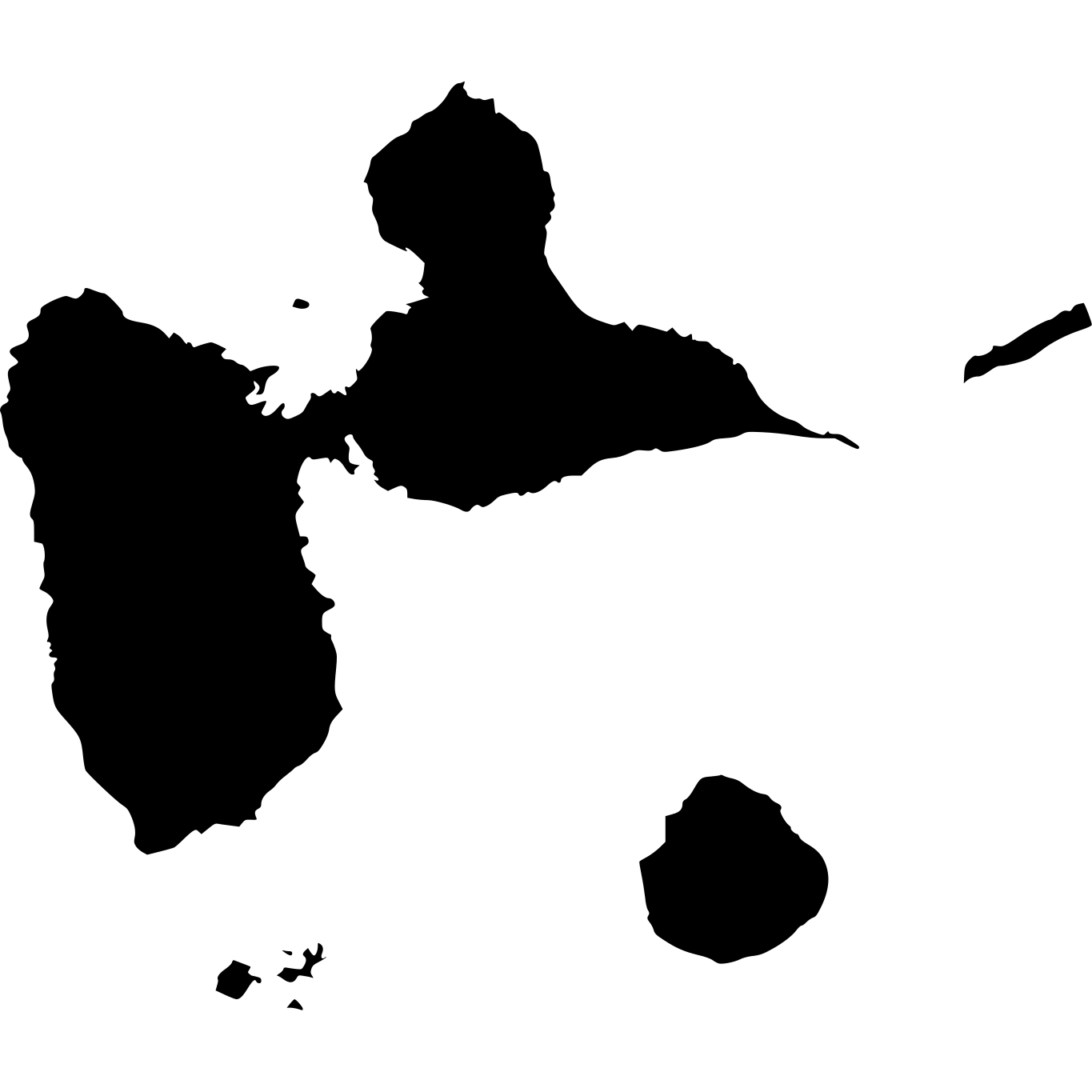
Mango Butterfull is a French brand

We're dedicated to providing you with the most up-to-date and science-backed ingredient info out there.
The data we've presented on this page has been verified by a member of the SkinSort Team.
Read more about us· Updated February 27, 2026 • Added by cheeeeeee_ch


