J. M. C. Y 3D Eyebrow Pencil
A eyebrow with 36 ingredients, including vitamin C, exfoliants, and vitamin E.
Eyebrow with 36 ingredients that contains exfoliants, Vitamin C and Vitamin E
We independently verify ingredients, backed by peer-reviewed research. Suggest an update.
What's inside
Ingredients List
CI 77499
Cosmetic ColorantSynthetic Fluorphlogopite
Boron Nitride
Absorbent
Cetearyl Dimethicone Crosspolymer

Hydrogenated Soybean Oil
Emollient




Hydrogenated Rapeseed Oil
Emollient
Hydrogenated Palm Oil
Emollient
Beeswax
Emulsion Stabilising
Hydrogenated Coconut Oil
Emollient
Hydrogenated Palm Kernel Oil
Emollient
CI 77491
Cosmetic ColorantCI 77891
Cosmetic ColorantCI 77492
Cosmetic ColorantCI 77266
Cosmetic ColorantTriethoxycaprylylsilane
Magnesium Myristate
Water
Skin ConditioningZinc Stearate
Cosmetic ColorantButylene Glycol
Humectant

Aluminum Hydroxide
EmollientIsatis Tinctoria Leaf Extract
Skin ConditioningTocopherol
Antioxidant





Zinc Palmitate
Lecithin
Emollient
Sucrose Polystearate
EmollientSilica
Abrasive

Ascorbyl Palmitate
Antioxidant

Dimethicone
Emollient
Polygonum Multiflorum Root Extract
Skin ConditioningGlyceryl Oleate
Emollient

Glyceryl Stearate
Emollient
Propylene Glycol
Humectant
Citric Acid
Buffering
Phenoxyethanol
Preservative
Chlorphenesin
Antimicrobial
Methylparaben
Preservative

CI 77499, Synthetic Fluorphlogopite, Boron Nitride, Cetearyl Dimethicone Crosspolymer, Hydrogenated Soybean Oil, Hydrogenated Rapeseed Oil, Hydrogenated Palm Oil, Beeswax, Hydrogenated Coconut Oil, Hydrogenated Palm Kernel Oil, CI 77491, CI 77891, CI 77492, CI 77266, Triethoxycaprylylsilane, Magnesium Myristate, Water, Zinc Stearate, Butylene Glycol, Aluminum Hydroxide, Isatis Tinctoria Leaf Extract, Tocopherol, Zinc Palmitate, Lecithin, Sucrose Polystearate, Silica, Ascorbyl Palmitate, Dimethicone, Polygonum Multiflorum Root Extract, Glyceryl Oleate, Glyceryl Stearate, Propylene Glycol, Citric Acid, Phenoxyethanol, Chlorphenesin, Methylparaben
Key Ingredients
Benefits
Concerns
Ingredients Explained
Ci 77499 is also hydrated iron III oxide. It is created from mixing red and black iron oxides. This helps give shades of darkness to a product.
Iron III oxides are classified as inorganic chemicals for coloring.
Synthetic Fluorphlogopite is the synthethic version of mica. It consists of fluorine, aluminum and silicate.
Synthetic Fluorphlogopite is used to add volume to products.
It is considered non-irritating on the skin.
Learn more about Synthetic FluorphlogopiteBoron Nitride is compound consisting of boron and nitrogen. It is used to absorb oil and modify adherence/ slip in products.
This means it is often used in makeup products to help them last longer.
Cetearyl Dimethicone Crosspolymer is a type of silicone.
Hydrogenated Soybean Oil is an oil and isn't fungal acne safe. It can be bad for acne prone skin.
Hydrogenated Rapeseed Oil comes from the rapeseed plant. This plant is closely related to mustard, cabbage, broccoli, cauliflower and turnip.
To be hydrogenated means to be combined with hydrogen.
Like other vegetable oils, Hydrogenated Rapeseed Oil helps keep your skin hydrated.
Rapeseed Oil and Canola Oil are derived from the same plant; rapeseed oil is industrial while canola oil is culinary.
Canola oil has an erucic acid level of 2% or less, while rapeseed oil is higher. Erucic acid is a monounsaturated omega-9 fatty acid.
Learn more about Hydrogenated Rapeseed OilHydrogenated Palm Oil is an oil and isn't fungal acne safe.
Beeswax is natural wax produced by honey bees to build their honeycomb.
Because it forms a protective layer on your skin, it can help lock in moisture and reduce water loss. It is also widely used as a thickener and emulsifier in lip balms and lotions. Research suggests beeswax containing moisturizers can support skin barrier integrity.
In comedogenic testing, Beeswax scored a 0-2, which is on the low end. Whether or not a product clogs your pores really comes down to the formula as a whole (not any single ingredient on its own) and your skin.
Cera Alba is the white, bleached form of this ingredient.
Just so you know, beeswax is not vegan since it is animal-derived. It cannot be removed with water, but can be taken off with an oil cleanser.
People with a known Propolis allergy also report to have reactions from beeswax.
Beeswax's wax esters are derived primarily from palmitic and oleic acid (C16 and C18:1). Both of these fall within the C11-C24 feeding window.
The Malassezia yeast can potentially cleave these esters and release usable fatty acids, so this ingredient may not be fungal acne safe. However, not everyone will react to this ingredient.
Learn more about BeeswaxHydrogenated Coconut Oil is regular coconut oil that's been run through a process that "fills in" the last few reactive spots on its fat molecules with hydrogen.
This results in a firmer, waxier, and more shelf-stable fat that melts around body temperature. This is why formulators use it as an emollient and a structuring agent for balms, sticks, and thick creams.
It doesn't do anything active and just sits on skin to soften it and slow water loss.
The CIR reviews of this ingredient reported concentration usage across a wide range (0.0001% - 70%) depending on the product type. You'll most likely see double digits (~1-5%) in emulsions and double digits in sticks + balms.
This ingredient may not be fungal acne safe; the Malassezia yeast feeds on chains longer than 12 carbons which is exactly what this ingredient is built from (C12, C14, C16, and C18).
It's worth being honest that the lab picture isn't one-directional: medium-chain triglycerides and medium-chain free fatty acids were actually toxic to Malassezia in vitro, suppressing M. furfur and M. sympodialis. However, there's no human skin data showing that protective effect holds in a real formula.
The risk of allergies is low; Hydrogenated Coconut Oil caused no irritation after a single patch application and no sign of sensitization on retest 14 days late. This is also a refined triglyceride with no coconut protein left, so it's not likely to trigger coconut food allergies. But if you have reacted to coconut in cosmetics before, it's best to avoid this ingredient.
This ingredient shows up on a lot of ""pore-clogging"" lists but there's no real evidence behind that. It doesn't even have a comedogenic rating from an actual study; the numbers you'll find online come from blogs citing other blogs.
Ratings for other ingredients mostly come from a 1980s rabbit ear test. This test doesn't translate well to human skin or to real products because the ingredient sits at a much lower percentage. Some people still find it breaks them out. So if that's you, definitely trust your skin.
Learn more about Hydrogenated Coconut OilHydrogenated Palm Kernel Oil is an oil and isn't fungal acne safe.
Ci 77491 is also hydrated iron III oxide. It's sole purpose is to give a red/pink hue to products.
Iron III oxides are classified as inorganic chemicals for coloring.
Synthetically created Ci 77491 is considered safer than those naturally found. This is because the synthetically created version may contain less impurities. Iron oxides are generally non-toxic and non-allergenic.
Learn more about CI 77491Ci 77891 is a white pigment from Titanium dioxide. It is naturally found in minerals such as rutile and ilmenite.
It's main function is to add a white color to cosmetics. It can also be mixed with other colors to create different shades.
Ci 77891 is commonly found in sunscreens due to its ability to block UV rays.
Learn more about CI 77891CI 77492 is also hydrated iron III oxide. It's sole purpose is to give a yellow hue to products.
Iron III oxides are classified as inorganic chemicals for coloring.
Synthetically created CI 77492 is considered safer than those naturally found. This is because the synthetically created version may contain less impurities. Iron oxides are generally non-toxic and non-allergenic.
Learn more about CI 77492CI 77266 is a high-purity pigment used to create an intense black color in cosmetics. It is made up of fine particles of pure carbon. This ingredient is also often listed as Carbon Black in ingredient lists.
You'll likely find this ingredient in mascaras, eyeliners, brow products, and eye shadow.
In the US, this ingredient can only be used if it meets strict FDA specifications. Certain versions even require batch-by-batch certification after extensive safety evaluation.
In the European Union, this ingredient is permitted as a colorant and classified as a "nanomaterial" based on its particle size (meaning it requires deeper assessment).
The EU Scientific Committee on Consumer Safety (SCCS) has reviewed nano-sized carbon black specifically and concluded that it does not pose a risk to human health when used in cosmetic products applied to healthy, intact skin and formulated to avoid inhalation.
Studies support this regulatory stance. Laboratory studies on nano-carbon black show potential for cytotoxicity and inflammatory effects in immune cells; it is important to highlight these findings are based on in vitro (not done on a living organism) testing or inhalation scenarios rather than normal topical cosmetic use.
Occupational studies involving industrial workers exposed to airborne carbon black have not shown a clear link between cumulative exposure and cancer risk. These findings are not directly applicable to cosmetics; cosmetic formulations bind pigments within creams, gels, and liquids that are not inhaled.
Overall, evidence shows that this ingredient is safe under regulatory guidelines and purity standards, especially when formulated to avoid airborne exposure.
Even with regulatory approval and a long history of use, some consumers might prefer to avoid ingredients that are petroleum-derived or that fall under the “nanomaterial” category.
Choosing whether to use CI 77266 isn’t necessarily about safety alone; it can also be about personal philosophy, comfort level with synthetic versus natural ingredients, and how much weight you place on ongoing research and regulatory oversight.
Makeup is highly individual, and personal preference plays an important role in deciding what feels right for you.
Learn more about CI 77266Triethoxycaprylylsilane is a silicon-based surface modifier that makes sunscreens feel silky and makeup stay put.
Its main job is to coat mineral particles like titanium dioxide, zinc oxide, and color pigments in a thin, oily layer so they spread smoothly, don't clump, and stick to skin better.
This ingredient is typically used at low levels (up to 2.5% in eyeshadow and 1% in lipstick).
Learn more about TriethoxycaprylylsilaneMagnesium Myristate can be bad for acne prone skin.
Water. It's the most common cosmetic ingredient of all. You'll usually see it at the top of ingredient lists, meaning that it makes up the largest part of the product.
So why is it so popular? Water most often acts as a solvent - this means that it helps dissolve other ingredients into the formulation.
You'll also recognize water as that liquid we all need to stay alive. If you see this, drink a glass of water. Remember to stay hydrated!
Learn more about WaterZinc Stearate is the metal salt of stearic acid. It is a white solid used to bind, thicken, and lubricate products.
This ingredient is common in powder makeup, where it helps keep the powder together.
Zinc Stearate is hydrophobic and repels water.
This ingredient can be sourced from non-animal or animal sources. It is best to reach out to the brand to see where they source this ingredient from.
Learn more about Zinc StearateButylene Glycol (or BG) is used within cosmetic products for a few different reasons:
Overall, Butylene Glycol is a safe and well-rounded ingredient that works well with other ingredients.
Though this ingredient works well with most skin types, some people with sensitive skin may experience a reaction such as allergic rashes, closed comedones, or itchiness.
Learn more about Butylene GlycolAluminum Hydroxide is a form of aluminum. It can be naturally found in nature as the mineral gibbsite. In cosmetics, Aluminum Hydroxide is used as a colorant, pH adjuster, and absorbent.
As a colorant, Aluminum Hydroxide may add opacity, or reduce the transparency. Aluminum hydroxide is contains both basic and acidic properties.
According to manufacturers, this ingredient is an emollient and humectant. This means it helps hydrate the skin.
In medicine, this ingredient is used to help relieve heartburn and help heal ulcers.
There is currently no credible scientific evidence linking aluminum hydroxide in cosmetics to increased cancer risk.
Major health organizations allow the use of aluminum hydroxide in personal care products and have not flagged it as a carcinogenic risk at typical usage levels.
Learn more about Aluminum HydroxideWe don't have a description for Isatis Tinctoria Leaf Extract yet.
Tocopherol is a fat-soluble antioxidant known as Vitamin E.
You'll find this ingredient in the vast majority of skincare (for good reason). It works to neutralize free radicals, or unstable molecules generated by UV exposure, pollution, and other environmental stressors, before they can cause oxidative damage to your skin cells.
Topically applied tocopherol has been shown to protect against UV damage by ramping up the skin's own natural defense enzymes.
It also acts as a skin conditioning agent; some studies show that regular topical use can improve the skin's water-binding capacity over 2-4 weeks.
This ingredient is especially loved for being a team player. When combined with Vitamin C, the photoprotective effect of both ingredients roughly doubles and the combo also helps reduce UV-induced DNA damage.
This ingredient has some brightening potential but it's more of a prevention ingredient than spot-fader. Cell studies show it can slow down melanin production but it's worth noting that it's not the most powerful brightener out there.
In formulations, it also serves as a stabilizer that helps protect other oxidation-prone ingredients from degrading.
Concentrations usually range from 0.1-1% in most leave-on products.
Learn more about TocopherolWe don't have a description for Zinc Palmitate yet.
Lecithin is a term for a group of substances found in the cell membranes of plants, animals, and humans. They are made up of phospholipids.
Thanks to its amphiphilic structure (water-loving head and oil-loving tail), it is a true multitasker:
It plays well with most ingredients and is typically used at 0.1-1%. However, concentrations up to 50% have been reported in moisturizers.
Learn more about LecithinWe don't have a description for Sucrose Polystearate yet.
Silica, also known as silicon dioxide, is a naturally occurring mineral. It is used as a fine, spherical, and porous powder in cosmetics.
Though it has exfoliant properties, the function of silica varies depending on the product.
The unique structure of silica enhances the spreadability and adds smoothness, making it a great texture enhancer.
It is also used as an active carrier, emulsifier, and mattifier due to its ability to absorb excess oil.
In some products, tiny microneedles called spicules are made from silica or hydrolyzed sponge. When you rub them in, they lightly polish away dead skin layers and enhance the penetration of active ingredients.
Learn more about SilicaAscorbyl Palmitate is a fat-soluble form of vitamin C (Ascorbic Acid) made by combining it with palmitic acid.
It is able to blend easily into creams and oil-based formulas because it dissolves in oils rather than water.
As you may know, regular vitamin C is notorious for breaking down when exposed to sunlight and air. Ascorbyl Palmitate is more stable and degrades at a slower rate.
Research on whether it converts efficiently into active vitamin C once it's applied on your skin is still limited.
Some in-vitro studies suggest it may support collagen production, but it is not considered one of the stronger vitamin C derivatives, like:
Due to the palmitic acid base, this ingredient may not be fungal acne safe. Comedogenic studies have also shown this ingredient to have a rating of 2.
It's also worth keeping in mind that comedogenic and irritancy ratings are tested on individual ingredients, not finished formulas. The final product's formulation, concentration, and other ingredients all play a role in how something actually behaves on your skin.
Learn more about Ascorbyl PalmitateDimethicone is a type of synthetic silicone created from natural materials such as quartz. It is also known as polydimethylsiloxane.
What it does:
Dimethicone comes in different viscosities:
Depending on the viscosity, dimethicone has different properties.
Ingredients lists don't always show which type is used, so we recommend reaching out to the brand if you have questions about the viscosity.
This ingredient is unlikely to cause irritation because it does not get absorbed into skin. However, people with silicone allergies should be careful about using this ingredient.
Note: Dimethicone may contribute to pilling. This is because it is not oil or water soluble, so pilling may occur when layered with products. When mixed with heavy oils in a formula, the outcome is also quite greasy.
Learn more about DimethiconeThis plant derived ingredient has skin conditioning and antioxidant properties.
You may see his ingredient in hair and scalp products because some research suggests it may support hair growth. However, strong human clinical evidence is limited.
Glyceryl Oleate is the monoester of glycerin and oleic acid. It is a skin-conditioning emollient that also helps form emulsions.
What makes glyceryl oleate special is its "re-fatting" effect.
When you wash your hair and skin with a surfactant-based cleanser, the surfactants grab onto everything. This includes your skin's natural lipids, or the fats that live in your skin barrier and sebum. Once you rinse these surfactants away, it leaves your skin feeling tight, dry, and clean (in a not-good way).
Re-fatting is essentially putting some of these lipids back. Glyceryl oleate deposits a thin layer of emollient lipids back on the skin or hair surface reduce some of the barrier damage.
Also, glyceryl oleate isn't a foreign molecule to your skin. It's chemically identical to something your skin already produces and manages naturally. This is why it tends to be well-tolerated with low risk of irritation.
Typical use levels range from 0.5-5%.
Glyceryl Oleate has a function of "perfuming" in the CosIng database. This just means that the ingredient has some scent character that can contribute to the product's overall smell.
The scent of this ingredient is described as "waxy".
As an ester of oleic acid, this ingredient may not be fungal acne safe. This is because oleic acid falls into the carbon-chain length that Malassezia can use as a substrate.
Learn more about Glyceryl OleateGlyceryl Stearate is made by reacting glycerin with stearic acid (typically sourced from plant oils like palm or coconut). It's an emulsifier, emollient, and mild occlusive.
Emulsifiers help ingredients like oil and water stay mixed so your formula stays nicely blended and uniform in texture.
This ingredient is typically used in concentrations between 1-10%. Studies have found it to be non-sensitizing, non-phototoxic, and non-photoallergenic.
A close cousin of this ingredient is Glyceryl Stearate SE ("self-emulsifying"). This just has a small amount of sodium or potassium stearate added so it can emulsify without a co-emulsifier.
Since this ingredient is an ester of a C18 fatty acid, it may not be fungal acne safe. The Malassezia yeast can potentially metabolize within the C11-C24 range.
Fun fact: The human body also creates Glyceryl Stearate naturally.
Learn more about Glyceryl StearatePropylene Glycol is a synthetic, colorless, odorless liquid that has been a staple in cosmetics for decades. It is a skin conditioning agent, humectant, and solvent.
As a humectant, it draw water to the skin to reduce flaking and restore suppleness. It's also a solvent that helps dissolve other actives and keeps formulas stable across temperature changes.
The CIR Expert Panel has confirmed this ingredient to be nontoxic and clinical studies show no sensitization at cosmetic use concentrations.
True allergic reactions are quite rare: a 15-year retrospective study of 6,751 patients found only 0.31% had a positive reaction (and less than half were considered clinically relevant).
It seemed that when sensitization does occur, it's most commonly linked to topical medication (like corticosteroids) and not cosmetics. Allergic contact dermatitis also appears largely limited to individuals with underlying skin conditions.
Overall, propylene glycol is a well-studied ingredient that most people can tolerate without issue.
Learn more about Propylene GlycolCitric Acid is an alpha hydroxy acid (AHA) naturally found in citrus fruits like oranges, lemons, and limes.
Like other AHAs, citric acid can exfoliate skin by breaking down the bonds that hold dead skin cells together. This helps reveal smoother and brighter skin underneath.
However, this exfoliating effect only happens at high concentrations (20%) which can be hard to find in cosmetic products.
Due to this, citric acid is usually included in small amounts as a pH adjuster. This helps keep products slightly more acidic and compatible with skin's natural pH.
In skincare formulas, citric acid can:
While it can provide some skin benefits, research shows lactic acid and glycolic acid are generally more effective and less irritating exfoliants.
Most citric acid used in skincare today is made by fermenting sugars (usually from molasses). This synthetic version is identical to the natural citrus form but easier to stabilize and use in formulations.
Rosacea skin has a lower threshold for acids generally, with 62.5% of rosacea subjects in one study reacting to lactic acid in a sting test. This is why we mark citric acid as a potential rosacea trigger.
However, this ingredient shows up as a pH adjuster or chelator at roughly 0.1-1% in many products. These low levels are unlikely to be an issue for rosacea skin and becomes a potential trigger at exfoliating concentrations (20%). Because everybody's skin is unique, we recommend a patch test if you are unsure.
Learn more about Citric AcidPhenoxyethanol is one of the most widely used preservatives in skincare (and for good reason!).
It has a large spectrum of antimicrobial activity and especially effective bacteria, yeast, and mold while only having a weak effect on your skin's natural microbiome.
On a cellular level, it disrupts the cell membranes of microbes by poking holes that make the cell leak. This shuts down the chemical reactions the microbe needs to make energy so it can no longer survive.
Another perk of this ingredient is that it stays functional across a wide pH range (3-10).
You'll often see it paired with boosters like Ethylhexylglycerin; one study showed that a 1:9 ratio of Ethylhexylglycerin to Phenoxyethanol damages bacterial membranes as effectively as doubling the Phenoxyethanol concentration on its own.
Typical use concentrations range from 0.3-1% depending on the formula, and this ingredient is capped at 1% int the EU.
Safety-wise, the fear mongering does not hold up to the evidence. The EU's Scientific Committee on Consumer Safety and FDA consider it safe as a preservative at up to 1%, including for children of all ages.
Adverse systemic effects only showed up in animal studies at exposures roughly 200x higher than what people get from cosmetics. And despite its very widespread use, this ingredient is a rare sensitizer and allergic reactions are uncommon.
Learn more about PhenoxyethanolChlorphenesin is a synthetic preservative. It helps protect a product against bacteria in order to extend shelf life. In most cases, Chlorphenesin is paired with other preservatives such as phenoxyethanol and caprylyl glycol.
Chlorphenesin is a biocide. This means it is able to help fight the microorganisms on our skin. It is also able to fight odor-releasing bacteria.
Chlorphenesin is soluble in both water and glycerin.
Studies show Chlorphenesin is easily absorbed by our skin. You should speak with a skincare professional if you have concerns about using Chlorphenesin.
Learn more about ChlorphenesinMethylparaben is a synthetic preservative and one of the most widely used in the world. It has a simple, but important job: prevent your products from going bad by stopping bacteria, yeast, and mold from growing.
Typical use levels are low, often 0.1-0.3%.
This is also one of the most heavily studied preservatives out there and major regulatory bodies have repeatedly given it the green light.
In 2023, the EU's Scientific Committee on Consumer Safety (SCCS) confirmed that this ingredient is safe up to 0.4% on its own, of up to 0.8% when mixed with other paraben esters.
Here's the science behind the noise behind parabens/hormones as well:
Methylparaben shows very weak estrogen-like activity in vitro tests (more than 1,000x weaker than your body's own estradiol). In vivo (live-organism) studies don't support a meaningful endocrine-disrupting effect either.
You get a stronger estrogenic effect from eating tofu, actually.
It's also a low sensitizer and allergic reactions are uncommon; they usually happen on damage or broken skin.
There is a caveat: France has proposed to formally re-examine its endocrine classification in 2025 so the regulatory conversation isn't fully closed as of yet.
But as it stands today, this ingredient is considered safe at permitted levels.
Learn more about MethylparabenReviews
No written reviews yet. Be the first to review this product.
Recent searches
Search reviews by skin type, ingredient, or keyword.
Where it's from
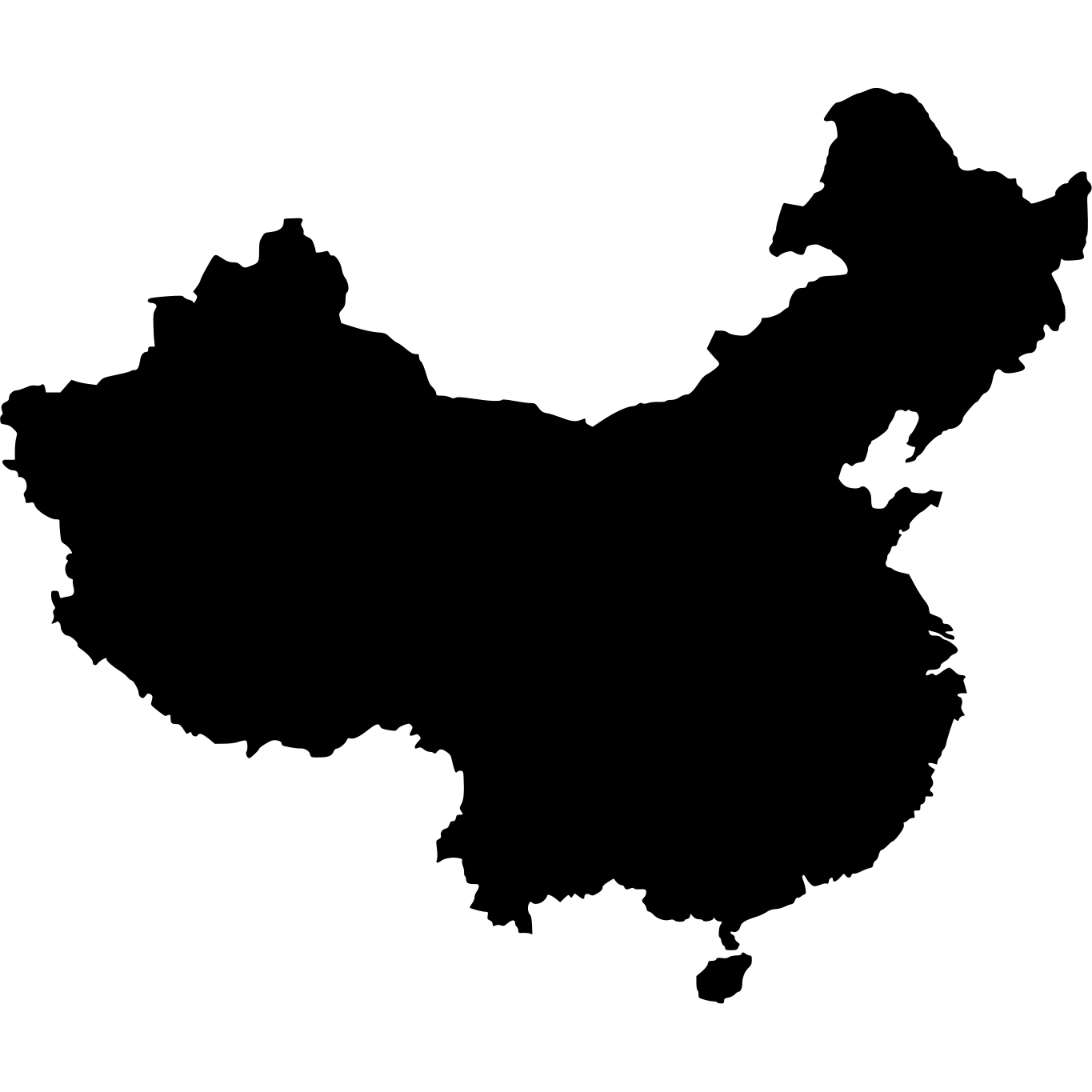
J. M. C. Y is a Chinese brand

We're dedicated to providing you with the most up-to-date and science-backed ingredient info out there.
The data we've presented on this page has been verified by a member of the SkinSort Team.
Read more about us· Updated July 16, 2026 • Added by shengingxuyu


