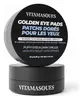
This hydrating eye mask is formulated around Caffeine and Sodium Hyaluronate to hydrate skin and soften the look of wrinkles.
This anti-aging eye mask is formulated around Caffeine to soften the look of wrinkles.


What's inside
What's inside
 Key Ingredients
Benefits
Concerns
Ingredients Side-by-side
Water
Skin ConditioningGlycerin
Humectant


Propylene Glycol
Humectant

Carrageenan


1,2-Hexanediol
Skin Conditioning
Glucomannan
Skin ConditioningAloe Barbadensis Leaf Extract
Emollient

Hydroxyacetophenone
Antioxidant
Mica
Cosmetic ColorantAllantoin
Skin Conditioning
Potassium Chloride
Methylcellulose
Emulsion StabilisingCaffeine
Skin Conditioning
Cyclodextrin
AbsorbentSodium Hyaluronate
Humectant
Hydrolyzed Sodium Hyaluronate
Skin Conditioning
Ethylhexylglycerin
Skin ConditioningCaprylyl Glycol
Emollient
Carnosine
Skin Conditioning
Panthenol
Skin Conditioning
Butylene Glycol
Humectant
Hydrolyzed Vegetable Protein
Skin ConditioningCitric Acid
Buffering

Camellia Sinensis Leaf Extract
Antimicrobial

Sodium Benzoate
Masking
Potassium Sorbate
Preservative
Palmitoyl Tripeptide-5
Skin Conditioning

Acetyl Hexapeptide-8
Humectant
CI 77891
Cosmetic ColorantCI 77491
Cosmetic ColorantWater, Glycerin, Propylene Glycol, Carrageenan, 1,2-Hexanediol, Glucomannan, Aloe Barbadensis Leaf Extract, Hydroxyacetophenone, Mica, Allantoin, Potassium Chloride, Methylcellulose, Caffeine, Cyclodextrin, Sodium Hyaluronate, Hydrolyzed Sodium Hyaluronate, Ethylhexylglycerin, Caprylyl Glycol, Carnosine, Panthenol, Butylene Glycol, Hydrolyzed Vegetable Protein, Citric Acid, Camellia Sinensis Leaf Extract, Sodium Benzoate, Potassium Sorbate, Palmitoyl Tripeptide-5, Acetyl Hexapeptide-8, CI 77891, CI 77491
Water
Skin ConditioningGlycerin
Humectant
Sodium Polyacrylate
Absorbent
Polyvinyl Alcohol
Sodium PCA
Humectant
Acetyl Tetrapeptide-5
Humectant
Caffeine
Skin Conditioning
Cocos Nucifera Oil
Masking



Tartaric Acid
Buffering
Chondrus Crispus Powder
Abrasive
Ceratonia Siliqua Gum
EmollientHydroxyacetophenone
Antioxidant
Carrageenan
Xanthan Gum
EmulsifyingAgar
MaskingPolyglyceryl-3 Methylglucose Distearate
Emulsifying
Polyacrylic Acid
Emulsion StabilisingButylene Glycol
Humectant
Potassium Chloride
Aluminum Glycinate
AstringentSodium Phytate
ChelatingChlorphenesin
Antimicrobial
Water, Glycerin, Sodium Polyacrylate, Polyvinyl Alcohol, Sodium PCA, Acetyl Tetrapeptide-5, Caffeine, Cocos Nucifera Oil, Tartaric Acid, Chondrus Crispus Powder, Ceratonia Siliqua Gum, Hydroxyacetophenone, Carrageenan, Xanthan Gum, Agar, Polyglyceryl-3 Methylglucose Distearate, Polyacrylic Acid, Butylene Glycol, Potassium Chloride, Aluminum Glycinate, Sodium Phytate, Chlorphenesin
Ingredients Explained
These ingredients are found in both products.
Ingredients higher up in an ingredient list are typically present in a larger amount.
Butylene Glycol (or BG) is used within cosmetic products for a few different reasons:
Overall, Butylene Glycol is a safe and well-rounded ingredient that works well with other ingredients.
Though this ingredient works well with most skin types, some people with sensitive skin may experience a reaction such as allergic rashes, closed comedones, or itchiness.
Learn more about Butylene GlycolCaffeine is a naturally occurring plant compound found in coffee beans, tea leaves, cocoa pods, and guarana.
As an antioxidant, caffeine protects your skin from free radical damage caused by UV exposure and envionrmnetal stressors.
Early research also shows that caffeine can help calm redness, soothe irritated skin, and support hair growth by stimulating microcirculation in the scalp.
You might have seen eye creams marketing caffeine as a depuffing ingredient. This is because it is a vasoconstrictor meaning it can temporarily constrict blood vessels, though clinical evidence for this specific use is still limited.
Most skincare products contain this ingredient at concentrations between 1-6%. It is able to penetrate skin easily regardless of skin type or thickness.
Just so you know, a very small number of case reports describe caffeine-induced allergy. This ingredient is generally well-tolerated, non-irritating, and non-sensitizing for the majority of people.
Learn more about CaffeineCarrageenan is a gel-forming sugar chain pulled out of red seaweed. In skincare, it's a texture ingredient rather than an active that:
Formulators typically use it around 0.1-2% but go up to 5% in thick gel masks or toothpaste-style products.
It's a very large molecule that doesn't meaningfully get through intact skin and the CIR Expert Panel has concluded it's safe at current use levels.
True allergy is rare and there are only two published cases from internal/mucosal exposure rather than anything topical. Most of the scary internet content about Carrageenan is actually about poligeenan (also called "degraded carrageenan").
Poligeenan is a deliberately acid-broken down version that isn't food or cosmetic grade.
Learn more about CarrageenanGlycerin (or glycerol) is a compound naturally found in your skin. It's a powerhouse humectant that pulls water into the stratum corneum.
Topically, glycerin does several things at once:
Your skin makes glycerin on its own (mostly from sebaceous oil breakdown) and shuttles it to your outermost layer of skin, or your epidermis, via aquaporin-3.
Aquaporin-3 is a transporter that is essential for normal skin hydration, elasticity, and repair. Interestingly, mice lacking in AQP3 have dry and less elastic skin that can be fully corrected with glycerin.
This ingredient is non-irritating, plays well with almost every ingredient, and works across all skin types. Typical use is anywhere between 3-10% but can go up to 79% in some leave-on products.
Just know very high concentrations (>40%) can feel tacky in low humidity.
Glycerin is the name for this ingredient in American English. British English uses Glycerol/Glycerine.
Learn more about GlycerinHydroxyacetophenone is a small phenolic molecule that earns its place in a formulas as an antioxidant and preservative booster.
As a phenol, it is able to neutralize free radicals to protect both the product and the skin from oxidative stress.
Though it can't kill microbes on its own, it works as a good supporting agent when combined with other preservatives like Phenoxyethanol or 1,2-Hexanediol.
This ingredient naturally occurs as piceol in Norwegian spruce needles (~0.4-1.1% dry weight and in cloudberries). Though the cosmetic-grade material is synthesized for purity and consistency.
You'll usually see it used at low levels and suppliers recommend up to 1% added to a water phase.
Safety testing was done at concentrations like 0.05% in SPF products and 0.5% in a Human Repeated Insult Patch Test. The safety evidence is assuring; this ingredient is safe for cosmetics in current use and also holds safety status as a food flavoring as well.
An honest caveat: the "soothing" and "anti-inflammatory" claims come mostly from supplier marketing rather than published clinical trials. The Cosmetic Ingredient Review's own literature search found no useful efficacy studies on this ingredient.
So the antioxidant and preservative-boosting roles are the well supported ones while the calming benefit is plausible but thinly evidenced.
Overall, this is a well-tolerated, low-irritation multitasker that quietly helps a formula stay fresh and stable.
Learn more about HydroxyacetophenoneWe don't have a description for Potassium Chloride yet.
Water. It's the most common cosmetic ingredient of all. You'll usually see it at the top of ingredient lists, meaning that it makes up the largest part of the product.
So why is it so popular? Water most often acts as a solvent - this means that it helps dissolve other ingredients into the formulation.
You'll also recognize water as that liquid we all need to stay alive. If you see this, drink a glass of water. Remember to stay hydrated!
Learn more about Water

