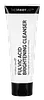
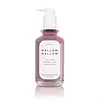
The INKEY List Fulvic Acid Brightening Cleanser Versus Murmure Mellow Mallow Nourishing Gel Cleanser
This gel cleanser uses mild cleansing ingredients, but contains alcohol that may feel drying for some.
This cream cleanser uses mild cleansing ingredients, but contains alcohol that may feel drying for some.


What's inside
What's inside
 Key Ingredients
Benefits
Concerns
Ingredients Side-by-side
Water
Skin ConditioningCoco-Glucoside
Cleansing
Glycerin
Humectant


Butylene Glycol
Humectant
Xanthan Gum
EmulsifyingPhenoxyethanol
Preservative
Benzyl Alcohol
Perfuming





Aloe Barbadensis Leaf Juice
Skin Conditioning

Caprylic/Capric Triglyceride
Masking
Peat
Skin ConditioningGlycyrrhiza Glabra Root Extract
Bleaching

PEG-200 Hydrogenated Glyceryl Palmate
Cleansing

PEG-7 Glyceryl Cocoate
Emulsifying
Disodium EDTA
ChelatingHelianthus Annuus Seed Oil
Emollient
Prunus Amygdalus Dulcis Oil
Skin Conditioning
Dehydroacetic Acid
Preservative
Terminalia Ferdinandiana Fruit Extract
Antioxidant
Potassium Sorbate
Preservative
Water, Coco-Glucoside, Glycerin, Butylene Glycol, Xanthan Gum, Phenoxyethanol, Benzyl Alcohol, Aloe Barbadensis Leaf Juice, Caprylic/Capric Triglyceride, Peat, Glycyrrhiza Glabra Root Extract, PEG-200 Hydrogenated Glyceryl Palmate, PEG-7 Glyceryl Cocoate, Disodium EDTA, Helianthus Annuus Seed Oil, Prunus Amygdalus Dulcis Oil, Dehydroacetic Acid, Terminalia Ferdinandiana Fruit Extract, Potassium Sorbate
Water
Skin ConditioningLippia Citriodora Flower/Leaf/Stem Water
MaskingGlycerin
Humectant
Caprylyl/Capryl Glucoside
CleansingHelianthus Annuus Seed Oil
Emollient
Niacinamide
Smoothing





Xanthan Gum
EmulsifyingCamelina Sativa Seed Oil
Skin Conditioning
Benzyl Alcohol
Perfuming
Malva Sylvestris Flower Extract
Skin ConditioningTilia Platyphyllos Flower Extract
Skin ConditioningDehydroacetic Acid
Preservative
Citric Acid
Buffering
Potassium Sorbate
Preservative
Sodium Benzoate
Masking
Hydrolyzed Gardenia Florida Extract
Antioxidant
Zingiber Officinale Root Oil
Masking
Maltodextrin
Absorbent
Sodium Hyaluronate
Humectant
Water, Lippia Citriodora Flower/Leaf/Stem Water, Glycerin, Caprylyl/Capryl Glucoside, Helianthus Annuus Seed Oil, Niacinamide, Xanthan Gum, Camelina Sativa Seed Oil, Benzyl Alcohol, Malva Sylvestris Flower Extract, Tilia Platyphyllos Flower Extract, Dehydroacetic Acid, Citric Acid, Potassium Sorbate, Sodium Benzoate, Hydrolyzed Gardenia Florida Extract, Zingiber Officinale Root Oil, Maltodextrin, Sodium Hyaluronate
Reviews
Ingredients Explained
These ingredients are found in both products.
Ingredients higher up in an ingredient list are typically present in a larger amount.
Benzyl Alcohol is an aromatic alcohol with several roles: it's a preservative, solvent, and mild fragrance component with a floral scent.
This ingredient has been deemed safe for use in cosmetic formulations at concentrations up to 5%, and up to 10% in hair dyes. You'll typically see 0.5-2% in most rinse-off or leave-on products.
As a preservative, it works by disrupting the membrane of microbial proteins. This helps keep bacteria and fungi from growing in your products.
The sensitization picture is actually quite assuring as well:of nearly 71,000 patients patch tested with benzyl alcohol, only 0.21% showed a positive reaction with most of them being weakly positive.
This led researchers to conclude that benzyl alcohol cannot be regarded as a significant contact allergen.
It is worth noting this ingredient is classified as one of the EU's regulated fragrance allergens and restricted to 1% in finished products.
Labels must also declare it in concentrations above 0.001% in leave-on products and 0.01% in rinse-off products.
At concentrations around 5%, localized redness and itching can appear as a direct irritant response and not as a true allergic reaction.
Learn more about Benzyl AlcoholDehydroacetic Acid is a synthetic preservative that keeps your products safe from microbes.
As an organic acid, it penetrates microbial cell walls and disrupts cellular metabolism. This makes it effective against bacteria, yeast, and mold.
It is effective at low concentrations (<0.6%). Clinical studies have found it to be non-irritating, non-sensitizing, and non-photosensitizing.
Learn more about Dehydroacetic AcidGlycerin (or glycerol) is a compound naturally found in your skin. It's a powerhouse humectant that pulls water into the stratum corneum.
Topically, glycerin does several things at once:
Your skin makes glycerin on its own (mostly from sebaceous oil breakdown) and shuttles it to your outermost layer of skin, or your epidermis, via aquaporin-3.
Aquaporin-3 is a transporter that is essential for normal skin hydration, elasticity, and repair. Interestingly, mice lacking in AQP3 have dry and less elastic skin that can be fully corrected with glycerin.
This ingredient is non-irritating, plays well with almost every ingredient, and works across all skin types. Typical use is anywhere between 3-10% but can go up to 79% in some leave-on products.
Just know very high concentrations (>40%) can feel tacky in low humidity.
Glycerin is the name for this ingredient in American English. British English uses Glycerol/Glycerine.
Learn more about GlycerinHelianthus Annuus Seed Oil is a plant oil derived from the seeds of a sunflower.
It is rich in fatty acids, primarily linoleic acid and oleic acid. This gives it emollient and skin conditioning properties.
The reason this ingredient is so effective is because it forms a thin film on the skin that reduces transepidermal water loss (TEWL) while supplying linoleic acid to the stratum corneum to improve barrier strength.
The high linoleic acid content is particularly noteworthy for acne-prone skin.
Research suggests that acne-prone skin tends to be deficient in linoleic acid in sebum. Topical application may help replenish this to support a healthier follicular environment and less comedone-promoting sebum.
One randomized study found sunflower seed oil preserved skin barrier integrity in adult volunteers with and without atopic dermatitis (outperforming olive oil).
This ingredient is well-studied, gentle, and an effective emollient suitable for most skin types.
On fungal acne: This ingredient may not be Fungal acne (Malassezia folliculitis) safe. This is because it contains fatty acids with carbon chain lengths in the C11-C24 range.
Learn more about Helianthus Annuus Seed OilPotassium Sorbate is a preservative used to prevent yeast and mold in products. It is commonly found in both cosmetic and food products.
This ingredient comes from potassium salt derived from sorbic acid. Sorbic acid is a natural antibiotic and effective against fungus.
Both potassium sorbate and sorbic acid can be found in baked goods, cheeses, dried meats, dried fruit, ice cream, pickles, wine, yogurt, and more.
You'll often find this ingredient used with other preservatives.
Learn more about Potassium SorbateWater. It's the most common cosmetic ingredient of all. You'll usually see it at the top of ingredient lists, meaning that it makes up the largest part of the product.
So why is it so popular? Water most often acts as a solvent - this means that it helps dissolve other ingredients into the formulation.
You'll also recognize water as that liquid we all need to stay alive. If you see this, drink a glass of water. Remember to stay hydrated!
Learn more about WaterXanthan gum is used as a stabilizer and thickener within cosmetic products. It helps give products a sticky, thick feeling - preventing them from being too runny.
On the technical side of things, xanthan gum is a polysaccharide - a combination consisting of multiple sugar molecules bonded together.
Xanthan gum is a pretty common and great ingredient. It is a natural, non-toxic, non-irritating ingredient that is also commonly used in food products.
Learn more about Xanthan Gum

