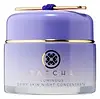
This barrier-repair night moisturizer is formulated around Squalane and Panax Ginseng Root Extract to strengthen the skin barrier and hydrate skin.
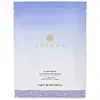
This hydrating sheet mask is formulated around Chondrus Crispus Extract and Camellia Sinensis Leaf Extract to hydrate skin and brighten dull-looking skin.

What's inside
What's inside
 Key Ingredients
Benefits
Concerns
Ingredients Side-by-side
Water
Skin ConditioningGlycerin
Humectant


Propanediol
Solvent
Squalane
Emollient
Cyclopentasiloxane
Emollient
Triethylhexanoin
MaskingPanax Ginseng Root Extract
Emollient

Origanum Majorana Leaf Extract
AntiseborrhoeicZiziphus Jujuba Fruit Extract
Skin ConditioningThymus Serpyllum Extract
Skin ConditioningRoyal Jelly Extract
Skin Conditioning
Stearyl Glycyrrhetinate
Skin ConditioningCamellia Sinensis Leaf Extract
Antimicrobial



Algae Extract
Emollient

Scutellaria Baicalensis Root Extract
Astringent
Oryza Sativa Germ Oil
Emollient


Camellia Japonica Seed Oil
Emollient
Sericin
Skin ConditioningInositol
Humectant
Glyceryl Stearate Se
Emulsifying
Polyglyceryl-2 Diisostearate
Emulsifying
PPG-5-Ceteth-10 Phosphate
Emulsifying
Sodium Lauroyl Lactylate
EmulsifyingSorbitan Stearate
Emulsifying
Trideceth-12
EmulsifyingEthylhexylglycerin
Skin ConditioningPEG-240/Hdi Copolymer Bis-Decyltetradeceth-20 Ether
StabilisingButylene Glycol
Humectant
Behenyl Alcohol
Emollient
Parfum
Masking


Alcohol
Antimicrobial

Phenoxyethanol
Preservative
Water, Glycerin, Propanediol, Squalane, Cyclopentasiloxane, Triethylhexanoin, Panax Ginseng Root Extract, Origanum Majorana Leaf Extract, Ziziphus Jujuba Fruit Extract, Thymus Serpyllum Extract, Royal Jelly Extract, Stearyl Glycyrrhetinate, Camellia Sinensis Leaf Extract, Algae Extract, Scutellaria Baicalensis Root Extract, Oryza Sativa Germ Oil, Camellia Japonica Seed Oil, Sericin, Inositol, Glyceryl Stearate Se, Polyglyceryl-2 Diisostearate, PPG-5-Ceteth-10 Phosphate, Sodium Lauroyl Lactylate, Sorbitan Stearate, Trideceth-12, Ethylhexylglycerin, PEG-240/Hdi Copolymer Bis-Decyltetradeceth-20 Ether, Butylene Glycol, Behenyl Alcohol, Parfum, Alcohol, Phenoxyethanol
Water
Skin ConditioningGlycerin
Humectant
Propanediol
Solvent
Methyl Gluceth-20
Humectant
Alcohol
Antimicrobial
PPG-6-Decyltetradeceth-20
EmulsifyingEthylhexylglycerin
Skin ConditioningPolyglyceryl-10 Eicosanedioate/Tetradecanedioate
Skin ConditioningPolyglyceryl-10 Isostearate
Skin Conditioning
Chondrus Crispus Extract
Skin Conditioning
Parfum
Masking
Sericin
Skin ConditioningXanthan Gum
EmulsifyingCamellia Sinensis Leaf Extract
Antimicrobial
Sodium Hyaluronate
Humectant
Panax Ginseng Root Extract
Emollient
Algae Extract
Emollient
Royal Jelly Extract
Skin Conditioning
Thymus Serpyllum Extract
Skin ConditioningPhenoxyethanol
Preservative
Water, Glycerin, Propanediol, Methyl Gluceth-20, Alcohol, PPG-6-Decyltetradeceth-20, Ethylhexylglycerin, Polyglyceryl-10 Eicosanedioate/Tetradecanedioate, Polyglyceryl-10 Isostearate, Chondrus Crispus Extract, Parfum, Sericin, Xanthan Gum, Camellia Sinensis Leaf Extract, Sodium Hyaluronate, Panax Ginseng Root Extract, Algae Extract, Royal Jelly Extract, Thymus Serpyllum Extract, Phenoxyethanol
Ingredients Explained
These ingredients are found in both products.
Ingredients higher up in an ingredient list are typically present in a larger amount.
This ingredient is also called ethanol or ethyl alcohol. It is denatured, meaning made undrinkable for cosmetic use.
In formulas, it:
Is it bad for your skin?
The answer comes down to concentration. Patch and wash studies have found highly concentrated alcohol-based hand rubs (60-100%) cause less barrier disruption than washing with a basic detergent like SLS. The only measurable effect in these studies was a temporary dip in skin hydration.
Concentrations below 12-15% in leave-on cosmetics is generally well-tolerated. Concentrations above start to see increased transepidermal water loss (TEWL) and reduced hydration.
In concentrations about 58%, it creates temporary channels in your skin's lipid layers to become more permeable and allow other ingredients to slip through easily.
This ingredient can be up to 80% of the formula in alcohol-based perfumes.
Overall, this ingredient is probably harmless if found lower down an ingredients list but worth side-eyeing if it's high up (especially if your barrier is already struggling).
Alcohol can worsen dry skin, eczema, and oily skin, especially at higher concentrations. This is because it can increase transepidermal water loss and decrease hydration to disrupt the skin barrier.
According to the National Rosacea Society based in the US, you should be mindful of products with these alcohols in the top half of ingredients.
True allergic contact dermatitis to ethanol is uncommon, but be sure to patch test if you have dry or sensitive skin.
Learn more about AlcoholAlgae Extract is one of the vaguest names on any label because it just means "extract of some alga" (and there are thousands of species and dozens of ways to extract them). This just means two products listing it can contain completely different things.
This ingredient name was actually officially retired in the INCI dictionary in 2015 and brands were pushed toward species-specific names instead (like Laminaria Digitata Extract or Chondrus Crispus Extract).
Generally, it is used to hold water and soften skin in a formula. Algae are rich in polysaccharides, pigments, and amino-acids that act as humectants, emollients, and skin-conditioning agents.
It isn't on standard cosmetic-patch test panels and "seaweed dermatitis" is actually an acute irritant reaction to algal toxins in seawater and not the cosmetic ingredient.
You'll see algae listed as a 5/5 on a lot of pore-clogging charts and that number doesn't come from anywhere; it's not in the original rabbit-ear studies that most comedogenic ratings trace back to.
The reasoning behind the reputation is that seaweed is high in iodine and iodine can trigger acne-like breakouts when eaten. This traces back to a 1976 letter in Archives of Dermatology describing two women whose breakouts cleared after they stopped taking high-dose kelp supplements orally.
And the reaction of these two women wasn't clogged pores at all: it was an iodine-triggered pustular rash. Later research found normal dietary iodine doesn't meaningfully affect acne either and nobody has shown topical algae delivers enough iodine to matter.
What we do have is dozens of brown and red algae ingredients found to be non-irritating and non-sensitizing, and a handful of studies that found algae compounds may actually help acne.
However, plenty of people do report breaking out from algae-containing products. Skin is individual and it's worth avoiding if yours has reacted to algae before.
Learn more about Algae ExtractCamellia Sinensis Leaf Extract (tea extract) is one of the most well-researched plant extracts in skincare with an impressive resume.
Black tea, green tea, and oolong tea are all harvested from the Camellia Sinensis plant.
Studies show green tea extract and its catechins (like epigallocatechin gallate (EGCG)) help your skin cells product energy more efficiently and reducing the number of free-radicals that can damage your skin from the inside.
In lab-grown skin models, this translated to younger, healthier, and stronger skin.
There's also good sun protection data; researchers saw less DNA damage and redness on human skin when green tea was applied before UVB exposure. And the more they applied, the better the protection.
Needless to say, this ingredient shouldn't replace your sunscreen. But it is a great supportive ingredient that you can already find in many sunscreens and antioxidant serums.
A 2009 study found a 2% green tea lotion was effective for mild-to-moderate acne thanks to its anti-inflammatory and mild antimicrobial activity.
The quality of the extract matters a lot here:
Good extracts contain 50-90% catechins while lower quality ones are mostly there for marketing. We recommend reaching out to the brand if you have questions about the quality or source of their ingredients.
Human Repeated Insult Patch Testing showed no irritation or sensitization at use concentrations (0.86% in leave-on products and up to 30% as leaf water).
Learn more about Camellia Sinensis Leaf ExtractEthylhexylglycerin is created from glycerin. It is a multitasker ingredient that:
The CIR Expert Panel found minimal skin absorption or sensitization of any kind in a safety assessment. Though this ingredient is considered well-tolerated, a small number of cases of allergic dermatitis have been published since 2002. Just be sure to patch test if you are unsure.
Industry-reported use ranges from 8% in rinse-off products and 2% in leave-on formulations.
Learn more about EthylhexylglycerinGlycerin (or glycerol) is a compound naturally found in your skin. It's a powerhouse humectant that pulls water into the stratum corneum.
Topically, glycerin does several things at once:
Your skin makes glycerin on its own (mostly from sebaceous oil breakdown) and shuttles it to your outermost layer of skin, or your epidermis, via aquaporin-3.
Aquaporin-3 is a transporter that is essential for normal skin hydration, elasticity, and repair. Interestingly, mice lacking in AQP3 have dry and less elastic skin that can be fully corrected with glycerin.
This ingredient is non-irritating, plays well with almost every ingredient, and works across all skin types. Typical use is anywhere between 3-10% but can go up to 79% in some leave-on products.
Just know very high concentrations (>40%) can feel tacky in low humidity.
Glycerin is the name for this ingredient in American English. British English uses Glycerol/Glycerine.
Learn more about GlycerinGinseng root is a well-loved ingredient in Asian skincare for good reason. It hydrates the skin, soothes irritation, and helps even out skin tone.
In traditional East Asian medicine, ginseng has been used for centuries both as food and as a healing remedy, and modern research continues to confirm its skin benefits.
One of the standout features of ginseng is its ability to improve blood circulation and oxygen delivery to the skin, bringing a fresh supply of nutrients to support overall skin health. It also has antioxidant and anti-inflammatory properties. This helps to protect your skin against damage from UV exposure, pollution, and daily stress.
Additionally, studies suggest that ginseng may help reduce hyperpigmentation by inhibiting tyrosinase, the enzyme involved in melanin production.
There are different types of ginseng used in skincare, and while they all share core benefits, their potency can vary.
Most products use fresh or white ginseng because it’s more affordable. However, red ginseng, produced by steaming the root, contains higher levels of ginsenosides, which are compounds with proven anti-aging effects. These ginsenosides help reduce the appearance of wrinkles and improve skin elasticity.
Note: All forms of ginseng are listed simply as “Panax ginseng” in ingredient lists. We recommend reaching out to the brand if you have questions about which type of ginseng is used in their ingredients.
For general antioxidant benefits, any ginseng extract will do, but for wrinkle care or firmer skin, red or fermented ginseng is often more effective.
In short, ginseng is a powerhouse ingredient that supports hydration, radiance, and resilience.
Learn more about Panax Ginseng Root ExtractParfum is a catch-all term for an ingredient or more that is used to give a scent to products.
Also called "fragrance", this ingredient can be a blend of hundreds of chemicals or plant oils. This means every product with "fragrance" or "parfum" in the ingredients list is a different mixture.
For instance, Habanolide is a proprietary trade name for a specific aroma chemical. When used as a fragrance ingredient in cosmetics, most aroma chemicals fall under the broad labeling category of “FRAGRANCE” or “PARFUM” according to EU and US regulations.
The term 'parfum' or 'fragrance' is not regulated in many countries. In many cases, it is up to the brand to define this term.
For instance, many brands choose to label themselves as "fragrance-free" because they are not using synthetic fragrances. However, their products may still contain ingredients such as essential oils that are considered a fragrance by INCI standards.
One example is Calendula flower extract. Calendula is an essential oil that still imparts a scent or 'fragrance'.
Depending on the blend, the ingredients in the mixture can cause allergies and sensitivities on the skin. Some ingredients that are known EU allergens include linalool and citronellol.
Parfum can also be used to mask or cover an unpleasant scent.
The bottom line is: not all fragrances/parfum/ingredients are created equally. If you are worried about fragrances, we recommend taking a closer look at an ingredient. And of course, we always recommend speaking with a professional.
Learn more about ParfumPhenoxyethanol is one of the most widely used preservatives in skincare (and for good reason!).
It has a large spectrum of antimicrobial activity and especially effective bacteria, yeast, and mold while only having a weak effect on your skin's natural microbiome.
On a cellular level, it disrupts the cell membranes of microbes by poking holes that make the cell leak. This shuts down the chemical reactions the microbe needs to make energy so it can no longer survive.
Another perk of this ingredient is that it stays functional across a wide pH range (3-10).
You'll often see it paired with boosters like Ethylhexylglycerin; one study showed that a 1:9 ratio of Ethylhexylglycerin to Phenoxyethanol damages bacterial membranes as effectively as doubling the Phenoxyethanol concentration on its own.
Typical use concentrations range from 0.3-1% depending on the formula, and this ingredient is capped at 1% int the EU.
Safety-wise, the fear mongering does not hold up to the evidence. The EU's Scientific Committee on Consumer Safety and FDA consider it safe as a preservative at up to 1%, including for children of all ages.
Adverse systemic effects only showed up in animal studies at exposures roughly 200x higher than what people get from cosmetics. And despite its very widespread use, this ingredient is a rare sensitizer and allergic reactions are uncommon.
Learn more about PhenoxyethanolPropanediol is an all-star ingredient. It softens, hydrates, and smooths the skin.
It’s often used to:
Propanediol is not likely to cause sensitivity and considered safe to use. It is derived from corn or petroleum with a clear color and no scent.
Learn more about PropanediolRoyal Jelly Extract comes from a secretion made by worker honeybees. This secretion is white and described as creamy.
This compound has antibacterial, anti-aging, and anti-inflammatory properties.
Studies show Royal Jelly to contain amino acids, fatty acids, and a variety of vitamins, including Vitamin Bs. Many of these components are antioxidants, which help with anti-aging. The fatty acids in Royal Jelly make it a hydrating ingredient.
Several animal studies show Royal Jelly to boost collagen production and reduce inflammation.
The Vitamin Bs found in Royal Jelly include:
Royal Jelly is derived from honeybees. This means it is not vegan.
Learn more about Royal Jelly ExtractWe don't have a description for Sericin yet.
We don't have a description for Thymus Serpyllum Extract yet.
Water. It's the most common cosmetic ingredient of all. You'll usually see it at the top of ingredient lists, meaning that it makes up the largest part of the product.
So why is it so popular? Water most often acts as a solvent - this means that it helps dissolve other ingredients into the formulation.
You'll also recognize water as that liquid we all need to stay alive. If you see this, drink a glass of water. Remember to stay hydrated!
Learn more about Water

