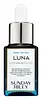
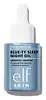
Sunday Riley Luna Retinol Sleeping Night Oil Versus e.l.f. cosmetics Youth Boosting Blue-Ty Sleep Night Oil
This anti-aging oil is formulated around Vitis Vinifera Seed Oil and Hydroxypinacolone Retinoate to soften the look of wrinkles and refine skin texture.
This anti-aging oil is formulated around Hydroxypinacolone Retinoate and Chamomilla Recutita Flower Oil to soften the look of wrinkles and refine skin texture.

What's inside
What's inside
 Key Ingredients
Benefits
Concerns
Ingredients Side-by-side
Vitis Vinifera Seed Oil
Emollient




Rubus Laciniatus Seed Oil
Skin Conditioning
Salvia Hispanica Seed Oil
Emollient
Persea Gratissima Oil
Skin Conditioning

Dimethyl Isosorbide
SolventHelianthus Annuus Seed Oil
Emollient
Hydroxypinacolone Retinoate
Skin Conditioning







Rosmarinus Officinalis Leaf Extract
AntimicrobialCitrus Aurantium Amara Flower Oil
Masking
Citrus Aurantium Dulcis Oil
Masking
Chamomilla Recutita Flower Oil
Masking
Cananga Odorata Flower Oil
Masking



Vetiveria Zizanoides Root Oil
Masking
Anthemis Nobilis Flower Oil
Masking
Tanacetum Annuum Flower Oil
Masking
Vanilla Planifolia Fruit Extract
Skin Conditioning
Eriocephalus Punctulatus Oil
Masking
CI 61565
Cosmetic ColorantCI 60725
Cosmetic ColorantVitis Vinifera Seed Oil, Rubus Laciniatus Seed Oil, Salvia Hispanica Seed Oil, Persea Gratissima Oil, Dimethyl Isosorbide, Helianthus Annuus Seed Oil, Hydroxypinacolone Retinoate, Rosmarinus Officinalis Leaf Extract, Citrus Aurantium Amara Flower Oil, Citrus Aurantium Dulcis Oil, Chamomilla Recutita Flower Oil, Cananga Odorata Flower Oil, Vetiveria Zizanoides Root Oil, Anthemis Nobilis Flower Oil, Tanacetum Annuum Flower Oil, Vanilla Planifolia Fruit Extract, Eriocephalus Punctulatus Oil, CI 61565, CI 60725
Caprylic/Capric Triglyceride
Masking

Helianthus Annuus Seed Oil
Emollient
Tocopherol
Antioxidant


Vitis Vinifera Seed Oil
Emollient
Simmondsia Chinensis Seed Oil
Emollient
Persea Gratissima Oil
Skin Conditioning
Limnanthes Alba Seed Oil
Skin Conditioning
Dimethyl Isosorbide
SolventHydroxypinacolone Retinoate
Skin Conditioning
Stearyl Glycyrrhetinate
Skin ConditioningVaccinium Angustifolium Fruit Extract
Skin Protecting
Chamomilla Recutita Flower Oil
Masking
Borago Officinalis Seed Oil
Emollient
Ethylhexylglycerin
Skin ConditioningPentaerythrityl Tetracocoate
Emollient
CI 61565
Cosmetic ColorantCI 60725
Cosmetic ColorantCaprylic/Capric Triglyceride, Helianthus Annuus Seed Oil, Tocopherol, Vitis Vinifera Seed Oil, Simmondsia Chinensis Seed Oil, Persea Gratissima Oil, Limnanthes Alba Seed Oil, Dimethyl Isosorbide, Hydroxypinacolone Retinoate, Stearyl Glycyrrhetinate, Vaccinium Angustifolium Fruit Extract, Chamomilla Recutita Flower Oil, Borago Officinalis Seed Oil, Ethylhexylglycerin, Pentaerythrityl Tetracocoate, CI 61565, CI 60725
Reviews
Ingredients Explained
These ingredients are found in both products.
Ingredients higher up in an ingredient list are typically present in a larger amount.
Chamomilla Recutita Flower Oil comes from the chamomile flower (like the tea you drink).
Essential oils from chamomile have been found to improve wound healing due to its antimicrobial properties.
Chamomile oil can help soothe and hydrate your skin.
Learn more about Chamomilla Recutita Flower OilThis synthetic colorant is used to add a violet color to products. It is water-soluble.
We don't have a description for CI 61565 yet.
Dimethyl Isosorbide (often shortened to DMI) is a sugar-derived solvent made from sorbitol. It's used to dissolve tricky ingredients and help them mix smoothly into a formula.
Many actives sit as gritty crystals when undissolved, so DMI swoops in to full dissolve them. This helps improve texture, stability, and how evenly an active is distributed.
It does have a penetration-enhancing reputation that is a bit more nuanced than marketing suggests; a cell study on human skin found that 10% DMI didn't significantly boost the permeation of Hydroquinone, Salicylic Acid, or Octadecenedioic Acid compared to controls (though it did improve their solubility in the formula itself).
Typical usage concentrations usually range from 1-10% depending on the formula's needs; this ingredient is also well tolerated at these levels.
Learn more about Dimethyl IsosorbideHelianthus Annuus Seed Oil is a plant oil derived from the seeds of a sunflower.
It is rich in fatty acids, primarily linoleic acid and oleic acid. This gives it emollient and skin conditioning properties.
The reason this ingredient is so effective is because it forms a thin film on the skin that reduces transepidermal water loss (TEWL) while supplying linoleic acid to the stratum corneum to improve barrier strength.
The high linoleic acid content is particularly noteworthy for acne-prone skin.
Research suggests that acne-prone skin tends to be deficient in linoleic acid in sebum. Topical application may help replenish this to support a healthier follicular environment and less comedone-promoting sebum.
One randomized study found sunflower seed oil preserved skin barrier integrity in adult volunteers with and without atopic dermatitis (outperforming olive oil).
This ingredient is well-studied, gentle, and an effective emollient suitable for most skin types.
On fungal acne: This ingredient may not be Fungal acne (Malassezia folliculitis) safe. This is because it contains fatty acids with carbon chain lengths in the C11-C24 range.
Learn more about Helianthus Annuus Seed OilHydroxypinacolone Retinoate (aka Granactive Retinoid or HPR) is a retinoid that is part of the same vitamin A family as retinol.
It is an ester of retinoic acid that binds directly to your skin's retinoic acid receptors so it doesn't need your skin to convert it through several steps before it can do anything.
In practice, this means it does the classic retinoid jobs in a formula:
The best part is that it can do all this with noticeably less redness, flaking, and stinging than traditional retinoids.
That gentle reputation is backed by lab work as well; a 2018 study on skin models found that HPR triggered higher retinoid-gene activity than retinol, retinal, or retinyl propionate at the same concentrations while being less irritating to cells.
It also boosted procollagen production to levels similar to retinoic acid itself.
A 2023 study showed HPR works synergistically with retinyl propionate to switch on collagen-building pathways and a 2025 clinical serum study in women with mild photoaging saw improvements in wrinkles and elasticity (though that formula also contained retinol, peptides, and Silybin).
One naming quirk worth mentioning:
You'll likely see this ingredient sold under the trade name "Granactive Retinoid", which is actually only 10% HPR blended with 90% Dimethyl Isosorbide solvent. This means a 5% Granactive Retinoid really only means about 0.5% HPR.
Finished products typically land somewhere between 0.05-1% and it's happiest formulated at a mildly acidic to neutral pH (~5.5-6.5).
Another perk is that this is one of the more light- and temperature-stable retinoids which is a nice bonus for shelf life.
Learn more about Hydroxypinacolone RetinoateThis ingredient is also known as Avocado oil. It's the cold-pressed oil from the flesh of the avocado fruit packed with fatty acids (mostly oleic acid).
The rich fatty acid profile allows it to function as a skin conditioning agent and emollient; it helps soften and smooth skin while reducing water loss.
Preclinical research has found that topical avocado oil increased collagen synthesis and reduced inflammation during wound healing, giving it some skin-repairing credibility.
The unsaponifiable fraction of the oil is also interesting: studies on avocado unsaponifiables showed that it helped skin produce more collagen and other structural compounds that support healing.
The CIR Expert Panel has found this ingredient to be non-irritating in formulations.
This ingredient may not be fungal acne safe. This is because the oleic acid content falls within the range that Malassezia can use as a food source.
This ingredient does have a comedogenic rating of 0-3, but this doesn't mean a formula with this ingredient will clog pores. Human testing has proved that any finished product with a comedogenic ingredient won't automatically make you break out; it really comes down to concentration, formula, and your skin.
Learn more about Persea Gratissima OilVitis Vinifera Seed Oil comes from the grape vine. Grape seeds are a byproduct of creating grape juice or wine.
The components of grape seeds have many skin benefits. Research has found it to be antimicrobial and anti-inflammatory. It also contains many potent antioxidants such as Vitamin E , Vitamin C, proanthocyanidins, polyphenols, flavonoids, and anthocyanins. Proanthocyanidin has been shown to help even out skin tone.
Antioxidants help fight free-radical molecules. Free-radical molecules are capable of damaging our cells and other genetic material. Antioxidants help stabilize free-radicals by donating extra electrons. Grape seed extract may help reduce the signs of aging.
The antimicrobial properties of grape seed may help treat acne. However, more research is needed to support this claim.
Grape seed has also been found to help absorb UV rays. Grape seed extract should not replace your sunscreen.
The fatty acids of grape seed oil give it emollient properties. Emollients help soothe and soften your skin by creating a film. This film traps moisture within, keeping your skin hydrated.
Learn more about Vitis Vinifera Seed Oil

