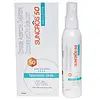
This hybrid sunscreen covers the full UV range, though its SPF isn't confirmed on file yet.
This chemical sunscreen covers the full UV range and blocks ~98% of UVB at SPF 50.

What's inside
What's inside
 Key Ingredients
Benefits
Concerns
Ingredients Side-by-side
Water
Skin ConditioningOctocrylene
UV Absorber



Ethylhexyl Salicylate
UV Absorber
Glycerin
Humectant


Glyceryl Stearate
Emollient

Cetyl Alcohol
Emollient

Cetearyl Alcohol
Emollient

Emulsifying Wax
Acrylates Crosspolymer
AbsorbentMethylene Bis-Benzotriazolyl Tetramethylbutylphenol
UV Filter
Squalane
Emollient
Nigella Sativa Seed Oil
Emollient

Carthamus Tinctorius Seed Oil
Masking
Isopropyl Palmitate
Emollient
Niacinamide
Smoothing








Camellia Sinensis Leaf Extract
Antimicrobial
Xanthan Gum
EmulsifyingHydroxyethylcellulose
Emulsion StabilisingPhenoxyethanol
Preservative
Ethylhexylglycerin
Skin ConditioningPotassium Sorbate
Preservative
Sodium Benzoate
Masking
Citric Acid
Buffering
Water, Octocrylene, Ethylhexyl Salicylate, Glycerin, Glyceryl Stearate, Cetyl Alcohol, Cetearyl Alcohol, Emulsifying Wax, Acrylates Crosspolymer, Methylene Bis-Benzotriazolyl Tetramethylbutylphenol, Squalane, Nigella Sativa Seed Oil, Carthamus Tinctorius Seed Oil, Isopropyl Palmitate, Niacinamide, Camellia Sinensis Leaf Extract, Xanthan Gum, Hydroxyethylcellulose, Phenoxyethanol, Ethylhexylglycerin, Potassium Sorbate, Sodium Benzoate, Citric Acid
Ingredients Explained
These ingredients are found in both products.
Ingredients higher up in an ingredient list are typically present in a larger amount.
Octocrylene is an oil-soluble organic UV filter that mainly absorbs UVB and short wave UVA II light.
Its real superpower is teamwork: octocrylene is remarkably photostable and is most famous for stabilizing avobenzone (the workhorse UVA filter).
This ingredient is commonly used to enhance both UVB and UVA protection due to its unique property in stabilizing avobenzone. It also pulls double duty by boosting water resistance and giving formulas a smooth, spreadable feel.
The EU's Scientific Committee on Consumer Safety (SCCS) has deemed octocrylene to be safe as a UV-filter at concentrations up to 10% (capped at 9% in propellant sprays). The US also permits it up to 10%.
Two things worth knowing:
You'll usually see this ingredient used in concentrations between 2-10% (higher amounts when used as a stabilizer for avobenzone).
Learn more about Octocrylene

