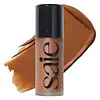
Saie Dew Bronze Soft-Focus Effortless Liquid Bronzer Versus Dolce Glow Contour Self-Tanning Sculpt + Glow


What's inside
What's inside
 Key Ingredients
Benefits
Concerns
Ingredients Side-by-side
Isocetyl Stearoyl Stearate
Emollient

Glycerin
Humectant


Tribehenin
Emollient
Sambucus Nigra Fruit Extract
AstringentMica
Cosmetic ColorantGlyceryl Stearate
Emollient
Glycyrrhiza Glabra Root Extract
Bleaching



Silica
Abrasive


Morus Alba Root Extract
BleachingSymphytum Officinale Leaf Extract
Skin ConditioningOenothera Biennis Root Extract
Skin ConditioningTitanium Dioxide
Cosmetic Colorant

CI 77891
Cosmetic ColorantCI 77492
Cosmetic ColorantCI 77491
Cosmetic ColorantCI 77499
Cosmetic ColorantCI 15985
Cosmetic ColorantCI 15850
Cosmetic ColorantCI 45380
Cosmetic ColorantCI 77510
Cosmetic ColorantIsocetyl Stearoyl Stearate, Glycerin, Tribehenin, Sambucus Nigra Fruit Extract, Mica, Glyceryl Stearate, Glycyrrhiza Glabra Root Extract, Silica, Morus Alba Root Extract, Symphytum Officinale Leaf Extract, Oenothera Biennis Root Extract, Titanium Dioxide, CI 77891, CI 77492, CI 77491, CI 77499, CI 15985, CI 15850, CI 45380, CI 77510
Water
Skin ConditioningHydrogenated Polyisobutene
EmollientGlycerin
Humectant
Dihydroxyacetone
Skin ConditioningPentylene Glycol
Skin Conditioning
Pyrus Malus Fruit Extract
Skin Conditioning
Squalane
Emollient
Mica
Cosmetic ColorantHydroxyethyl Acrylate/Sodium Acryloyldimethyl Taurate Copolymer
Emulsion StabilisingSodium Acetylated Hyaluronate
Humectant
Sodium Hyaluronate
Humectant
Sodium Hyaluronate Crosspolymer
Humectant
Hydrolyzed Sodium Hyaluronate
Skin Conditioning
Citrullus Lanatus Fruit Extract
Skin Conditioning
Lens Esculenta Fruit Extract
Skin ConditioningSodium PCA
Humectant
Glyceryl Oleate Citrate
Emulsifying
Boron Nitride
Absorbent
Sodium Stearoyl Glutamate
CleansingCaprylic/Capric Triglyceride
Masking
Xanthan Gum
EmulsifyingCalcium Titanium Borosilicate
Abrasive
Citric Acid
Buffering
Sodium Lactate
Buffering
Tocopherol
Antioxidant

Sodium C14-16 Olefin Sulfonate
Cleansing

Tin Oxide
Abrasive
Sodium Benzoate
Masking
Caprylyl Glycol
Emollient
Ethylhexylglycerin
Skin ConditioningHexylene Glycol
EmulsifyingPhenoxyethanol
Preservative
Iron Oxides
CI 77491
Cosmetic ColorantCI 77492
Cosmetic ColorantCI 77499
Cosmetic ColorantCI 77891
Cosmetic ColorantWater, Hydrogenated Polyisobutene, Glycerin, Dihydroxyacetone, Pentylene Glycol, Pyrus Malus Fruit Extract, Squalane, Mica, Hydroxyethyl Acrylate/Sodium Acryloyldimethyl Taurate Copolymer, Sodium Acetylated Hyaluronate, Sodium Hyaluronate, Sodium Hyaluronate Crosspolymer, Hydrolyzed Sodium Hyaluronate, Citrullus Lanatus Fruit Extract, Lens Esculenta Fruit Extract, Sodium PCA, Glyceryl Oleate Citrate, Boron Nitride, Sodium Stearoyl Glutamate, Caprylic/Capric Triglyceride, Xanthan Gum, Calcium Titanium Borosilicate, Citric Acid, Sodium Lactate, Tocopherol, Sodium C14-16 Olefin Sulfonate, Tin Oxide, Sodium Benzoate, Caprylyl Glycol, Ethylhexylglycerin, Hexylene Glycol, Phenoxyethanol, Iron Oxides, CI 77491, CI 77492, CI 77499, CI 77891
Reviews
Ingredients Explained
These ingredients are found in both products.
Ingredients higher up in an ingredient list are typically present in a larger amount.
Ci 77491 is also hydrated iron III oxide. It's sole purpose is to give a red/pink hue to products.
Iron III oxides are classified as inorganic chemicals for coloring.
Synthetically created Ci 77491 is considered safer than those naturally found. This is because the synthetically created version may contain less impurities. Iron oxides are generally non-toxic and non-allergenic.
Learn more about CI 77491CI 77492 is also hydrated iron III oxide. It's sole purpose is to give a yellow hue to products.
Iron III oxides are classified as inorganic chemicals for coloring.
Synthetically created CI 77492 is considered safer than those naturally found. This is because the synthetically created version may contain less impurities. Iron oxides are generally non-toxic and non-allergenic.
Learn more about CI 77492Ci 77499 is also hydrated iron III oxide. It is created from mixing red and black iron oxides. This helps give shades of darkness to a product.
Iron III oxides are classified as inorganic chemicals for coloring.
Ci 77891 is a white pigment from Titanium dioxide. It is naturally found in minerals such as rutile and ilmenite.
It's main function is to add a white color to cosmetics. It can also be mixed with other colors to create different shades.
Ci 77891 is commonly found in sunscreens due to its ability to block UV rays.
Learn more about CI 77891Glycerin (or glycerol) is a compound naturally found in your skin. It's a powerhouse humectant that pulls water into the stratum corneum.
Topically, glycerin does several things at once:
Your skin makes glycerin on its own (mostly from sebaceous oil breakdown) and shuttles it to your outermost layer of skin, or your epidermis, via aquaporin-3.
Aquaporin-3 is a transporter that is essential for normal skin hydration, elasticity, and repair. Interestingly, mice lacking in AQP3 have dry and less elastic skin that can be fully corrected with glycerin.
This ingredient is non-irritating, plays well with almost every ingredient, and works across all skin types. Typical use is anywhere between 3-10% but can go up to 79% in some leave-on products.
Just know very high concentrations (>40%) can feel tacky in low humidity.
Glycerin is the name for this ingredient in American English. British English uses Glycerol/Glycerine.
Learn more about GlycerinMica is a naturally occurring mineral used to add shimmer and color in cosmetics. It can also help improve the texture of a product or give it an opaque, white/silver color.
Serecite is the name for very fine but ragged grains of mica.
This ingredient is often coated with metal oxides like titanium dioxide. Trace amounts of heavy metals may be found in mica, but these metals are not harmful in our personal products.
Mica has been used since prehistoric times throughout the world. Ancient Egyptian, Indian, Greek, Roman, Aztec, and Chinese civilizations have used mica.
Learn more about Mica

