This hydrating serum is formulated around Sodium Hyaluronate to hydrate skin and soften the look of wrinkles.
This serum is formulated around Pseudoalteromonas Ferment Extract to reduce redness.


What's inside
What's inside
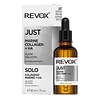 Key Ingredients
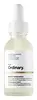
Benefits
Concerns
Ingredients Side-by-side

Water
Skin ConditioningGlycerin
Humectant


Algae Extract
Emollient

Pseudoalteromonas Exopolysaccharides
Skin ConditioningPseudoalteromonas Ferment Extract
Humectant


Ahnfeltia Concinna Extract
Skin ConditioningArginine
Masking
Glycine
Buffering
Alanine
Masking
Serine
Masking
Valine
MaskingIsoleucine
Skin ConditioningProline
Skin Conditioning
Threonine
Histidine
Humectant
Phenylalanine
Masking
Aspartic Acid
Masking
PCA
Humectant
Sodium PCA
Humectant
Sodium Lactate
Buffering
Salicylic Acid
Masking








Citric Acid
Buffering
Propanediol
Solvent
Dimethyl Isosorbide
SolventEthoxydiglycol
HumectantPolysorbate 20
Emulsifying
Potassium Sorbate
Preservative
Sodium Salicylate
Preservative
Sodium Benzoate
Masking
Hexylene Glycol
Emulsifying1,2-Hexanediol
Skin Conditioning
Phenoxyethanol
Preservative
Caprylyl Glycol
Emollient
Water, Glycerin, Algae Extract, Pseudoalteromonas Exopolysaccharides, Pseudoalteromonas Ferment Extract, Ahnfeltia Concinna Extract, Arginine, Glycine, Alanine, Serine, Valine, Isoleucine, Proline, Threonine, Histidine, Phenylalanine, Aspartic Acid, PCA, Sodium PCA, Sodium Lactate, Salicylic Acid, Citric Acid, Propanediol, Dimethyl Isosorbide, Ethoxydiglycol, Polysorbate 20, Potassium Sorbate, Sodium Salicylate, Sodium Benzoate, Hexylene Glycol, 1,2-Hexanediol, Phenoxyethanol, Caprylyl Glycol
Reviews
Ingredients Explained
These ingredients are found in both products.
Ingredients higher up in an ingredient list are typically present in a larger amount.
Algae Extract is one of the vaguest names on any label because it just means "extract of some alga" (and there are thousands of species and dozens of ways to extract them). This just means two products listing it can contain completely different things.
This ingredient name was actually officially retired in the INCI dictionary in 2015 and brands were pushed toward species-specific names instead (like Laminaria Digitata Extract or Chondrus Crispus Extract).
Generally, it is used to hold water and soften skin in a formula. Algae are rich in polysaccharides, pigments, and amino-acids that act as humectants, emollients, and skin-conditioning agents.
It isn't on standard cosmetic-patch test panels and "seaweed dermatitis" is actually an acute irritant reaction to algal toxins in seawater and not the cosmetic ingredient.
You'll see algae listed as a 5/5 on a lot of pore-clogging charts and that number doesn't come from anywhere; it's not in the original rabbit-ear studies that most comedogenic ratings trace back to.
The reasoning behind the reputation is that seaweed is high in iodine and iodine can trigger acne-like breakouts when eaten. This traces back to a 1976 letter in Archives of Dermatology describing two women whose breakouts cleared after they stopped taking high-dose kelp supplements orally.
And the reaction of these two women wasn't clogged pores at all: it was an iodine-triggered pustular rash. Later research found normal dietary iodine doesn't meaningfully affect acne either and nobody has shown topical algae delivers enough iodine to matter.
What we do have is dozens of brown and red algae ingredients found to be non-irritating and non-sensitizing, and a handful of studies that found algae compounds may actually help acne.
However, plenty of people do report breaking out from algae-containing products. Skin is individual and it's worth avoiding if yours has reacted to algae before.
Learn more about Algae ExtractPhenoxyethanol is one of the most widely used preservatives in skincare (and for good reason!).
It has a large spectrum of antimicrobial activity and especially effective bacteria, yeast, and mold while only having a weak effect on your skin's natural microbiome.
On a cellular level, it disrupts the cell membranes of microbes by poking holes that make the cell leak. This shuts down the chemical reactions the microbe needs to make energy so it can no longer survive.
Another perk of this ingredient is that it stays functional across a wide pH range (3-10).
You'll often see it paired with boosters like Ethylhexylglycerin; one study showed that a 1:9 ratio of Ethylhexylglycerin to Phenoxyethanol damages bacterial membranes as effectively as doubling the Phenoxyethanol concentration on its own.
Typical use concentrations range from 0.3-1% depending on the formula, and this ingredient is capped at 1% int the EU.
Safety-wise, the fear mongering does not hold up to the evidence. The EU's Scientific Committee on Consumer Safety and FDA consider it safe as a preservative at up to 1%, including for children of all ages.
Adverse systemic effects only showed up in animal studies at exposures roughly 200x higher than what people get from cosmetics. And despite its very widespread use, this ingredient is a rare sensitizer and allergic reactions are uncommon.
Learn more about PhenoxyethanolWater. It's the most common cosmetic ingredient of all. You'll usually see it at the top of ingredient lists, meaning that it makes up the largest part of the product.
So why is it so popular? Water most often acts as a solvent - this means that it helps dissolve other ingredients into the formulation.
You'll also recognize water as that liquid we all need to stay alive. If you see this, drink a glass of water. Remember to stay hydrated!
Learn more about Water

