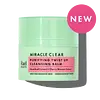
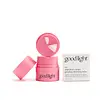
Rael Miracle Clear Purifying Twist Up Cleansing Balm Versus Good Light Strawberry Moon Grinding Cleansing Balm
This oil-based makeup remover is made to dissolve makeup, sunscreen, and daily buildup.
This oil-based makeup remover is made to dissolve makeup, sunscreen, and daily buildup.

What's inside
What's inside
 Key Ingredients
Benefits
Concerns
Ingredients Side-by-side
Cetyl Ethylhexanoate
EmollientEthylhexyl Palmitate
Emollient




Polyglyceryl-6 Dicaprate
EmulsifyingSynthetic Wax
Abrasive
Polyglyceryl-10 Dioleate
Emulsifying
Butylene Glycol
Humectant

Sorbitan Sesquioleate
Emulsifying
Eclipta Prostrata Extract
Skin Conditioning
Coccinia Indica Fruit Extract
Skin Conditioning
Tocopherol
Antioxidant




Water
Skin ConditioningOryza Sativa Bran Oil
Emollient
Calophyllum Inophyllum Seed Oil
Antimicrobial
Simmondsia Chinensis Seed Oil
Emollient
Squalane
Emollient
Houttuynia Cordata Extract
Skin Conditioning
Prunus Serrulata Flower Extract
Skin ConditioningGlycerin
Humectant
1,2-Hexanediol
Skin Conditioning
Ethylhexylglycerin
Skin ConditioningCetyl Ethylhexanoate, Ethylhexyl Palmitate, Polyglyceryl-6 Dicaprate, Synthetic Wax, Polyglyceryl-10 Dioleate, Butylene Glycol, Sorbitan Sesquioleate, Eclipta Prostrata Extract, Coccinia Indica Fruit Extract, Tocopherol, Water, Oryza Sativa Bran Oil, Calophyllum Inophyllum Seed Oil, Simmondsia Chinensis Seed Oil, Squalane, Houttuynia Cordata Extract, Prunus Serrulata Flower Extract, Glycerin, 1,2-Hexanediol, Ethylhexylglycerin
Cetyl Ethylhexanoate
EmollientCaprylic/Capric Triglyceride
Masking
Polyglyceryl-6 Dicaprate
EmulsifyingPolyglyceryl-10 Diisostearate
Emulsifying
Synthetic Wax
Abrasive
Sorbitan Sesquioleate
Emulsifying
Fragaria Ananassa Fruit Extract
Skin Conditioning
Rubus Fruticosus Fruit Extract
AstringentVaccinium Macrocarpon Fruit Extract
AstringentVaccinium Angustifolium Fruit Extract
Skin Protecting
Rubus Idaeus Fruit Extract
AstringentSambucus Nigra Fruit Extract
AstringentEclipta Prostrata Extract
Skin Conditioning
Water
Skin ConditioningMelia Azadirachta Leaf Extract
Skin ConditioningMoringa Oleifera Seed Oil
Emollient
Glycerin
Humectant
1,2-Hexanediol
Skin Conditioning
Ethylhexylglycerin
Skin ConditioningCaprylyl Glycol
Emollient
Parfum
Masking


Cetyl Ethylhexanoate, Caprylic/Capric Triglyceride, Polyglyceryl-6 Dicaprate, Polyglyceryl-10 Diisostearate, Synthetic Wax, Sorbitan Sesquioleate, Fragaria Ananassa Fruit Extract, Rubus Fruticosus Fruit Extract, Vaccinium Macrocarpon Fruit Extract, Vaccinium Angustifolium Fruit Extract, Rubus Idaeus Fruit Extract, Sambucus Nigra Fruit Extract, Eclipta Prostrata Extract, Water, Melia Azadirachta Leaf Extract, Moringa Oleifera Seed Oil, Glycerin, 1,2-Hexanediol, Ethylhexylglycerin, Caprylyl Glycol, Parfum
Ingredients Explained
These ingredients are found in both products.
Ingredients higher up in an ingredient list are typically present in a larger amount.
1,2-Hexanediol is a synthetic liquid and another multi-functional powerhouse.
It is a:
- Humectant, drawing moisture into the skin
- Emollient, helping to soften skin
- Solvent, dispersing and stabilizing formulas
- Preservative booster, enhancing the antimicrobial activity of other preservatives
Cetyl Ethylhexanoate is an emollient ester. It comes from cetearyl alcohol and 2-ethylhexanoic acid.
Cetyl Ethylhexanoate is an emollient that adds a velvety feel to skin without being greasy or oily. Emollients help trap moisture into your skin, keeping your skin soft and hydrated.
This ingredient is also known as Bhringaraj extract or False Daisy. It is a skin conditioning ingredient that keeps skin soft and hydrated.
Research shows it has antioxidant properties; lab studies have found it can protect skin cells from UV-induced damage and help suppress inflammation.
There's also some interesting research on its potential to support hair growth by promoting the growth phase of the hair cycle.
Those with an allergy to plants in the daisy family may want to patch test this ingredient. This ingredient is generally well-tolerated otherwise.
Learn more about Eclipta Prostrata ExtractEthylhexylglycerin is created from glycerin. It is a multitasker ingredient that:
The CIR Expert Panel found minimal skin absorption or sensitization of any kind in a safety assessment. Though this ingredient is considered well-tolerated, a small number of cases of allergic dermatitis have been published since 2002. Just be sure to patch test if you are unsure.
Industry-reported use ranges from 8% in rinse-off products and 2% in leave-on formulations.
Learn more about EthylhexylglycerinGlycerin (or glycerol) is a compound naturally found in your skin. It's a powerhouse humectant that pulls water into the stratum corneum.
Topically, glycerin does several things at once:
Your skin makes glycerin on its own (mostly from sebaceous oil breakdown) and shuttles it to your outermost layer of skin, or your epidermis, via aquaporin-3.
Aquaporin-3 is a transporter that is essential for normal skin hydration, elasticity, and repair. Interestingly, mice lacking in AQP3 have dry and less elastic skin that can be fully corrected with glycerin.
This ingredient is non-irritating, plays well with almost every ingredient, and works across all skin types. Typical use is anywhere between 3-10% but can go up to 79% in some leave-on products.
Just know very high concentrations (>40%) can feel tacky in low humidity.
Glycerin is the name for this ingredient in American English. British English uses Glycerol/Glycerine.
Learn more about GlycerinWe don't have a description for Polyglyceryl-6 Dicaprate yet.
Sorbitan Sesquioleate is derived from sorbitol and oleic acid. It is an emulsifier and prevents ingredients from separating.
Specifically, this ingredient is a water-in-oil emulsifier, meaning it helps water dissolve into oil.
Some studies suggest this ingredient may cause irritation in some people. If you are unsure, it is best to patch test.
This ingredient may not be Malassezia folliculitis, or fungal-acne safe due to the oleic acid. In vitro studies have shown that Oleic Acid is one of the fatty acids that induce rapid Malassezia growth in lab settings.
Learn more about Sorbitan SesquioleateSynthetic Wax is a manufactured hydrocarbon wax. In formulas, it works as an occlusive emollient that helps reduce water loss and improves the spreadability of products.
Research comparing synthetic wax to traditional mineral-derived products found that formulas containing it perform as well for skin hydration.
It is considered non-comedogenic and vegan-friendly.
This ingredient has a well-established safety record by the CIR Expert Panel for Cosmetic Ingredient Safety.
Synthetic Waxes are straight/branched-chain hydrocarbons with no ester bond or fatty acids. That means there is nothing for the Malassezia yeast to feed on.
Learn more about Synthetic WaxWater. It's the most common cosmetic ingredient of all. You'll usually see it at the top of ingredient lists, meaning that it makes up the largest part of the product.
So why is it so popular? Water most often acts as a solvent - this means that it helps dissolve other ingredients into the formulation.
You'll also recognize water as that liquid we all need to stay alive. If you see this, drink a glass of water. Remember to stay hydrated!
Learn more about Water

