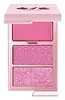
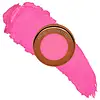
One/Size by Patrick Starrr Cheek Clapper 3D Blush Trio Versus Danessa Myricks Beauty Yummy Skin Blurring Balm Powder Flushed

What's inside
What's inside
 Key Ingredients
Benefits
Concerns
Ingredients Side-by-side
Dimethicone
Emollient

Dicaprylyl Carbonate
EmollientSilica
Abrasive


Caprylic/Capric Triglyceride
Masking


Polyhydroxystearic Acid
Emulsifying

Dimethicone Crosspolymer
Emulsion Stabilising
Synthetic Wax
Abrasive
Mica
Cosmetic ColorantHdi/Trimethylol Hexyllactone Crosspolymer
Methyl Methacrylate Crosspolymer
Tocopheryl Acetate
Antioxidant


Glyceryl Caprylate
EmollientJasminum Grandiflorum Flower Wax
Masking
Limnanthes Alba Seed Oil
Skin Conditioning
Silica Silylate
Emollient
Glyceryl Undecylenate
Emollient
CI 77891
Cosmetic ColorantCI 77492
Cosmetic ColorantCI 15850
Cosmetic ColorantCI 45410
Cosmetic ColorantTalc
Abrasive
Zinc Stearate
Cosmetic ColorantSodium Dehydroacetate
Preservative
Sorbic Acid
Preservative
Ethylhexyl Hydroxystearate
Emollient
Magnesium Carbonate
AbsorbentOryza Sativa Hull Powder
Abrasive
Propylene Glycol
Humectant
Hylocereus Undatus Fruit Extract
Skin ConditioningPhenoxyethanol
Preservative
Calcium Aluminum Borosilicate
Tin Oxide
Abrasive
Dimethicone, Dicaprylyl Carbonate, Silica, Caprylic/Capric Triglyceride, Polyhydroxystearic Acid, Dimethicone Crosspolymer, Synthetic Wax, Mica, Hdi/Trimethylol Hexyllactone Crosspolymer, Methyl Methacrylate Crosspolymer, Tocopheryl Acetate, Glyceryl Caprylate, Jasminum Grandiflorum Flower Wax, Limnanthes Alba Seed Oil, Silica Silylate, Glyceryl Undecylenate, CI 77891, CI 77492, CI 15850, CI 45410, Talc, Zinc Stearate, Sodium Dehydroacetate, Sorbic Acid, Ethylhexyl Hydroxystearate, Magnesium Carbonate, Oryza Sativa Hull Powder, Propylene Glycol, Hylocereus Undatus Fruit Extract, Phenoxyethanol, Calcium Aluminum Borosilicate, Tin Oxide
Magnesium Carbonate
AbsorbentIsohexadecane
EmollientC13-15 Alkane
SolventIsododecane
EmollientDimethicone
Emollient
Squalane
Emollient
Synthetic Wax
Abrasive
Synthetic Candelilla Wax
EmollientKaolin
Abrasive
Tocopheryl Acetate
Antioxidant
Linum Usitatissimum Seed Oil
Perfuming

Zingiber Officinale Root Oil
Masking


Hydrolyzed Sodium Hyaluronate
Skin Conditioning
Glyceryl Behenate
Emollient
Limnanthes Alba Seed Oil
Skin Conditioning
Cera Microcristallina
Emulsion StabilisingPolyethylene
Abrasive
Stearoxy Dimethicone
Emollient
CI 77891
Cosmetic ColorantCI 77491
Cosmetic ColorantCI 77492
Cosmetic ColorantCI 77499
Cosmetic ColorantCI 19140
Cosmetic ColorantCI 15850
Cosmetic ColorantCI 45410
Cosmetic ColorantCI 42090
Cosmetic ColorantMagnesium Carbonate, Isohexadecane, C13-15 Alkane, Isododecane, Dimethicone, Squalane, Synthetic Wax, Synthetic Candelilla Wax, Kaolin, Tocopheryl Acetate, Linum Usitatissimum Seed Oil, Zingiber Officinale Root Oil, Hydrolyzed Sodium Hyaluronate, Glyceryl Behenate, Limnanthes Alba Seed Oil, Cera Microcristallina, Polyethylene, Stearoxy Dimethicone, CI 77891, CI 77491, CI 77492, CI 77499, CI 19140, CI 15850, CI 45410, CI 42090
Ingredients Explained
These ingredients are found in both products.
Ingredients higher up in an ingredient list are typically present in a larger amount.
Ci 15850 is the pigment color red. It is an azo dye and created synthetically.
Azo dyes need to be thoroughly purified before use. This allows them to be more stable and longer-lasting.
This ingredient is common in foundations, lipsticks, and blushes. This color is described as brown/orangey red.
It has many secondary names such as Red 6 and Red 7. According to a manufacturer, Red 6 usually contains aluminum.
Learn more about CI 15850CI 45410 is a synthetic red-pigment and dye.
It often goes by both Red 28 or Red 27; manufacturers label both ingredients as CI 45410.
This dye is commonly found in makeup because it imparts a vivid color. Some types of this dye change color based on pH level and interaction with moisture:
Your skin has a natural pH of around 4.5 - 5.5.
According to the FDA, CI 45410 is not permitted for use in eye products.
Red 27 is a flourescein dye and commonly used as a fluorescent tracer in medicine.
Learn more about CI 45410CI 77492 is also hydrated iron III oxide. It's sole purpose is to give a yellow hue to products.
Iron III oxides are classified as inorganic chemicals for coloring.
Synthetically created CI 77492 is considered safer than those naturally found. This is because the synthetically created version may contain less impurities. Iron oxides are generally non-toxic and non-allergenic.
Learn more about CI 77492Ci 77891 is a white pigment from Titanium dioxide. It is naturally found in minerals such as rutile and ilmenite.
It's main function is to add a white color to cosmetics. It can also be mixed with other colors to create different shades.
Ci 77891 is commonly found in sunscreens due to its ability to block UV rays.
Learn more about CI 77891Dimethicone is a type of synthetic silicone created from natural materials such as quartz. It is also known as polydimethylsiloxane.
What it does:
Dimethicone comes in different viscosities:
Depending on the viscosity, dimethicone has different properties.
Ingredients lists don't always show which type is used, so we recommend reaching out to the brand if you have questions about the viscosity.
This ingredient is unlikely to cause irritation because it does not get absorbed into skin. However, people with silicone allergies should be careful about using this ingredient.
Note: Dimethicone may contribute to pilling. This is because it is not oil or water soluble, so pilling may occur when layered with products. When mixed with heavy oils in a formula, the outcome is also quite greasy.
Learn more about DimethiconeLimnanthes Alba Seed Oil is from the seeds of the meadowfoam plant. It is a skin conditioning agent and emollient that sits on top of skin to soften and hydrate it.
Over 98% of the oil is made up of long-chain fatty acids, mostly aachidic acid (61%), docosenoic acid (~16%), and docosadienoic acid (~18%).
This combination is not really found in any other plant oil and is the reason this is one of the most stable botanical oils available.
Some studies show it to be more stable than jojoba oil, helps a product resist going rancid, and can help extend the shelf life of a formula.
It also naturally contains vitamin E and phytosterols that give it a mild antioxidant benefit.
This ingredient is typically used from around 1% to fairly high levels since it's gentle; it's well-tolerated and low on the irritation scale.
Learn more about Limnanthes Alba Seed OilMagnesium carbonate is a mineral as an oil and moisture absorber and bulking agent. It is not very reactive on skin and considered low risk for irritation.
Synthetic Wax is a manufactured hydrocarbon wax. In formulas, it works as an occlusive emollient that helps reduce water loss and improves the spreadability of products.
Research comparing synthetic wax to traditional mineral-derived products found that formulas containing it perform as well for skin hydration.
It is considered non-comedogenic and vegan-friendly.
This ingredient has a well-established safety record by the CIR Expert Panel for Cosmetic Ingredient Safety.
Synthetic Waxes are straight/branched-chain hydrocarbons with no ester bond or fatty acids. That means there is nothing for the Malassezia yeast to feed on.
Learn more about Synthetic WaxTocopheryl Acetate is a stable, shelf-friendly form of vitamin E.
Formulators love it because plain vitamin E oxidizes quickly once it hits air. This acetate version stays stable and resists going off, helping to extend a product's shelf life.
It's actually inactive on its own and works like a slow-release "storage" form; the enzymes in your skin called esterases gradually convert it into active vitamin E over time.
One in vivo study showed 5% of the acetate in the living layer of the epidermis converted to vitamin E after 5 days of application. This study also found the skin gained protection against UV damage even though the conversion was slow and small.
Once converted, vitamin E acts as a skin's main fat-soluble antioxidant that fights free radicals to protect skin from damage.
Topical vitamin E generally boosts the skin's photoprotection, and it reduced UV-damage in animal models.
This ingredient has some brightening potential but it's more of a prevention ingredient than spot-fader. Cell studies show it can slow down melanin production but it's worth noting that it's not the most powerful brightener out there.
Overall, it has a pretty solid safety profile and has been found to be non-irritating and non-comedogenic. Allergic reactions may happen but stay rare due to how widely the ingredient gets used.
The concentration will vary depending on the formula; industry data shows 0.1% in baby lotions, 3% in lipsticks, and 5% in foot powders. You can also find this ingredient at 100% in a pure vitamin E oil.
Most leave-on skincare keeps it at the lower end, often between 0.5-1%.
Learn more about Tocopheryl Acetate

