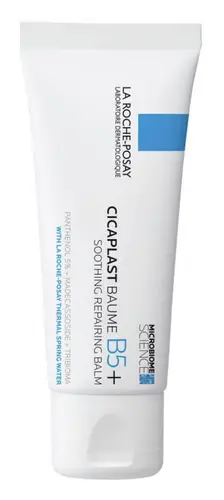
What's inside
What's inside
 Key Ingredients

No key ingredients
Benefits
Concerns
Ingredients Side-by-side
Water
Skin ConditioningParaffinum Liquidum
Emollient


Cera Microcristallina
Emulsion StabilisingGlycerin
Humectant


Lanolin Alcohol
Emollient
Paraffin
Skin Conditioning
Panthenol
Skin Conditioning

Magnesium Sulfate
Decyl Oleate
Emollient



Octyldodecanol
Emollient
Aluminum Stearates
EmollientCitric Acid
Buffering

Magnesium Stearate
Cosmetic ColorantLimonene
Perfuming

Geraniol
Perfuming
Hydroxycitronellal
Perfuming
Linalool
Perfuming
Citronellol
Perfuming
Benzyl Benzoate
Antimicrobial
Cinnamyl Alcohol
Perfuming
Parfum
Masking
Water, Paraffinum Liquidum, Cera Microcristallina, Glycerin, Lanolin Alcohol, Paraffin, Panthenol, Magnesium Sulfate, Decyl Oleate, Octyldodecanol, Aluminum Stearates, Citric Acid, Magnesium Stearate, Limonene, Geraniol, Hydroxycitronellal, Linalool, Citronellol, Benzyl Benzoate, Cinnamyl Alcohol, Parfum
Water
Skin ConditioningGlycerin
Humectant
Paraffinum Liquidum
Emollient
Alcohol Denat.
Antimicrobial

Cetyl Alcohol
Emollient
Glyceryl Stearate
Emollient
Hydrogenated Coco-Glycerides
Emollient
Stearyl Alcohol
Emollient
Palmitic Acid
Emollient
Stearic Acid
Cleansing
Cera Microcristallina
Emulsion StabilisingTocopheryl Acetate
Antioxidant

Sodium Hydroxide
BufferingDimethicone
Emollient
Myristic Acid
Cleansing
Arachidic Acid
Cleansing
Oleic Acid
Emollient
Carbomer
Emulsion StabilisingPhenoxyethanol
Preservative
Methylparaben
Preservative

BHT
Antioxidant
Parfum
Masking
Water, Glycerin, Paraffinum Liquidum, Alcohol Denat., Cetyl Alcohol, Glyceryl Stearate, Hydrogenated Coco-Glycerides, Stearyl Alcohol, Palmitic Acid, Stearic Acid, Cera Microcristallina, Tocopheryl Acetate, Sodium Hydroxide, Dimethicone, Myristic Acid, Arachidic Acid, Oleic Acid, Carbomer, Phenoxyethanol, Methylparaben, BHT, Parfum
Reviews
Ingredients Explained
These ingredients are found in both products.
Ingredients higher up in an ingredient list are typically present in a larger amount.
Cera Microcristallina, aka microcrystalline wax, is a petroleum-derived wax that helps thicken texture and stabilize the oils in formulas.
It also has mild occlusive properties that creates a film on skin to slow down water loss.
The CIR Expert Panel has concluded this ingredient to be safe as used in cosmetics.
This ingredient is refined to a cosmetic grade with high purity. It is chemically inert, stable, and doesn't clog pores (petroleum has a comedogenic rating of 0).
Malassezia feeds on fatty acids roughly in the C11-24 range and this ingredient contains none of those. Since there's no plausible food source for it here, this ingredient is fungal acne safe.
Learn more about Cera MicrocristallinaGlycerin (or glycerol) is a compound naturally found in your skin. It's a powerhouse humectant that pulls water into the stratum corneum.
Topically, glycerin does several things at once:
Your skin makes glycerin on its own (mostly from sebaceous oil breakdown) and shuttles it to your outermost layer of skin, or your epidermis, via aquaporin-3.
Aquaporin-3 is a transporter that is essential for normal skin hydration, elasticity, and repair. Interestingly, mice lacking in AQP3 have dry and less elastic skin that can be fully corrected with glycerin.
This ingredient is non-irritating, plays well with almost every ingredient, and works across all skin types. Typical use is anywhere between 3-10% but can go up to 79% in some leave-on products.
Just know very high concentrations (>40%) can feel tacky in low humidity.
Glycerin is the name for this ingredient in American English. British English uses Glycerol/Glycerine.
Learn more about GlycerinParaffinum Liquidum is a highly-refined cosmetic-grade mineral oil. It is also known as liquid paraffin.
Despite its controversial reputation, the science is pretty clear: it's one of the most well-studied and effective moisturizing ingredients out there.
As an occlusive, it forms a protective layer on the skin that locks in moisture and prevents transepidermal water loss (TEWL). This makes it especially great for compromised skin barriers.
The "it clogs your pores" myth has been around for decades; a study found that industrial-grade mineral oil may be comedogenic but cosmetic-grade mineral oil is not (these two are very, very different).
A 2017 review concluded that cosmetic use of mineral oils and waxes does not present a risk to consumers due to absorption.
Mineral oil got a bad rap from the old rabbit ear studies. When tested on actual human skin, cosmetic-grade mineral oil showed no comedogenic activity. The rating of 0 is a correction of outdated science.
Mineral oil is an inert substance with no fatty acids so there's nothing to feed Malassezia. This ingredient is fungal acne safe.
Learn more about Paraffinum LiquidumParfum is a catch-all term for an ingredient or more that is used to give a scent to products.
Also called "fragrance", this ingredient can be a blend of hundreds of chemicals or plant oils. This means every product with "fragrance" or "parfum" in the ingredients list is a different mixture.
For instance, Habanolide is a proprietary trade name for a specific aroma chemical. When used as a fragrance ingredient in cosmetics, most aroma chemicals fall under the broad labeling category of “FRAGRANCE” or “PARFUM” according to EU and US regulations.
The term 'parfum' or 'fragrance' is not regulated in many countries. In many cases, it is up to the brand to define this term.
For instance, many brands choose to label themselves as "fragrance-free" because they are not using synthetic fragrances. However, their products may still contain ingredients such as essential oils that are considered a fragrance by INCI standards.
One example is Calendula flower extract. Calendula is an essential oil that still imparts a scent or 'fragrance'.
Depending on the blend, the ingredients in the mixture can cause allergies and sensitivities on the skin. Some ingredients that are known EU allergens include linalool and citronellol.
Parfum can also be used to mask or cover an unpleasant scent.
The bottom line is: not all fragrances/parfum/ingredients are created equally. If you are worried about fragrances, we recommend taking a closer look at an ingredient. And of course, we always recommend speaking with a professional.
Learn more about ParfumWater. It's the most common cosmetic ingredient of all. You'll usually see it at the top of ingredient lists, meaning that it makes up the largest part of the product.
So why is it so popular? Water most often acts as a solvent - this means that it helps dissolve other ingredients into the formulation.
You'll also recognize water as that liquid we all need to stay alive. If you see this, drink a glass of water. Remember to stay hydrated!
Learn more about Water