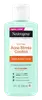
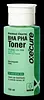
Neutrogena Oil-Free Acne Stress Control Triple-Action Toner Versus Oxecure Blackhead Clearing BHA PHA Toner
This acne toner is formulated around Salicylic Acid to clear breakouts and balance excess oil.
This pore-care exfoliator is formulated around Gluconolactone and Salicylic Acid to refine the look of pores and clear breakouts.


What's inside
What's inside
 Key Ingredients
Benefits
Concerns
Ingredients Side-by-side
Salicylic Acid 2%
Masking










Water
Skin ConditioningAlcohol Denat.
Antimicrobial
Butylene Glycol
Humectant

PPG-5-Ceteth-20
EmulsifyingC12-15 Alkyl Lactate
EmollientParfum
Masking

Sodium Citrate
BufferingCocamidopropyl Pg-Dimonium Chloride Phosphate

Sodium Hydroxide
BufferingBenzalkonium Chloride
Antimicrobial
Cetyl Lactate
EmollientDisodium EDTA
ChelatingGlycerin
Humectant
Camellia Sinensis Leaf Extract
Antimicrobial



Cucumis Sativus Fruit Extract
Emollient
CI 42090
Cosmetic ColorantCI 61570
Cosmetic ColorantCI 19140
Cosmetic ColorantSalicylic Acid 2%, Water, Alcohol Denat., Butylene Glycol, PPG-5-Ceteth-20, C12-15 Alkyl Lactate, Parfum, Sodium Citrate, Cocamidopropyl Pg-Dimonium Chloride Phosphate, Sodium Hydroxide, Benzalkonium Chloride, Cetyl Lactate, Disodium EDTA, Glycerin, Camellia Sinensis Leaf Extract, Cucumis Sativus Fruit Extract, CI 42090, CI 61570, CI 19140
Water
Skin ConditioningPropylene Glycol
Humectant
Gluconolactone
Chelating
Glycerin
Humectant
Ethoxydiglycol
HumectantSalicylic Acid
Masking
Butylene Glycol
Humectant
Potassium Hydroxide
BufferingPhenoxyethanol
Preservative
Propanediol
Solvent
Sodium Citrate
BufferingHamamelis Virginiana Leaf Extract
Skin Conditioning
Propylene Carbonate
SolventCaprylhydroxamic Acid
ChelatingDisodium EDTA
ChelatingO-Cymen-5-Ol
Antimicrobial
Aloe Barbadensis Leaf Juice
Skin Conditioning
Maltodextrin
Absorbent
Sodium Benzoate
Masking
Citric Acid
Buffering
Melaleuca Alternifolia Leaf Extract
Perfuming
Potassium Sorbate
Preservative
Water, Propylene Glycol, Gluconolactone, Glycerin, Ethoxydiglycol, Salicylic Acid, Butylene Glycol, Potassium Hydroxide, Phenoxyethanol, Propanediol, Sodium Citrate, Hamamelis Virginiana Leaf Extract, Propylene Carbonate, Caprylhydroxamic Acid, Disodium EDTA, O-Cymen-5-Ol, Aloe Barbadensis Leaf Juice, Maltodextrin, Sodium Benzoate, Citric Acid, Melaleuca Alternifolia Leaf Extract, Potassium Sorbate
Reviews
Ingredients Explained
These ingredients are found in both products.
Ingredients higher up in an ingredient list are typically present in a larger amount.
Butylene Glycol (or BG) is used within cosmetic products for a few different reasons:
Overall, Butylene Glycol is a safe and well-rounded ingredient that works well with other ingredients.
Though this ingredient works well with most skin types, some people with sensitive skin may experience a reaction such as allergic rashes, closed comedones, or itchiness.
Learn more about Butylene GlycolDisodium EDTA is a chelating agent. It grabs onto and deactivates metal ions that sneak into your products from water, packaging, or air.
This ingredient mainly works behind the scenes and helps with:
On top of that, this ingredient can counteract the effects of hard water by binding to the minerals in it.
One thing worth knowing is that Disodium EDTA has been shown to be a mild penetration enhancer. It can help other ingredients absorb into skin more effectively which can be a double-edged sword (great for actives, but can also make the active too strong if you have sensitive skin).
Clinical patch testing showed no significant skin irritation at typical use concentrations and minimal dermal absorption.
You'll most likely see this ingredient near the end of an ingredient list. It's typically found in concentrations less than 1%.
Learn more about Disodium EDTAGlycerin (or glycerol) is a compound naturally found in your skin. It's a powerhouse humectant that pulls water into the stratum corneum.
Topically, glycerin does several things at once:
Your skin makes glycerin on its own (mostly from sebaceous oil breakdown) and shuttles it to your outermost layer of skin, or your epidermis, via aquaporin-3.
Aquaporin-3 is a transporter that is essential for normal skin hydration, elasticity, and repair. Interestingly, mice lacking in AQP3 have dry and less elastic skin that can be fully corrected with glycerin.
This ingredient is non-irritating, plays well with almost every ingredient, and works across all skin types. Typical use is anywhere between 3-10% but can go up to 79% in some leave-on products.
Just know very high concentrations (>40%) can feel tacky in low humidity.
Glycerin is the name for this ingredient in American English. British English uses Glycerol/Glycerine.
Learn more about GlycerinSalicylic Acid (also known as beta hydroxy acid or BHA) is a well-known ingredient for treating skin that struggles with acne and clogged pores. It exfoliates both the skin's surface and deep within the pores to help clear out buildup, control oil, and reduce inflammation.
Unlike AHAs (alpha hydroxy acids), salicylic acid is oil-soluble. This allows it to penetrate into pores which makes it especially effective for treating blackheads and preventing future breakouts.
Salicylic acid is also known for its soothing properties. It has a similar structure to aspirin and can calm inflamed or irritated skin, making it a good option for acne-prone skin that is also sensitive.
Concentrations of 0.5-2% are recognized by the U.S. FDA as an over-the-counter topical acne product.
It can cause irritation and/or dryness if one's skin already has a compromised moisture barrier, so it's best to focus on repairing that before introducing this ingredient into your routine.
While salicylic acid does not increase sun sensitivity, it’s still important to wear sunscreen daily to protect your skin.
If you are looking for the ingredient called BHA or Butylated Hydroxyanisole, click here.
Learn more about Salicylic AcidSodium Citrate is the sodium salts of citric acid. In skincare, it is used to alter pH levels and acts as a preservative.
Its main functions are to maintain the pH of a product and neutralize metal ions.
The acidity of our skin is maintained by our glands and skin biome; normal pH level of skin is slightly acidic (~4.75-5.5).
Being slightly acidic allows our skin to create an "acid mantle". This acid mantle is a thin barrier that protects our skin from bacteria and contaminants.
Learn more about Sodium CitrateWater. It's the most common cosmetic ingredient of all. You'll usually see it at the top of ingredient lists, meaning that it makes up the largest part of the product.
So why is it so popular? Water most often acts as a solvent - this means that it helps dissolve other ingredients into the formulation.
You'll also recognize water as that liquid we all need to stay alive. If you see this, drink a glass of water. Remember to stay hydrated!
Learn more about Water

