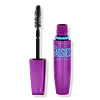
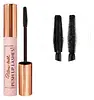
Maybelline Volum’ Express The Falsies Mascara Versus Charlotte Tilbury Pillow Talk Push Up Lashes Mascara


What's inside
What's inside
 Key Ingredients
Benefits
Concerns
Ingredients Side-by-side
Water
Skin ConditioningParaffin
Skin Conditioning
Potassium Cetyl Phosphate
EmulsifyingCera Alba
Emollient





Copernicia Cerifera Cera
Emollient
Acacia Senegal Gum
MaskingGlycerin
Humectant

Cetyl Alcohol
Emollient

Acrylates Copolymer
Hydroxyethylcellulose
Emulsion StabilisingPEG/PPG-17/18 Dimethicone
Emulsifying
Steareth-20
CleansingPhenoxyethanol
Preservative
Hydrolyzed Corn Starch
HumectantCaprylyl Glycol
Emollient
Sodium Polymethacrylate
Emulsion StabilisingSodium Dehydroacetate
Preservative
Hydrogenated Jojoba Oil
Abrasive

Hydrogenated Palm Oil
Emollient
Simethicone
Emollient
Rayon
Disodium EDTA
Arginine
Masking
Serine
Masking
Glutamic Acid
Humectant
2-Oleamido-1,3-Octadecanediol
Skin ConditioningSilica
Abrasive

Panthenol
Skin Conditioning
CI 77491
Cosmetic ColorantCI 77492
Cosmetic ColorantCI 77007
Cosmetic ColorantCI 77891
Cosmetic ColorantMica
Cosmetic ColorantCI 75470
Cosmetic ColorantCI 77288
Cosmetic ColorantCI 77289
Cosmetic ColorantCI 77742
Cosmetic ColorantCI 77510
Cosmetic ColorantWater, Paraffin, Potassium Cetyl Phosphate, Cera Alba, Copernicia Cerifera Cera, Acacia Senegal Gum, Glycerin, Cetyl Alcohol, Acrylates Copolymer, Hydroxyethylcellulose, PEG/PPG-17/18 Dimethicone, Steareth-20, Phenoxyethanol, Hydrolyzed Corn Starch, Caprylyl Glycol, Sodium Polymethacrylate, Sodium Dehydroacetate, Hydrogenated Jojoba Oil, Hydrogenated Palm Oil, Simethicone, Rayon, Disodium EDTA, Arginine, Serine, Glutamic Acid, 2-Oleamido-1,3-Octadecanediol, Silica, Panthenol, CI 77491, CI 77492, CI 77007, CI 77891, Mica, CI 75470, CI 77288, CI 77289, CI 77742, CI 77510
Water
Skin ConditioningCI 77499
Cosmetic ColorantCera Microcristallina
Emulsion StabilisingStearic Acid
Cleansing
Copernicia Cerifera Cera
Emollient
Glyceryl Stearate
Emollient
Acrylates Copolymer
Hydrogenated Vegetable Oil
Emollient
Butylene Glycol
Humectant
Ricinus Communis Seed Oil
Masking
Stearyl Stearate
Emollient
CI 77007
Cosmetic ColorantAminomethyl Propanol
BufferingCaprylyl Glycol
Emollient
Phenoxyethanol
Preservative
Galactoarabinan
Sodium Dehydroacetate
Preservative
Tocopheryl Acetate
Antioxidant


Laurdimonium Hydroxypropyl Hydrolyzed Keratin
Skin ConditioningLaureth-21
CleansingBHT
Antioxidant
Water, CI 77499, Cera Microcristallina, Stearic Acid, Copernicia Cerifera Cera, Glyceryl Stearate, Acrylates Copolymer, Hydrogenated Vegetable Oil, Butylene Glycol, Ricinus Communis Seed Oil, Stearyl Stearate, CI 77007, Aminomethyl Propanol, Caprylyl Glycol, Phenoxyethanol, Galactoarabinan, Sodium Dehydroacetate, Tocopheryl Acetate, Laurdimonium Hydroxypropyl Hydrolyzed Keratin, Laureth-21, BHT
Reviews
Ingredients Explained
These ingredients are found in both products.
Ingredients higher up in an ingredient list are typically present in a larger amount.
Acrylates Copolymer is used as a film-forming agent and texture enhancer.
After applied, Acrylates Copolymer forms a thin film cover that helps skin feel more soft. It can help sunscreens become more water-resistant.
It is also used to make a product more thick.
Learn more about Acrylates CopolymerCaprylyl Glycol is a humectant, skin conditioner, emollient, and preservative booster derived from either caprylic acid or synthetically created.
Typical use levels vary from 0.3-1% as a preservative booster and go up to 2% to condition skin.
Because it is not a free-fatty acid, this ingredient is fungal acne safe (there's nothing for Malassezia to feed on).
Learn more about Caprylyl GlycolThis pigment is called Ultramarine blue lazurite. It gives a saturated blue color, but can be used to create other colors as well.
According to the manufacturer, it is usually made from kaolin, sodium sulfate, sodium carbonate, sulfur, and charcoal.
This ingredient comes from a palm tree native to Brazil. This ingredient is used to thicken texture and leaves behind a film when applied.
Phenoxyethanol is one of the most widely used preservatives in skincare (and for good reason!).
It has a large spectrum of antimicrobial activity and especially effective bacteria, yeast, and mold while only having a weak effect on your skin's natural microbiome.
On a cellular level, it disrupts the cell membranes of microbes by poking holes that make the cell leak. This shuts down the chemical reactions the microbe needs to make energy so it can no longer survive.
Another perk of this ingredient is that it stays functional across a wide pH range (3-10).
You'll often see it paired with boosters like Ethylhexylglycerin; one study showed that a 1:9 ratio of Ethylhexylglycerin to Phenoxyethanol damages bacterial membranes as effectively as doubling the Phenoxyethanol concentration on its own.
Typical use concentrations range from 0.3-1% depending on the formula, and this ingredient is capped at 1% int the EU.
Safety-wise, the fear mongering does not hold up to the evidence. The EU's Scientific Committee on Consumer Safety and FDA consider it safe as a preservative at up to 1%, including for children of all ages.
Adverse systemic effects only showed up in animal studies at exposures roughly 200x higher than what people get from cosmetics. And despite its very widespread use, this ingredient is a rare sensitizer and allergic reactions are uncommon.
Learn more about PhenoxyethanolSodium Dehydroacetate is a synthetic preservative and sodium salt form of dehydroacetic acid. It stops bacteria, mold, and yeast from growing in your products at low concentrations.
Clinical testing found it to be non-irritating, non-sensitizing, and non-photosensitizing. It's also not significantly absorbed through skin.
There are a very small number of reported cases of contact dermatitis in cases linked to wound-care creams used over compromised skin (rather than skincare).
Overall, this is a well-studied and low-risk preservative just doing its job.
Typical concentrations run up to 0.6%, which is also the maximum amount permitted under both EU CosIng regulations and US FDA guidelines.
Learn more about Sodium DehydroacetateWater. It's the most common cosmetic ingredient of all. You'll usually see it at the top of ingredient lists, meaning that it makes up the largest part of the product.
So why is it so popular? Water most often acts as a solvent - this means that it helps dissolve other ingredients into the formulation.
You'll also recognize water as that liquid we all need to stay alive. If you see this, drink a glass of water. Remember to stay hydrated!
Learn more about Water

