
What's inside
What's inside
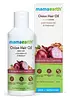 Key Ingredients
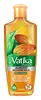
Benefits
Concerns
Ingredients Side-by-side
Helianthus Annuus Seed Oil
Emollient



Isopropyl Myristate
Emollient



Caprylic/Capric Triglyceride
Masking

Phyllanthus Emblica Fruit Extract
HumectantEclipta Prostrata Extract
Skin Conditioning
Coral Extract
Skin ConditioningSesamum Indicum Seed Oil
Emollient
Allium Cepa Bulb Extract
Skin Conditioning

Brain Extract
Skin ProtectingSimmondsia Chinensis Seed Oil
Emollient
Olea Europaea Fruit Oil
Masking
Prunus Amygdalus Dulcis Oil
Skin Conditioning
Ricinus Communis Seed Oil
Masking
Tocopherol
Antioxidant




Allium Cepa Bulb Oil
Redensyl
Helianthus Annuus Seed Oil, Isopropyl Myristate, Caprylic/Capric Triglyceride, Phyllanthus Emblica Fruit Extract, Eclipta Prostrata Extract, Coral Extract, Sesamum Indicum Seed Oil, Allium Cepa Bulb Extract, Brain Extract, Simmondsia Chinensis Seed Oil, Olea Europaea Fruit Oil, Prunus Amygdalus Dulcis Oil, Ricinus Communis Seed Oil, Tocopherol, Allium Cepa Bulb Oil, Redensyl
Canola Oil
Emollient
Isopropyl Myristate
Emollient
Prunus Amygdalus Dulcis Oil
Skin Conditioning
Olea Europaea Fruit Oil
Masking
Sesamum Indicum Seed Oil
Emollient
Cocos Nucifera Oil
Masking
Parfum
Masking
Glycine Soja Oil
Emollient
Carthamus Tinctorius Seed Oil
Masking
Linoleic Acid
Cleansing
Retinyl Palmitate
Skin Conditioning
Tocopheryl Acetate
Antioxidant
Butyl Methoxydibenzoylmethane
UV Absorber
Citrus Limon Peel Oil
Masking


Rosmarinus Officinalis Stem Oil
Perfuming
BHT
Antioxidant
Alpha-Isomethyl Ionone
Perfuming
Citral
Perfuming
Citronellol
Perfuming
Coumarin
Perfuming
Geraniol
Perfuming
Hexyl Cinnamal
Perfuming
Limonene
Perfuming
Linalool
Perfuming
CI 47000
Cosmetic ColorantCI 26100
Cosmetic ColorantCanola Oil, Isopropyl Myristate, Prunus Amygdalus Dulcis Oil, Olea Europaea Fruit Oil, Sesamum Indicum Seed Oil, Cocos Nucifera Oil, Parfum, Glycine Soja Oil, Carthamus Tinctorius Seed Oil, Linoleic Acid, Retinyl Palmitate, Tocopheryl Acetate, Butyl Methoxydibenzoylmethane, Citrus Limon Peel Oil, Rosmarinus Officinalis Stem Oil, BHT, Alpha-Isomethyl Ionone, Citral, Citronellol, Coumarin, Geraniol, Hexyl Cinnamal, Limonene, Linalool, CI 47000, CI 26100
Ingredients Explained
These ingredients are found in both products.
Ingredients higher up in an ingredient list are typically present in a larger amount.
Isopropyl Myristate is an ester made by combining isopropyl alcohol with myristic acid.
It is primarily an emollient and penetration enhancer that gives products a lightweight, silky feel without the heaviness of oils.
This ingredient is generally considered non-toxic, non-irritating, and has low absorption potential.
This ingredient does have a comedogenic rating of 3-5, but this doesn't mean a formula with this ingredient will clog pores.
Dermatologist Dr. Zoe Draelos has also confirmed in a peer-reviewed paper that products containing comedogenic ingredients are not necessarily comedogenic themselves.
A small subset of people (~2%) may experience contact sensitivity so patch testing is a reasonable idea if you have reactive skin.
Since this ingredient is an ester of myristic acid (a C14 fatty acid), it falls within the carbon chain range that is known to feed Malassezia. This ingredient may not be fungal acne safe.
Learn more about Isopropyl MyristateThis ingredient is also known as olive oil. It has been used in skincare for centuries and science largely backs up its reputation as a nourishing emollient.
The main components of olive oil are oleic acid (55-83%), linoleic acid (3.5-20%), and palmitic acid (7-20%). Oleic acid promotes skin regeneration and helps regulate inflammatory responses.
Squalene is also naturally present in olive oil and exhibits moisturizing and antioxidant properties.
The polyphenols in olive oil also show anti-aging promise; one clinical study found a measurable improvement in skin appearance after 30 days of topical serum use.
Just be aware that applying olive oil directly to skin can weaken the barrier and cause redness. One study with volunteers found even people without sensitive skin experienced a significant reduction in stratum corneum integrity and induced mild erythema.
It's best to use this ingredient as part of a carefully crafted formula (instead of putting it on skin directly from the bottle).
Because it has a 0-2 on the comedogenic scale, it is low risk for acne-prone skin. Just remember the overall formulation of a product matters more than a few ingredients with comedogenic ratings.
This ingredient may not be fungal acne safe because of the oleic and palmitic acid content. These fall within the C11-24 fatty acid range that the Malassezia yeast can metabolize to grow.
Overall, olive oil is a well-studied and nourishing skincare ingredient.
Learn more about Olea Europaea Fruit OilThis ingredient is also known as sweet almond oil. It is a lightweight, cold-pressed oil from the ripe seeds of the sweet almond tree.
Sweet almond oil is rich in skin-nourishing fatty acids such as oleic acid (55-86%) and linolenic acid (7-35%).
As an emollient, it softens and hydrates skin by forming a thin barrier that locks in moisture.
Clinical studies have found it to be non-irritating and non-sensitizing. The CIR Expert Panel has evaluated the available safety data and concluded it is safe for topical use.
Because of the oleic acid content, this ingredient may not be fungal acne safe.
This ingredient does have a comedogenic rating of 3, but this doesn't mean a formula with this ingredient will clog pores.
Human testing has proved that any finished product with a comedogenic ingredient won't automatically make you break out; it really comes down to concentration, formula, and your skin.
Learn more about Prunus Amygdalus Dulcis OilSesamum Indicum Seed Oil is the cold-pressed oil from sesame seeds.
It is an emollient and skin conditioning agent made up of roughly 82-85% unsaturated fatty acids, mostly linoleic (~41%) and oleic acid (~39%).
This pairing gives it barrier-supporting and moisturizing properties. Linoleic acid, an essential omega-6 fatty acid, can be incorporated into complex skin lipids. Topical application has shown barrier repair, anti-inflammatory, and wound-healing effects in cell and animal studies.
Beyond fatty acids, sesame oil brings something more distinctive to the table:
It contains natural antioxidants sesamol, sesamolin, and gamma-tocopherol. These also give the oil notably high oxidative stability.
One of the oil's key lignans, sesamin, has also demonstrated anti-inflammatory activity in preclinical models.
A 2023 clinical study found that a single application of sesame seed oil to the forearms of 35 healthy women improved stratum corneum hydration (though it didn't outperform raspberry seed oil).
The comedogenic rating of 1-3 depends on the type of sesame oil; unrefined carries a rating of 3 while refined sesame oil drops to a 1.
Human testing has proved that any finished product with a comedogenic ingredient won't automatically make you break out; it really comes down to concentration, formula, and your skin.
This ingredient may not be safe for fungal acne as it contains fatty acids that can feed Malassezia.
Learn more about Sesamum Indicum Seed Oil

