This brightening eye moisturizer is formulated around Niacinamide and 3-O-Ethyl Ascorbic Acid to brighten dull-looking skin and fade the look of dark spots.
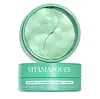
This anti-aging eye mask is formulated around Sodium Hyaluronate and 3-O-Ethyl Ascorbic Acid to soften the look of wrinkles and hydrate skin.


What's inside
What's inside
 Key Ingredients
Benefits
Concerns
No concerns
Ingredients Side-by-side
Water
Skin ConditioningGlycerin
Humectant


Butylene Glycol
Humectant
Niacinamide
Smoothing









Diethoxyethyl Succinate
Solvent3-O-Ethyl Ascorbic Acid
Skin Conditioning
Ammonium Acryloyldimethyltaurate/Vp Copolymer
1,2-Hexanediol
Skin Conditioning
Trehalose
Humectant
Betaine
Humectant
CI 77891
Cosmetic ColorantCitrus Unshiu Fruit Water
Skin ConditioningCitric Acid
Buffering

Propanediol
Solvent
Glyceryl Polymethacrylate
Mica
Cosmetic ColorantHydroxyethyl Acrylate/Sodium Acryloyldimethyl Taurate Copolymer
Emulsion StabilisingEthylhexylglycerin
Skin ConditioningSilica
Abrasive
Xanthan Gum
EmulsifyingDextrin
AbsorbentCarthamus Tinctorius Flower Extract
Skin ConditioningCitrus Sphaerocarpa Peel Extract
Sodium Citrate
BufferingSodium Metaphosphate
BufferingCI 77491
Cosmetic ColorantSorbitan Isostearate
Emulsifying
Citrus Unshiu Peel Extract
MaskingTin Oxide
Abrasive
Cyclodextrin
AbsorbentProtease
Exfoliating
Caprylyl Glycol
Emollient
Acetyl Heptapeptide-4
Humectant
Hexapeptide-9
Skin Conditioning
Acetyl Hexapeptide-8
Humectant
Sodium Hydroxide
BufferingAcetyl Octapeptide-3
Humectant
Acetyl Tetrapeptide-2
Skin Conditioning
Water, Glycerin, Butylene Glycol, Niacinamide, Diethoxyethyl Succinate, 3-O-Ethyl Ascorbic Acid, Ammonium Acryloyldimethyltaurate/Vp Copolymer, 1,2-Hexanediol, Trehalose, Betaine, CI 77891, Citrus Unshiu Fruit Water, Citric Acid, Propanediol, Glyceryl Polymethacrylate, Mica, Hydroxyethyl Acrylate/Sodium Acryloyldimethyl Taurate Copolymer, Ethylhexylglycerin, Silica, Xanthan Gum, Dextrin, Carthamus Tinctorius Flower Extract, Citrus Sphaerocarpa Peel Extract, Sodium Citrate, Sodium Metaphosphate, CI 77491, Sorbitan Isostearate, Citrus Unshiu Peel Extract, Tin Oxide, Cyclodextrin, Protease, Caprylyl Glycol, Acetyl Heptapeptide-4, Hexapeptide-9, Acetyl Hexapeptide-8, Sodium Hydroxide, Acetyl Octapeptide-3, Acetyl Tetrapeptide-2



Ingredients Explained
These ingredients are found in both products.
Ingredients higher up in an ingredient list are typically present in a larger amount.
3-O-Ethyl Ascorbic Acid is one of the most popular "stable" vitamin C derivatives in skincare.
Plain ascorbic acid is fantastic but notoriously fragile; it browns, oxidizes, and loses potency fast. So attaching an ethyl group to the third carbon of the molecule gives it some cool perks:
In a formula, it does the 3 classic vitamin C jobs: it acts as an antioxidant, helps brighten skin tone by inhibiting tyrosinase, and supports collagen.
The evidence is reasonably solid for a cosmetic ingredient; Liao and colleagues (2018) showed it's significantly more stable than ascorbic acid while still being effective.
A 2021 study by Zerbinati and colleagues tested a serum with 30% 3-O-ethyl-l-ascorbic acid and 1% lactic acid significantly increased collagen production, reduced UVB-induced DNA damage, and decreased melanin on a reconstructed pigmented skin model.
Typical real world usage sits around 0.5-5% (and 1-2% is common for daily serums).
Amounts up to 30% have been shown to be non-irritating on human skin samples, but two isolated cases reported allergic contact dermatitis so a patch test is sensible if you have reactive skin.
Learn more about 3-O-Ethyl Ascorbic AcidAcetyl Hexapeptide-8 (also known as Argireline) is a synthetic hexapeptide that is often called a "topical Botox alternative".
It works by mimicking how Botox relaxes muscles; it interferes with the signaling process that tells your facial muscles to contract. This can help soften expression lines like forehead wrinkles or crow's feet over time.
The comparison to Botox does have limits because the molecule is water-loving and relatively large.
Acetyl Hexapeptide-8 has a hard time absorbing deeply enough through the skin's outer barrier to actually reach the muscles.
So whether it truly works the way Botox does at a biological level is still up for debate, but early clinical outcomes are fairly encouraging.
A 12 week human study of a multi-ingredient regimen containing this ingredient saw:
While some studies have observed improvements in wrinkle appearance, it is important to note that more consistent results are seen in multi-ingredient formulations (vs just Acetyl Hexapeptide-8 alone).
Some research studies also used higher concentrations (up to 10%) while this ingredient is usually found in concentrations up to 0.005% in leave-on formulations.
Learn more about Acetyl Hexapeptide-8Caprylyl Glycol is a humectant, skin conditioner, emollient, and preservative booster derived from either caprylic acid or synthetically created.
Typical use levels vary from 0.3-1% as a preservative booster and go up to 2% to condition skin.
Because it is not a free-fatty acid, this ingredient is fungal acne safe (there's nothing for Malassezia to feed on).
Learn more about Caprylyl GlycolEthylhexylglycerin is created from glycerin. It is a multitasker ingredient that:
The CIR Expert Panel found minimal skin absorption or sensitization of any kind in a safety assessment. Though this ingredient is considered well-tolerated, a small number of cases of allergic dermatitis have been published since 2002. Just be sure to patch test if you are unsure.
Industry-reported use ranges from 8% in rinse-off products and 2% in leave-on formulations.
Learn more about EthylhexylglycerinTin Oxide is an inorganic oxide used to add opacity and volume to a product. In nature, it is already found in mineral form. The main ore of tin is an opaque and shiny mineral called casseterite.
Tin Oxide helps remove translucency in a product, or make it more opaque. Besides adding opacity, tin oxide is used for bulking to add volume.


