
What's inside
What's inside
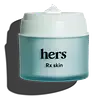 Key Ingredients
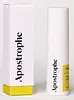
Benefits
Concerns
Ingredients Side-by-side
Tretinoin
Skin Conditioning









Niacinamide
Smoothing




Azelaic Acid
Buffering
Caprylic/Capric Triglyceride
Masking

Cetearyl Alcohol
Emollient




Ceteareth-20
Cleansing
Candelilla Wax Esters
Dimethicone
Emollient
Alcohol Denat.
Antimicrobial

Ethylhexylglycerin
Skin ConditioningGlyceryl Stearate
Emollient
Hydroxyethyl Acrylate/Sodium Acryloyldimethyl Taurate Copolymer
Emulsion StabilisingHydroxypropyl Starch Phosphate
Lecithin
Emollient
Octyldodecanol
Emollient
PEG-100 Stearate
Surfactant
Phenoxyethanol
Preservative
Poloxamer 407
EmulsifyingPolyethylene
Abrasive
Distearyl Ether
Skin ConditioningPolysorbate 60
Emulsifying
Propylene Glycol
Humectant
Bentonite
Absorbent
Water
Skin ConditioningSodium Acrylate/Sodium Acryloyldimethyl Taurate Copolymer
Emulsion StabilisingSorbitol
Humectant
Squalene
Emollient
Stearyl Alcohol
Emollient
Tretinoin, Niacinamide, Azelaic Acid, Caprylic/Capric Triglyceride, Cetearyl Alcohol, Ceteareth-20, Candelilla Wax Esters, Dimethicone, Alcohol Denat., Ethylhexylglycerin, Glyceryl Stearate, Hydroxyethyl Acrylate/Sodium Acryloyldimethyl Taurate Copolymer, Hydroxypropyl Starch Phosphate, Lecithin, Octyldodecanol, PEG-100 Stearate, Phenoxyethanol, Poloxamer 407, Polyethylene, Distearyl Ether, Polysorbate 60, Propylene Glycol, Bentonite, Water, Sodium Acrylate/Sodium Acryloyldimethyl Taurate Copolymer, Sorbitol, Squalene, Stearyl Alcohol

Reviews
Ingredients Explained
These ingredients are found in both products.
Ingredients higher up in an ingredient list are typically present in a larger amount.
Stearyl Alcohol is a type of fatty alcohol from stearic acid. It is a white, waxy compound used to emulsify ingredients used as an emollient or to thicken a product.
Emollients help soothe and hydrate the skin by trapping moisture.
Fatty alcohols are usually derived from natural fats and oils and therefore do not have the same drying or irritating effect as solvent (ethanol) alcohols.
The FDA allows products labeled "alcohol-free" to have fatty alcohols.
This ingredient may not be fungal acne safe. It is a primary fatty alcohol with a chain length above 12 carbons. A study from 2019 show Malassezia can feed on fatty alcohols in this range, so it may trigger fungal acne in those prone to it.
Learn more about Stearyl AlcoholWater. It's the most common cosmetic ingredient of all. You'll usually see it at the top of ingredient lists, meaning that it makes up the largest part of the product.
So why is it so popular? Water most often acts as a solvent - this means that it helps dissolve other ingredients into the formulation.
You'll also recognize water as that liquid we all need to stay alive. If you see this, drink a glass of water. Remember to stay hydrated!
Learn more about WaterTretinoin (aka retinoic acid) is the gold standard retinoid in dermatology because it's the form of vitamin A that your skin can use right away. It's a prescription drug and regulated as medication in most countries.
Unlike retinol, it skips the conversion steps and goes straight to work.
Inside your skin cells, it binds to receptors called retinoic acid receptors and switches on the genes that control how skin cells behave.
For acne, it helps your skin shed dead cells properly instead of letting them build up and clog your pores (this is what turns into blackheads and pimples). It also calms redness/swelling, which is why it's a FDA-approved acne treatment.
Tretinoin also tells your skin to make more collagen and slows down the stuff that breaks collagen apart too. Over time, your skin looks smoother, softer, and more even, with fewer lines lines and sun spots.
The evidence for this ingredient is strong:
A systematic review of randomized controlled trials found that topical tretinoin consistently improved wrinkles, pigmentation, sallowness, and dark spots. Results typically showed up as early as one month and lasted out to 24 months.
All studies also found this ingredient to be safe and well-tolerated.
Typical concentrations run from about 0.01-0.1%, with 0.025%-0.1% being the usual range studied for photoaging and a 0.05% cream producing measurable wrinkle/roughness improvements in large six-month trials.
The main trade-off is irritation; dryness, peeling, redness, and sun sensitivity are common in the first few weeks so be sure to pair it well with a good moisturizer and daily sunscreen.
Learn about a form of retinoid you can purchase at the store, retinol.
Learn more about Tretinoin

