
What's inside
What's inside
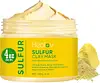 Key Ingredients
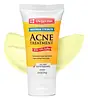
No key ingredients
Benefits
Concerns
Ingredients Side-by-side
Water
Skin ConditioningGlycerin
Humectant


Kaolin
Abrasive



Sclerocarya Birrea Seed Oil
Humectant




Sulfur
Antiseborrhoeic

Squalane
Emollient
Bentonite
Absorbent
Cetearyl Alcohol
Emollient


Glyceryl Stearate
Emollient
PEG-100 Stearate
Surfactant
Olea Europaea Fruit Oil
Masking
Butyrospermum Parkii Butter
Skin Conditioning
1,2-Hexanediol
Skin Conditioning
Zinc PCA
Humectant

Zinc Gluconate
Skin Conditioning
Menthyl Lactate
Masking
Mannose
HumectantMagnesium Ascorbyl Phosphate
Antioxidant



Tocopheryl Acetate
Antioxidant
Polyacrylate Crosspolymer-6
Emulsion StabilisingBisabolol
Antioxidant
Farnesol
Perfuming
Phenoxyethanol
Preservative
Ethylhexylglycerin
Skin ConditioningPolyacrylate-13
Polyisobutene
Polysorbate 20
Emulsifying
Hydrangea Macrophylla Leaf Extract
Skin ConditioningXanthan Gum
EmulsifyingSodium Hyaluronate
Humectant
Dipotassium Glycyrrhizate
Humectant
Water, Glycerin, Kaolin, Sclerocarya Birrea Seed Oil, Sulfur, Squalane, Bentonite, Cetearyl Alcohol, Glyceryl Stearate, PEG-100 Stearate, Olea Europaea Fruit Oil, Butyrospermum Parkii Butter, 1,2-Hexanediol, Zinc PCA, Zinc Gluconate, Menthyl Lactate, Mannose, Magnesium Ascorbyl Phosphate, Tocopheryl Acetate, Polyacrylate Crosspolymer-6, Bisabolol, Farnesol, Phenoxyethanol, Ethylhexylglycerin, Polyacrylate-13, Polyisobutene, Polysorbate 20, Hydrangea Macrophylla Leaf Extract, Xanthan Gum, Sodium Hyaluronate, Dipotassium Glycyrrhizate
Reviews
Ingredients Explained
These ingredients are found in both products.
Ingredients higher up in an ingredient list are typically present in a larger amount.
Sulfur is one of skincare's oldest ingredients that has been used to treat acne, rosacea, seborrheic dermatitis, scabies, and tinea versicolor.
How does it work?
When sulfur touches skin, it reacts with an amino acid in skin cells (called cysteine) to create cystine and hydrogen sulfide.
That hydrogen sulfide helps loosen dead skin cells to exfoliate. And here's a geeky detail: the smaller the Sulfur particles, the more they interact with skin and the better they work.
Sulfur also has antifungal and antibacterial activity, which is why you'll see it in both acne treatments and dandruff shampoos.
In the US, acne products can use 3-10% sulfur while dandruff products use 2-5%. It's also often paired with Sodium Sulfacetamide, and using that combo twice daily for 12 weeks reduced inflammatory acne spots by about 80%.
The most common complains are the smell and dryness. Otherwise, side effects are uncommon.
If you have a "sulfa" allergy, that's an allergy to sulfonamide drugs and this doesn't mean you'll react to elemental sulfur.
A 1972 study suggested sulfur might clog pores. Elemental sulfur caused some clogged pores on rabbit ears and human backs (though the researchers noted the effect was mild).
A 1978 follow-up tested this on 52 people. After six weeks of patches with 5% Sulfur, skin biopsies showed no link between Sulfur and clogged pores. The surprise? The base the Sulfur was mixed into was what caused clogged pores. Later reviewers also noted that other studies couldn't repeat the 1972 results.
So why does Sulfur have a comedogenic rating of 3?
That number comes from a 1989 rabbit ear study by dermatologist James Fulton, which gave a 3 to water-soluble sulfur specifically. Even so, a 3 isn't a big red flag. Fulton's own scale treats 2 to 3 as borderline.
Human testing has also proved that any finished product with a comedogenic ingredient won't automatically make you break out; it really comes down to concentration, formula, and your skin.
Learn more about Sulfur

