Forest Essentials Facial Moisturizer Sandalwood & Orange Peel SPF 30 Versus Forest Essentials Advanced Eternal Youth Formula Date & Litchi
This mineral sunscreen covers the full UV range and blocks ~97% of UVB at SPF 30.
This moisturizer is formulated around Prunus Amygdalus Dulcis Oil and Withania Somnifera Root Extract to hydrate skin.

What's inside
What's inside
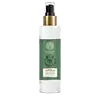 Key Ingredients
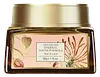
Benefits
Concerns
Ingredients Side-by-side
Prunus Amygdalus Dulcis Oil
Skin Conditioning





Olea Europaea Fruit Oil
Masking
Aloe Barbadensis Leaf Juice
Skin Conditioning

Citrus Aurantium Sinensis Fiber
Emulsion StabilisingWithania Somnifera Root Extract
Skin Conditioning
Vetiveria Zizanoides Root Water
Skin ConditioningOcimum Sanctum Leaf Extract
Skin ConditioningHydrolyzed Barley Protein
Skin ConditioningSantalum Album Oil
Masking

Water
Skin ConditioningGlycerin
Humectant

Butyrospermum Parkii Butter
Skin Conditioning
Zinc Oxide
Cosmetic Colorant


Cocos Nucifera Water
Masking
Cetearyl Olivate
Sorbitan Olivate
Emulsifying
Tocopherol
Antioxidant




Sodium Levulinate
Skin ConditioningPhytic Acid
Chelating
Prunus Amygdalus Dulcis Oil, Olea Europaea Fruit Oil, Aloe Barbadensis Leaf Juice, Citrus Aurantium Sinensis Fiber, Withania Somnifera Root Extract, Vetiveria Zizanoides Root Water, Ocimum Sanctum Leaf Extract, Hydrolyzed Barley Protein, Santalum Album Oil, Water, Glycerin, Butyrospermum Parkii Butter, Zinc Oxide, Cocos Nucifera Water, Cetearyl Olivate, Sorbitan Olivate, Tocopherol, Sodium Levulinate, Phytic Acid
Prunus Amygdalus Dulcis Oil 4%
Skin Conditioning
Terminalia Chebula Fruit Extract 2%
Skin ConditioningWithania Somnifera Root Extract 1.5%
Skin Conditioning
Litchi Chinensis Fruit Juice 1%
Skin ConditioningPhoenix Dactylifera Fruit Extract 0.5%
EmollientTriticum Vulgare Germ Extract 1%
Skin ConditioningHydrolyzed Trigonella Foenum-Graecum Seed Extract 1%
HumectantCurcuma Amada Rhizome Extract 1%
Skin ConditioningFoeniculum Vulgare Seed Extract 0.7%
Skin ConditioningEmblica Officinalis Fruit Extract 0.5%
Skin ConditioningSorbitan Olivate
Emulsifying
Argania Spinosa Kernel Oil
Emollient
Camellia Japonica Seed Oil
Emollient
Tocopherol
Antioxidant
Glycerin
Humectant
Sodium Levulinate
Skin ConditioningPhytic Acid
Chelating
Prunus Amygdalus Dulcis Oil 4%, Terminalia Chebula Fruit Extract 2%, Withania Somnifera Root Extract 1.5%, Litchi Chinensis Fruit Juice 1%, Phoenix Dactylifera Fruit Extract 0.5%, Triticum Vulgare Germ Extract 1%, Hydrolyzed Trigonella Foenum-Graecum Seed Extract 1%, Curcuma Amada Rhizome Extract 1%, Foeniculum Vulgare Seed Extract 0.7%, Emblica Officinalis Fruit Extract 0.5%, Sorbitan Olivate, Argania Spinosa Kernel Oil, Camellia Japonica Seed Oil, Tocopherol, Glycerin, Sodium Levulinate, Phytic Acid
Alternatives
Ingredients Explained
These ingredients are found in both products.
Ingredients higher up in an ingredient list are typically present in a larger amount.
Glycerin (or glycerol) is a compound naturally found in your skin. It's a powerhouse humectant that pulls water into the stratum corneum.
Topically, glycerin does several things at once:
Your skin makes glycerin on its own (mostly from sebaceous oil breakdown) and shuttles it to your outermost layer of skin, or your epidermis, via aquaporin-3.
Aquaporin-3 is a transporter that is essential for normal skin hydration, elasticity, and repair. Interestingly, mice lacking in AQP3 have dry and less elastic skin that can be fully corrected with glycerin.
This ingredient is non-irritating, plays well with almost every ingredient, and works across all skin types. Typical use is anywhere between 3-10% but can go up to 79% in some leave-on products.
Just know very high concentrations (>40%) can feel tacky in low humidity.
Glycerin is the name for this ingredient in American English. British English uses Glycerol/Glycerine.
Learn more about GlycerinPhytic Acid is a gentle AHA and antioxidant. AHAs are chemical exfoliants that help remove dead skin cells. Phytic Acid has a slight and mild exfoliating effect.
The chemical makeup makes it classified as an AHA, much like lactic acid.
In some cases, it is a chelating agent. Chelating agents help prevent metals from binding to water, helping to stabilize the ingredients in a product.
An interesting fact about phytic acid is that it is considered an antinutrient. People do not have the enzyme needed to properly breakdown and digest phytic acid. When ingested, phytic acid binds to minerals and prevents them from being absorbed.
Read more about some other popular AHA's here:
Learn more about Phytic AcidThis ingredient is also known as sweet almond oil. It is a lightweight, cold-pressed oil from the ripe seeds of the sweet almond tree.
Sweet almond oil is rich in skin-nourishing fatty acids such as oleic acid (55-86%) and linolenic acid (7-35%).
As an emollient, it softens and hydrates skin by forming a thin barrier that locks in moisture.
Clinical studies have found it to be non-irritating and non-sensitizing. The CIR Expert Panel has evaluated the available safety data and concluded it is safe for topical use.
Because of the oleic acid content, this ingredient may not be fungal acne safe.
This ingredient does have a comedogenic rating of 3, but this doesn't mean a formula with this ingredient will clog pores.
Human testing has proved that any finished product with a comedogenic ingredient won't automatically make you break out; it really comes down to concentration, formula, and your skin.
Learn more about Prunus Amygdalus Dulcis OilSodium levulinate is the a sodium salt of Levulinic Acid. Oncedissolved in an aqueous solution, the two ingredients become identical. It is usually derived from renewable plant sources like corn starch or sugarcane.
In skincare, it mostly acts as a skin conditioning agent that keeps skin soft and hydrated. It also acts as a preservative booster by inhibiting the growth of mold, yeast, and bacteria.
It's often paired with Sodium Anisate as the two create a broad-spectrum preservative system that is popular in "natural" formulations.
This ingredient is water-soluble.
The CIR Expert Panel for Cosmetic Ingredient Safety has concluded this ingredient to be non-irritated and there are no restrictions for use in EU cosmetics. The FDA also allows this ingredient to be used as a food-grade flavoring agent.
Learn more about Sodium LevulinateSorbitan Olivate is created from the fatty acids in olive oil and sorbitol.
This ingredient is an oil in water emulsifier. It helps stabilize a product by preventing oils and waters from separating. Sorbitan Olivate also helps hydrate the skin.
This ingredient is also known as part of Olivem 1000, with Cetearyl Olivate being the other part.
According to a manufacturer, this ingredient helps preserve the natural microbiome of skin. Having a healthy microbiome helps keep our skin healthy and protects against harmful bacteria.
Please note, having a healthy microbiome is different from fungal acne; a healthy microbiome includes small amounts of yeast that normally live on your skin without causing problems.
Fungal acne happens when one type of yeast (Malassezia) grows out of control. This is usually because it's feeding on certain oils or fatty acids. Due to the olive oil base, this ingredient may not be fungal acne safe.
Learn more about Sorbitan OlivateTocopherol is a fat-soluble antioxidant known as Vitamin E.
You'll find this ingredient in the vast majority of skincare (for good reason). It works to neutralize free radicals, or unstable molecules generated by UV exposure, pollution, and other environmental stressors, before they can cause oxidative damage to your skin cells.
Topically applied tocopherol has been shown to protect against UV damage by ramping up the skin's own natural defense enzymes.
It also acts as a skin conditioning agent; some studies show that regular topical use can improve the skin's water-binding capacity over 2-4 weeks.
This ingredient is especially loved for being a team player. When combined with Vitamin C, the photoprotective effect of both ingredients roughly doubles and the combo also helps reduce UV-induced DNA damage.
This ingredient has some brightening potential but it's more of a prevention ingredient than spot-fader. Cell studies show it can slow down melanin production but it's worth noting that it's not the most powerful brightener out there.
In formulations, it also serves as a stabilizer that helps protect other oxidation-prone ingredients from degrading.
Concentrations usually range from 0.1-1% in most leave-on products.
Learn more about TocopherolWithania Somnifera Root Extract is also known as Ashwaganda extract. Ashwaganda is an evergreen shrub grown in India, the Middle East, and parts of Africa.
Ashwaganda contains many antioxidant compounds. Antioxidants may help with anti-aging as they neutralize free-radical molecules. These molecules may damage skin cells and DNA. By neutralizing them, antioxidants may help slow the signs of aging.
Other compounds found in ashwaganda include Vitamin C, caffeic acid, and ferulic acid. These three acids are antioxidants but also provide other skin benefits as well.
Ongoing studies show ashwaganda to prevent damage from UV-B radiation.
Ashwaganda root powder has traditionally been used in Indian medicine.
Learn more about Withania Somnifera Root Extract

