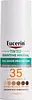
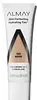
This hybrid sunscreen covers the full UV range and blocks ~97% of UVB at SPF 35.


What's inside
What's inside
 Key Ingredients
Benefits
Concerns
Ingredients Side-by-side
Zinc Oxide 24%
Cosmetic Colorant


Water
Skin ConditioningC12-15 Alkyl Benzoate
AntimicrobialIsopropyl Palmitate
Emollient




Butyloctyl Salicylate
Skin Conditioning
Ethylhexyl Pelargonate
EmollientCetyl PEG/PPG-10/1 Dimethicone
Emulsifying
Propylene Glycol
Humectant
Cyclopentasiloxane
Emollient
Bis-Octyldodecyl Dimer Dilinoleate/Propanediol Copolymer
EmollientDimethicone
Emollient
Diethylhexyl Syringylidenemalonate
Skin Protecting
Ethylhexyl Methoxycrylene
Skin Conditioning
Polyester-27
Glycyrrhiza Inflata Root Extract
Skin Conditioning
Glycyrrhetinic Acid
Skin Conditioning
Sodium Ascorbyl Phosphate
Antioxidant





Simmondsia Chinensis Seed Oil
Emollient

Tocopherol
Antioxidant

Triethoxycaprylylsilane
Beeswax
Emulsion Stabilising
Hydroxyacetophenone
Antioxidant
Sodium Chloride
MaskingPEG-12 Dimethicone Crosspolymer
Emulsifying
1,2-Hexanediol
Skin Conditioning
Caprylyl Glycol
Emollient
Jojoba Esters
Emollient
Silica
Abrasive
Polyglyceryl-6 Polyricinoleate
Emulsifying
Iron Oxides
Zinc Oxide 24%, Water, C12-15 Alkyl Benzoate, Isopropyl Palmitate, Butyloctyl Salicylate, Ethylhexyl Pelargonate, Cetyl PEG/PPG-10/1 Dimethicone, Propylene Glycol, Cyclopentasiloxane, Bis-Octyldodecyl Dimer Dilinoleate/Propanediol Copolymer, Dimethicone, Diethylhexyl Syringylidenemalonate, Ethylhexyl Methoxycrylene, Polyester-27, Glycyrrhiza Inflata Root Extract, Glycyrrhetinic Acid, Sodium Ascorbyl Phosphate, Simmondsia Chinensis Seed Oil, Tocopherol, Triethoxycaprylylsilane, Beeswax, Hydroxyacetophenone, Sodium Chloride, PEG-12 Dimethicone Crosspolymer, 1,2-Hexanediol, Caprylyl Glycol, Jojoba Esters, Silica, Polyglyceryl-6 Polyricinoleate, Iron Oxides

Reviews
Ingredients Explained
These ingredients are found in both products.
Ingredients higher up in an ingredient list are typically present in a larger amount.
Cyclopentasiloxane (D5) is a lightweight silicone that mostly acts as an emollient and solvent in cosmetics. Its the reason your products feel silky, fast-spreading, and non-greasy.
Since D5 is volatile, it does its thing and then evaporates off the skin quickly.
The safety profile of this ingredient is reassuring; the US CIR Expert Panel concluded D5 is safe as used in cosmetics and Health Canada concluded that D5 is not harmful to human health or the environment as currently used in cosmetics
There's a study that people mention about D5 in a rat study showing tumors. This study is related to long-term inhalation of high D5 levels.
Regulatory bodies have judged this study to be not applicable in topical skincare since skin absorption of D5 is very low and we're not really inhaling huge amounts of D5.
The only restriction for this ingredient is environmental. The European Chemicals Agency (ECHA) restricted D5 in wash-off cosmetics at or above 0.1% due to their persistence in water.
Learn more about CyclopentasiloxaneDimethicone is a type of synthetic silicone created from natural materials such as quartz. It is also known as polydimethylsiloxane.
What it does:
Dimethicone comes in different viscosities:
Depending on the viscosity, dimethicone has different properties.
Ingredients lists don't always show which type is used, so we recommend reaching out to the brand if you have questions about the viscosity.
This ingredient is unlikely to cause irritation because it does not get absorbed into skin. However, people with silicone allergies should be careful about using this ingredient.
Note: Dimethicone may contribute to pilling. This is because it is not oil or water soluble, so pilling may occur when layered with products. When mixed with heavy oils in a formula, the outcome is also quite greasy.
Learn more about DimethiconeChances are, you eat sodium chloride every day. Sodium Chloride is also known as table salt. This ingredient has many purposes in skincare: thickener, emulsifier, and exfoliator.
You'll most likely find this ingredient in cleansers where it is used to create a gel-like texture. As an emulsifier, it also prevents ingredients from separating.
You might see people debate whether Sodium Chloride is comedogenic, but there actually haven't been any comedogenic tests done on it. Either way, the overall formulation of a product matters a lot more than any single ingredient.
You might see this ingredient used in scrubs as a primary exfoliating ingredient.
Learn more about Sodium ChlorideWater. It's the most common cosmetic ingredient of all. You'll usually see it at the top of ingredient lists, meaning that it makes up the largest part of the product.
So why is it so popular? Water most often acts as a solvent - this means that it helps dissolve other ingredients into the formulation.
You'll also recognize water as that liquid we all need to stay alive. If you see this, drink a glass of water. Remember to stay hydrated!
Learn more about WaterThis ingredient is a combination of red, black, and yellow iron oxide pigments. This combination of colors is usually found in foundation, because it results in a "skin" color.
The EU typically uses CI numbers for colorants when applicable, such as CI 77489. In the US, iron oxides are regulated as color additives and "iron oxides" is the most commonly used name in US cosmetic practice.
A 2021 paper looked at skincare formulations containing iron oxides and found that they reduced transmission of blue light when measured optically. In simple terms, the pigment particles helped block or scatter part of the visible light spectrum in lab testing and the authors suggest this could translate into better protection against blue-light-related skin effects.
There is also clinical and experimental research showing that tinted products containing iron oxides can reduce visible light-induced pigmentation:
Please note, whether a product reduces visible or blue light depends on things like:
In the EU's CosIng database, iron oxides are only listed as a colorant. CosIng groups ingredients by their main cosmetic role, such as colorant, preservative, or UV filter.
Though studies say iron oxides can "attenuate blue light", they're describing an optical property and not an officially recognized cosmetic function.
So CosIng isn’t contradicting the research. It’s just classifying iron oxides by what they officially are: pigments that add color.
Learn more about Iron Oxides

