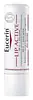
This barrier-repair lip moisturizer is formulated around Ricinus Communis Seed Oil and Panthenol to strengthen the lip barrier and hydrate lips.
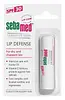
This barrier-repair lip moisturizer is formulated around Simmondsia Chinensis Seed Oil and Bisabolol to strengthen the lip barrier and hydrate lips.

What's inside
What's inside
 Key Ingredients
Benefits
Concerns
Ingredients Side-by-side
Cera Microcristallina
Emulsion StabilisingOctyldodecanol
Emollient
Hydrogenated Polydecene
EmollientRicinus Communis Seed Oil
Masking




Cetyl Palmitate
Emollient
Polyglyceryl-3 Diisostearate
Emulsifying


Panthenol
Skin Conditioning



Ethylhexyl Triazone
UV Absorber
Butyl Methoxydibenzoylmethane
UV Absorber
Cetearyl Alcohol
Emollient
Bis-Diglyceryl Polyacyladipate-2
Emollient
Myristyl Myristate
Emollient
C20-40 Alkyl Stearate
Skin ConditioningGlycerin
Humectant
Copernicia Cerifera Cera
Emollient
Water
Skin ConditioningTocopheryl Acetate
Antioxidant


Simmondsia Chinensis Seed Oil
Emollient
Butyrospermum Parkii Butter
Skin Conditioning
Bisabolol
Antioxidant
Cera Alba
Emollient
Cera Microcristallina, Octyldodecanol, Hydrogenated Polydecene, Ricinus Communis Seed Oil, Cetyl Palmitate, Polyglyceryl-3 Diisostearate, Panthenol, Ethylhexyl Triazone, Butyl Methoxydibenzoylmethane, Cetearyl Alcohol, Bis-Diglyceryl Polyacyladipate-2, Myristyl Myristate, C20-40 Alkyl Stearate, Glycerin, Copernicia Cerifera Cera, Water, Tocopheryl Acetate, Simmondsia Chinensis Seed Oil, Butyrospermum Parkii Butter, Bisabolol, Cera Alba
Caprylic/Capric/Succinic Triglyceride
EmollientCera Alba
Emollient
Isoamyl P-Methoxycinnamate
UV Absorber
Ricinus Communis Seed Oil
Masking
Caprylic/Capric Triglyceride
Masking
Ethylhexyl Salicylate
UV Absorber
Tocopheryl Acetate
Antioxidant
C12-15 Alkyl Benzoate
AntimicrobialOryza Sativa Bran Wax
Skin Conditioning
Simmondsia Chinensis Seed Oil
Emollient
Glyceryl Ricinoleate
Emollient
Butyl Methoxydibenzoylmethane
UV Absorber
Bisabolol
Antioxidant
Parfum
Masking

Caprylic/Capric/Succinic Triglyceride, Cera Alba, Isoamyl P-Methoxycinnamate, Ricinus Communis Seed Oil, Caprylic/Capric Triglyceride, Ethylhexyl Salicylate, Tocopheryl Acetate, C12-15 Alkyl Benzoate, Oryza Sativa Bran Wax, Simmondsia Chinensis Seed Oil, Glyceryl Ricinoleate, Butyl Methoxydibenzoylmethane, Bisabolol, Parfum
Reviews
Ingredients Explained
These ingredients are found in both products.
Ingredients higher up in an ingredient list are typically present in a larger amount.
Bisabolol is a gentle skin conditioner, antioxidant, and soothing ingredient.
It's primary claim to fame is soothing and research shows topically applied bisabolol can quiet the chemical messengers that cause your skin to become inflamed, helping to sooth any irritation.
A clinical study found that applying 0.5% bisabolol daily for 8 weeks produced an average 9% decrease in skin pigmentation. Researchers found it can also suppress the process that leads to excess melanin production in skin.
In vitro studies found that bisabolol combined with propylene glycol significantly increased skin permeability by increasing lipid fluidity in the stratum corneum.
You'll likely see use concentrations quite low, usually 0.1-0.2%.
Overall, this is a well-tolerated ingredient that works well in formulas designed for sensitive, reactive, or post-procedure skin.
Learn more about BisabololAlso known as Avobenzone, this ingredient is an oil-soluble used to absorb the full spectrum of UVA rays (peak 357 nm).
It's one of the most effective UVA filters available but has a major caveat of photostability: avobenzone is susceptible to photodegradation.
This means it can lose efficacy when exposed to sunlight without the help of a stabilizing agent.
Studies show antioxidants (like vitamin E or vitamin C) and some UV filters (like octocrylene and Tinosorb S) can meaningfully improve its stability in a formulation.
The maximum allowable concentration according to regulation is 3% in the US + Canada, and 5% in the EU, Australia, China, Korea, and ASEAN countries.
It has a well-support safety profile: a comprehensive 2025 review found minimal toxicity with no evidence of carcinogenicity.
Overall, avobenzone is a safe and regulated ingredient used in sunscreen for over 40 years.
Learn more about Butyl MethoxydibenzoylmethaneCera alba is beeswax, or the wax used by bees to make honeycombs. It is a texture-enhancer and emollient. A study from 2003 found beeswax to be a stronger emollient than ingredients such as petroleum jelly.
As an emollient, beeswax helps hydrate the skin by creating a barrier on top. This barrier traps moisture in.
Emulsifiers help prevent ingredients from separating. This helps create consistent texture.
The structure of beeswax is mainly long-chain alcohols and the esters of fatty acids.
There are three types of beeswax: yellow, white, and absolute. Yellow is pure beeswax taken from the honeycomb. White beeswax is created by filtering or bleaching yellow beeswax. Absolute beeswax is created by treating beeswax with alcohol. Beeswax used in cosmetics are purified.
Beeswax has been used throughout history and even in prehistoric times. Some common uses for beeswax still used today are making candles, as a waterproofing agent, and polish for leather.
Beeswax's wax esters are derived primarily from palmitic and oleic acid (C16 and C18:1). Both of these fall within the C11-C24 feeding window.
The Malassezia yeast can potentially cleave these esters and release usable fatty acids, so this ingredient may not be fungal acne safe. However, not everyone will react to this ingredient.
Learn more about Cera AlbaThis ingredient is also known as castor oil. It is a skin conditioning ingredient.
The star component of castor oil is ricinoleic acid, an unusual fatty acid that makes up ~80-92% of its composition.
In skincare, it is an emollient that dries down to a solid film with water-binding properties. This helps keep skin hydrated and helps reduce transepidermal water loss (TEWL).
A 2026 dermatology review pulls together its broader uses:
Human clinical testing found this ingredient to be non-irritating and non-sensitizing.
Because castor oil contains fatty acids in the C11-24 range, this ingredient may not be fungal acne safe.
At this time, the literature does not support castor oil in regrowing hair. A 2022 systematic review found no strong evidence that it supports hair growth and only weak evidence that it improves hair shine.
Castor oil itself carries "perfuming" and "masking" function tags according to the official CosIng database. This is because of its mild odor and odor-dampening properties.
Learn more about Ricinus Communis Seed OilJojoba oil is one of the most well-studied plant-derived ingredients in cosmetics. It is an emollient with a special structure.
Because it is made up of 97-98% wax esters, it closely mirrors the linear monoesters found in human sebum. This makes it skin compatible, non-greasy, and lightweight.
Unlike other plant oils, jojoba wax doesn't easily penetrate skin. It mostly works in the uppermost layers as an emollient. This just means it forms a light barrier on the skin to help retain moisture.
Formulations with jojoba esters up to 90% reduced transepidermal water loss (TEWL) and increased barrier recovery by 81% (outperforming bisabolol at 47%).
Besides barrier support, the science also suggests jojoba to have anti-inflammatory effects and potential applications for skin infections, aging, and wound healing.
Fun fact: Indigenous cultures have used jojoba as a moisturizer and to help treat burns for centuries.
Fungal acne: The Malassezia yeast is known to metabolize fatty acids in the C11-24 range and jojoba's dominant fatty acid components fall into this range. This ingredient may not be fungal acne safe.
Learn more about Simmondsia Chinensis Seed OilTocopheryl Acetate is a stable, shelf-friendly form of vitamin E.
Formulators love it because plain vitamin E oxidizes quickly once it hits air. This acetate version stays stable and resists going off, helping to extend a product's shelf life.
It's actually inactive on its own and works like a slow-release "storage" form; the enzymes in your skin called esterases gradually convert it into active vitamin E over time.
One in vivo study showed 5% of the acetate in the living layer of the epidermis converted to vitamin E after 5 days of application. This study also found the skin gained protection against UV damage even though the conversion was slow and small.
Once converted, vitamin E acts as a skin's main fat-soluble antioxidant that fights free radicals to protect skin from damage.
Topical vitamin E generally boosts the skin's photoprotection, and it reduced UV-damage in animal models.
This ingredient has some brightening potential but it's more of a prevention ingredient than spot-fader. Cell studies show it can slow down melanin production but it's worth noting that it's not the most powerful brightener out there.
Overall, it has a pretty solid safety profile and has been found to be non-irritating and non-comedogenic. Allergic reactions may happen but stay rare due to how widely the ingredient gets used.
The concentration will vary depending on the formula; industry data shows 0.1% in baby lotions, 3% in lipsticks, and 5% in foot powders. You can also find this ingredient at 100% in a pure vitamin E oil.
Most leave-on skincare keeps it at the lower end, often between 0.5-1%.
Learn more about Tocopheryl Acetate

